


Alleged Food Contamination at Proddatur Tiffin Centre Raises Fresh Questions Over Hygiene, Consumer Safety
By Doruvu Paul Jagan Babu: Assistant Chief Editor

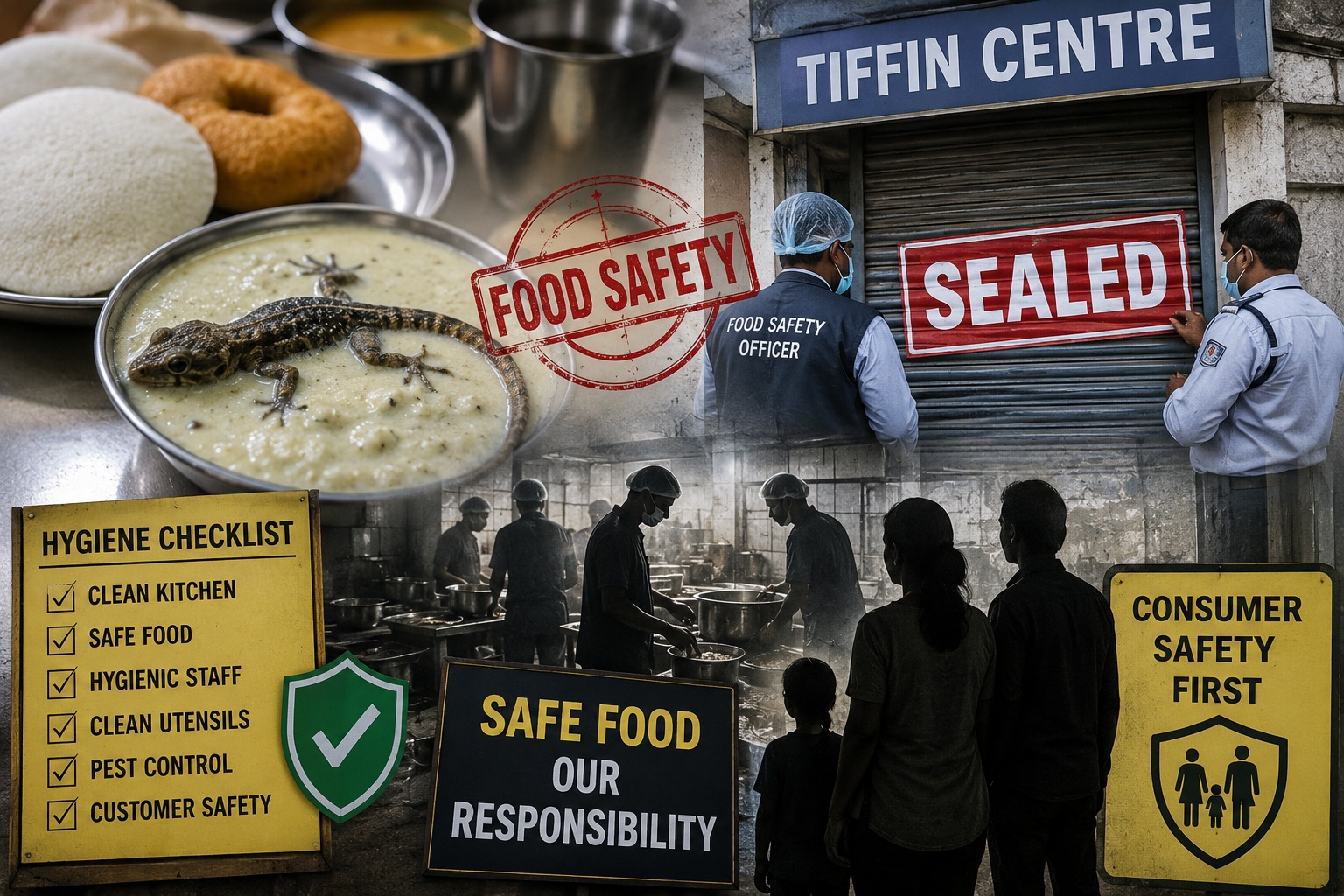
Proddatur, AP: An alleged incident involving the discovery of a lizard in chutney served at a busy tiffin centre in Proddatur has triggered widespread concern over food hygiene and consumer safety. According to sources, officials from the Food Safety Department and the police inspected the premises and sealed the establishment pending further action. While the findings of the official inquiry are awaited, the incident has once again highlighted the need for higher hygiene standards, greater accountability by food business operators and more proactive enforcement by regulatory authorities.
A wake-up call for food business operators
Though popularly known as a small tiffin centre, the establishment reportedly employs more than ten workers and caters to a large number of customers every day. With such a high volume of food being prepared and served, maintaining hygiene is not merely a legal obligation but a public responsibility.
Owners and management are expected to ensure clean kitchens, hygienic food preparation, safe storage of ingredients, pest control, clean utensils, proper waste disposal and regular health and hygiene practices among employees. Every worker handling food has a direct responsibility towards protecting consumers’ health.
Consumer complaints deserve immediate attention

Beyond the alleged contamination, the incident has brought renewed attention to another concern frequently raised by consumers—the manner in which some food establishments respond when customers report problems.
Several customers alleged that complaints regarding food quality, hygiene or service are often dismissed rather than addressed constructively. They claimed that some operators display an indifferent attitude instead of treating consumer feedback as an opportunity to improve standards.
Customer grievances should never be viewed as an inconvenience. Every complaint deserves a prompt, respectful and transparent response. Addressing concerns at an early stage can prevent larger problems and strengthen public confidence.

Need for continuous monitoring, not occasional action
According to sources, the tiffin centre was inspected and sealed by the concerned authorities after the complaint. However, an official confirmation regarding the inspection findings is still awaited.
The incident underscores the importance of periodic inspections by Food Safety authorities rather than inspections being conducted only after complaints emerge. Regular monitoring, awareness programmes, timely corrective measures and strict enforcement of food safety regulations can significantly reduce the risk of such incidents.
Preventive enforcement is often more effective than reactive action.
Commercial success should never override consumer welfare
Residents observed that some food establishments, particularly those with a large customer base, may gradually become complacent if regular inspections are infrequent or enforcement is inconsistent. Such perceptions highlight the importance of continuous regulatory oversight.
No business, regardless of its popularity or commercial success, should place profits, reputation or complacency above consumer welfare. Every customer has the right to receive safe, hygienically prepared food and to be treated with courtesy and respect when raising genuine concerns.
Professionalism is reflected not only in the quality of food served but also in the willingness to acknowledge shortcomings and take immediate corrective action.
A shared responsibility for safe food
Food safety is a shared responsibility involving owners, managers, employees, regulatory authorities and consumers.
Tiffin centre owners must foster a culture where cleanliness, food safety, customer service and accountability become everyday practices rather than responses to inspections. Employees should receive regular training in personal hygiene, food handling, sanitation and customer interaction.
The owner of the tiffin centre was unavailable for comment, however, a senior staff member said that the tiffin center follows due care in food preparation and hygiene and strives to treat all customers with courtesy and respect.
At the same time, Food Safety officials have an equally important responsibility to conduct impartial and periodic inspections, ensure compliance with food safety laws and initiate timely action wherever violations are found.
Ultimately, public trust is the greatest asset of any food establishment. That trust can only be sustained when hygiene, transparency, accountability and respect for consumers remain the highest priorities.