


Sunil Pal vs Salman Khan: A Debate Over Stardom, Accountability and the Changing Culture of Bollywood
Comedian’s sharp criticism raises wider questions about celebrity power, audience ownership, box-office performance and the limits of online trolling

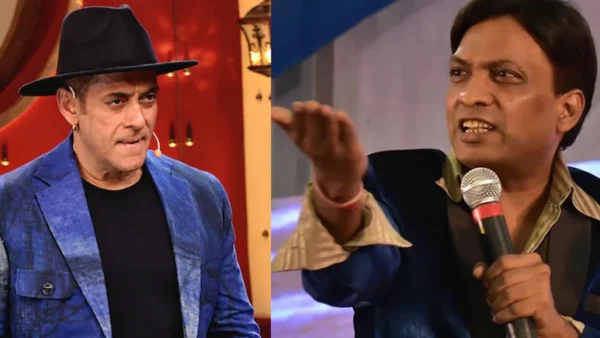
Opinion : The latest exchange involving comedian Sunil Pal and Bollywood superstar Salman Khan has opened a broader conversation about celebrity culture, audience expectations and the changing relationship between stars and the public. Pal has publicly criticized Khan after the actor strongly objected to body-shaming, age-shaming and personal attacks against celebrities during a recent episode of Bigg Boss 20. Pal also questioned the relationship between stardom and audience support, pointed to the reported performance of the low-budget film Hanuman Ansh, and described Bigg Boss in highly critical terms.
The episode is noteworthy not simply because one comedian criticized one of Bollywood’s biggest stars, but because the two sides are addressing different parts of the same entertainment ecosystem. Salman Khan’s remarks focused largely on the behaviour of online trolls and the personal attacks faced by public figures. Sunil Pal, meanwhile, shifted the discussion toward the responsibilities that come with stardom, the power of audiences and the commercial performance of films.
Both issues deserve to be examined separately.
Salman Khan’s Argument: Where Does Criticism End and Trolling Begin?
During the latest Bigg Boss 20 Weekend Ka Vaar, Salman Khan spoke angrily about the growing culture of online trolling. He objected to comments about people’s physical appearance, age, weight, professional failures and personal lives. He also addressed criticism directed at women after pregnancy, in remarks that were widely interpreted as an indirect defence of Katrina Kaif following online comments about her post-pregnancy appearance. Khan did not name Kaif directly in the remarks reported by several media outlets.
Khan also referred to the criticism he himself receives about ageing. Reports from the episode say that he acknowledged being 60 and argued that he cannot be expected to look the same as he did decades ago. At one point, he removed his hat and shirt and wiped off his makeup on camera while challenging people who comment on his appearance.

There is an important distinction here.
Criticism of a celebrity’s work is not the same thing as abuse directed at the celebrity as a person.
Audiences can legitimately question an actor’s acting, a film’s screenplay, its direction, its commercial performance or the decisions made by a production team. Those are part of the normal relationship between entertainment and its consumers.

However, comments about someone’s body, pregnancy, family or personal circumstances move into a different territory. That distinction was central to Khan’s argument.
His comments therefore touched upon a larger problem in the social-media era: the boundary between public accountability and personal humiliation has become increasingly difficult to maintain.
Sunil Pal Brings the Audience Into the Conversation
Sunil Pal’s response approached the subject from another direction.
At an event, the comedian argued that Salman Khan’s stardom exists because audiences have supported him over many years. Pal’s remarks, as reported by The Times of India and Hindustan Times, included the argument that audiences watched Khan’s films and therefore played a central role in creating his position as a star. He also extended his comments to other major actors, including Akshay Kumar and Shah Rukh Khan.
This argument introduces the concept of audience ownership into the debate.
A film star may have talent, charisma, professional discipline, a powerful production network and decades of experience. But commercial stardom ultimately depends on people buying tickets, subscribing to streaming platforms, watching television programmes, following celebrities and continuing to consume their work.
In that sense, Pal’s argument is about the economic relationship between celebrity and audience.
At the same time, saying that audiences contribute to a star’s success does not necessarily mean that audiences have unlimited rights over that person’s private life. Buying a cinema ticket does not automatically give a viewer authority over an actor’s body, family, relationships or personal decisions.
This is where the debate becomes more complicated.
Stardom Creates Visibility — But Also Exposure
Celebrity status operates on a paradox.
The more visible a person becomes, the more public attention they receive. That attention can create financial opportunities, professional influence and cultural relevance. But the same visibility also exposes celebrities to criticism, jokes, rumours and intrusive commentary.
Salman Khan’s comments address the negative side of that exposure.
Sunil Pal’s comments address another side: celebrities should remember that their success is connected to the audience.
Both propositions can exist simultaneously.
A public figure can acknowledge the importance of audiences while also objecting to abusive behaviour. Likewise, an audience can demand accountability from a star without engaging in personal attacks.
The difficulty lies in determining where legitimate criticism ends.
The Hanuman Ansh Argument
One of the strongest parts of Pal’s criticism concerns the film Hanuman Ansh.
Pal referred to reported box-office figures and contrasted the performance of a relatively low-budget film with the earnings of big-budget star-driven movies. He claimed that Hanuman Ansh was made for around Rs 2 crore and had earned around Rs 500 crore, while suggesting that a film costing hundreds of crores may struggle to earn even Rs 50 crore.
These numbers should be treated as Pal’s stated comparison rather than an independently established fact unless supported by audited industry data. Box-office reporting in India can vary significantly according to whether a figure refers to gross collection, net collection, worldwide revenue, distributor share or another measure.
Nevertheless, the underlying question is legitimate: Does a large star guarantee commercial success in today’s film market?
The answer cannot be reduced to the popularity of one actor.
Film performance depends on multiple factors, including story, genre, marketing, release timing, competition, ticket pricing, audience sentiment, distribution strategy, production cost, music, reviews and the strength of the theatrical market.
The changing Indian entertainment market has also created more competition for cinema. Streaming platforms, television, short-form video and social media have changed how audiences consume entertainment.
As a result, established stardom does not necessarily translate into predictable box-office returns.
The Audience Is More Powerful Than Before
The modern entertainment audience has access to more information than previous generations.
A viewer can watch a trailer, read reviews, compare ratings, examine audience reactions and discuss a film with thousands of other people before buying a ticket.
Social media has made the audience an active participant in entertainment marketing.
A positive response can amplify a film rapidly. A negative response can spread equally quickly.
This has reduced the distance between celebrities and consumers.
But this new relationship also creates risks.
When every opinion can become a viral post, criticism can turn into harassment. A discussion about a film can become an attack on an actor’s appearance. A disagreement with a celebrity can turn into abuse involving family members.
The entertainment industry therefore faces a new challenge: how to maintain open criticism without normalising personal humiliation.
Body-Shaming Is a Separate Issue
The discussion surrounding Katrina Kaif has made this issue particularly visible.
Media reports say Kaif faced online comments concerning her appearance after becoming a mother. Salman Khan addressed the broader issue of women being criticised for changes in their bodies after pregnancy.
Pregnancy and childbirth involve significant physical changes, and public discussion of those changes can easily become intrusive.
A celebrity does not lose the right to privacy simply because she works in the public eye.
At the same time, public figures can reasonably be criticised for their professional decisions, public statements or work. The important distinction is whether the criticism concerns something relevant to their public role or instead targets an intimate personal characteristic.
That distinction is increasingly important in the age of viral content.
Salman Khan’s Own Stardom Is Part of the Discussion
There is also a larger irony in the controversy.
Salman Khan’s enormous public profile means that his comments themselves become news. His statements on Bigg Boss can generate headlines across entertainment portals and social-media platforms.
This demonstrates precisely the power that Pal was referring to when he spoke about stardom.
A major star has the ability to influence public conversation.
But influence brings responsibility as well as visibility.
When a celebrity speaks about trolling, audiences listen. When a celebrity criticises another section of the industry, audiences also listen. This is why statements from high-profile actors are scrutinised more closely than similar comments from ordinary individuals.
What About Bigg Boss?
Pal also criticised Bigg Boss, calling it a “gutter show” and asking Salman Khan to shut the programme down.
This is clearly an opinion expressed by Pal rather than an established description of the programme.
The larger question is whether reality television contributes to the culture of confrontation that social media later amplifies.
Bigg Boss is built around interpersonal conflict, arguments, competition, emotional confrontations and dramatic interactions. Such elements are part of the programme’s entertainment format.
Whether viewers consider that format entertaining, excessive or uncomfortable is ultimately a matter of individual judgment.
However, the relationship between reality television and online trolling deserves discussion. Content designed to provoke strong reactions can generate extensive social-media conversation, and that conversation can sometimes move beyond criticism of contestants into attacks on their personal lives.
The responsibility therefore does not rest only with viewers.
Broadcasters, producers, participants, celebrities, influencers and social-media users all contribute to the environment in which such discussions take place.
Can Celebrities Demand Respect While Accepting Criticism?
This is perhaps the central question emerging from the controversy.
The answer requires separating two concepts: accountability and entitlement.
A celebrity should be open to criticism of professional work. A poor film can be called unsuccessful. An acting performance can be criticised. A production decision can be questioned. A television programme can receive negative reviews.
But criticism does not have to become humiliation.
Similarly, an audience should be able to express disappointment without being told that celebrities are beyond criticism.
This distinction could improve public discussion of entertainment.
A film star is neither completely above criticism nor completely without personal boundaries.
Commercial Success Is Not a Simple Star-versus-Audience Equation
Pal’s comparison between low-budget cinema and expensive star vehicles also raises a broader industry question.
For decades, Bollywood relied heavily on star power. A familiar actor’s name could help generate initial interest, facilitate distribution and attract audiences.
That model has not disappeared.
But audiences have also demonstrated that content, novelty, word-of-mouth and audience engagement can matter greatly.
A smaller film can attract attention if viewers believe it offers something distinctive. Conversely, a high-cost production can face difficulties if audiences do not connect with it.
However, one successful low-budget film cannot by itself establish that star-led cinema has become commercially irrelevant.
Likewise, one unsuccessful star vehicle cannot prove that the star system has ended.
The film business is too complex for such a simple conclusion.
The Changing Meaning of a “Star”
The definition of a film star is also changing.
Earlier, stardom was primarily constructed through theatrical releases, magazine covers, television appearances and traditional publicity.
Today, a celebrity’s digital following, social-media engagement, brand partnerships, streaming visibility and viral presence are also important.
An actor may be highly influential even when a recent film does not perform strongly.
Similarly, a film may succeed despite the absence of a conventional superstar.
This means that stardom is no longer a single measurement.
It is a combination of visibility, audience connection, professional work, commercial performance and cultural relevance.
A More Useful Debate
The exchange between Sunil Pal and Salman Khan could easily become another celebrity controversy that dominates social media for a few days and then disappears.
There is, however, a more useful way to understand it.
Pal’s remarks raise questions about who creates stardom, whether major actors remain accountable to audiences, and whether expensive star-led productions can continue to depend primarily on established names.
Khan’s remarks raise questions about how audiences criticise public figures, where the boundary lies between criticism and abuse, and whether social media has normalised attacks on appearance and private life.
Neither question needs to cancel the other.
A healthy entertainment culture requires both audience accountability and respect for personal boundaries.
The Responsibility of the Audience
Viewers have enormous influence.
They decide what to watch, what to share and what to support. They can reject a film commercially without abusing its actors. They can criticise a performance without attacking someone’s family. They can dislike a television programme without targeting its host personally.
This is particularly important because social-media engagement often rewards extreme reactions.
An angry comment can receive more attention than a balanced review.
That creates an incentive for increasingly aggressive language.
The result is a cycle in which outrage becomes entertainment in itself.
Breaking that cycle requires audiences to recognise that celebrities are public figures but still human beings.
The Responsibility of Celebrities
The responsibility also works in the opposite direction.
Stars who enjoy extraordinary popularity have a platform unavailable to most people.
Their public statements can influence millions of viewers.
They therefore have a role in encouraging healthier conversations about entertainment.
When celebrities criticise trolling, they can also acknowledge that audiences have legitimate reasons to question films and performances.
When they discuss the importance of audiences, they can also recognise that viewers are not obliged to praise every project.
That balance would make the conversation more constructive.
Opinion : Beyond One Celebrity Dispute
The Sunil Pal-Salman Khan exchange is ultimately about more than two entertainers disagreeing.
It reflects a changing Bollywood environment in which traditional stardom, audience power, social media and commercial performance are increasingly connected.
Pal has challenged the idea that stars should forget the audiences who helped build their careers, while also using the reported performance of Hanuman Ansh to question the relationship between production budgets and star power.
Khan, meanwhile, has used his platform on Bigg Boss 20 to object to body-shaming, age-shaming and intrusive commentary about personal lives, including criticism directed at women after pregnancy.
These positions address different aspects of the entertainment industry.
The audience has the right to demand quality. Critics have the right to question commercial performance. Viewers can reject films and television programmes through their choices.
At the same time, public criticism does not require personal humiliation.
The future of celebrity culture may therefore depend less on choosing between the star and the audience and more on redefining the relationship between them.
Stars need audiences. Audiences need entertainment. Critics need freedom. And public debate needs boundaries.
The real challenge for Bollywood is to maintain all four without allowing one to overwhelm the others.