

NHRC Calls for Unified Action to Strengthen Human Rights Protection
Full Commission meeting in New Delhi stresses joint investigations, coordinated research, grievance redressal and stronger support for vulnerable communities

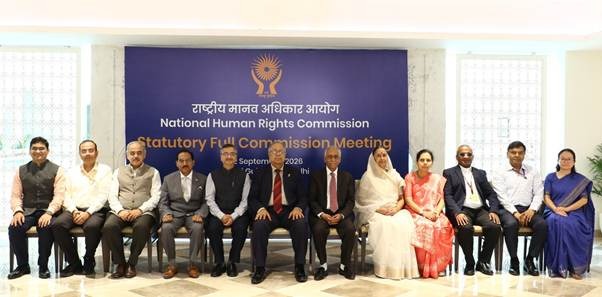
NEW DELHI: Doruvu Paul Jagan Babu – Assistant Chief Editor: The National Human Rights Commission (NHRC), India, has called for greater coordination among the country’s statutory commissions to strengthen the protection of human rights and ensure welfare measures reach vulnerable and marginalised communities at the grassroots level.
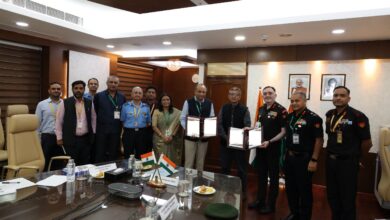
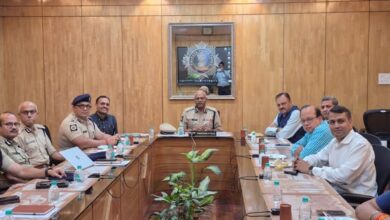
Chairing the Statutory Full Commission meeting with representatives of seven deemed members in New Delhi on Tuesday, NHRC Chairperson Justice V. Ramasubramanian emphasised that the commissions, whose chairpersons are ex-officio members of the NHRC, could achieve greater impact through coordinated functioning.
Nodal Officer, joint investigations proposed
Justice Ramasubramanian suggested appointing a Nodal Officer to coordinate among the National Commissions and said the NHRC could explore extending investigative support to commissions lacking adequate machinery.

Participants called for joint fact-finding, research, awareness campaigns, outreach programmes and measures to avoid duplication of cases. Suggestions also included joint investigations, coordinated bench sittings and stronger State Commissions.
Focus on vulnerable communities
The meeting highlighted concerns affecting women, children, persons with disabilities, minorities, Scheduled Castes and Scheduled Tribes, besides bonded labourers, older persons and manual scavengers.

The NHRC Chairperson expressed concern over inadequate rehabilitation of mentally ill women engaged in begging, and urged attention to gaps in policies concerning persons with disabilities, including social security and insurance coverage.
The National Commission for Backward Classes also called for a policy for rehabilitation of mentally ill persons abandoned by families and forced into begging.
Women and children’s rights highlighted
NCW Chairperson Vijaya K. Rahatkar outlined public hearings, awareness initiatives and anti-human trafficking campaigns, besides youth programmes on POSH, POCSO and cybercrime.
The NCPCR highlighted its rescue and rehabilitation efforts involving more than 8,000 children and called for urgent action against the circulation of child sexual abuse material online.
Technology and grievance redressal
Representatives stressed the importance of electronic grievance systems, real-time tracking and early-warning mechanisms. The NCSC highlighted its e-grievance monitoring portal, while the NCST stressed suo motu cases and identification of recurring and overlapping issues.
The NCM called for stronger electronic grievance mechanisms, coordinated research and interfaith dialogue, while noting that only 18 States currently have State Minority Commissions.
Capacity building key to effective protection
NHRC Member Justice (Dr.) Bidyut Ranjan Sarangi stressed that coordinated efforts should ensure benefits reach the grassroots. Officials also underlined the need for adequate staff, infrastructure and effective implementation of SOPs.
The NHRC will begin a monthly training programme for investigation officers from September 30, with further expansion planned.
The meeting concluded with a renewed commitment to collective action, institutional cooperation and stronger human-rights protection across India.