

Yemen and the Red Sea Corridor Enter a New Phase of Volatility
Renewed fighting along Yemen’s western coast is putting civilians, regional security and a vital international shipping route under growing pressure
 Samir Singh 'Bharat'-Editor-in-Chief
Send an email
3 weeks ago
Samir Singh 'Bharat'-Editor-in-Chief
Send an email
3 weeks ago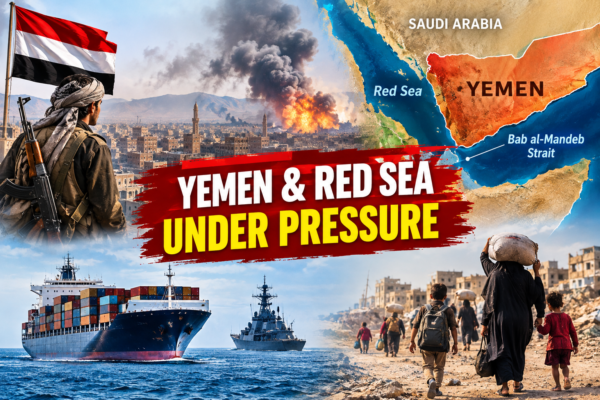
WAR-REPORT : SANA’A/RED SEA: Yemen and the wider Red Sea maritime corridor have entered a highly volatile phase as renewed fighting between Houthi forces and forces aligned with Yemen’s internationally recognised government has expanded across several fronts. The escalation is unfolding alongside renewed Saudi-Houthi hostilities and a sharp deterioration in security around the Bab al-Mandeb Strait, one of the world’s strategically important maritime chokepoints.
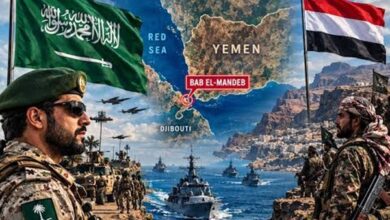
The latest developments mark a significant deterioration from the relative reduction in large-scale fighting that followed the 2022 truce. On September 10, United Nations Special Envoy for Yemen Hans Grundberg told the UN Security Council that the risk of a return to large-scale conflict had become a reality, with fighting intensifying particularly along Yemen’s western coast. He said Houthi forces had launched a major offensive that included the port city of Mokha, located roughly 75 kilometres from the Bab al-Mandeb Strait.
The consequences extend well beyond Yemen. The Red Sea links the Suez Canal with the Bab al-Mandeb Strait and the Gulf of Aden, forming a major maritime connection between Europe, Asia and the Middle East. The International Maritime Organization describes the Red Sea as a critical maritime corridor for international trade, while warning that conflict, piracy and organised crime threaten freedom of navigation and maritime commerce.
Fighting Spreads Along Yemen’s Western Coast
The immediate driver of the current crisis is the renewed military offensive by the Houthis, also known as Ansar Allah, against forces supporting Yemen’s internationally recognised government.
According to the UN, fighting has intensified across multiple frontlines, including the western coast. The UN has also reported clashes in Marib, Lahj, Al-Jawf, Hajjah, Al-Bayda and Saada, while government forces have launched a counteroffensive. The conflict therefore extends beyond a single battlefield and involves several geographically separated areas.

The western coast is particularly important because of its proximity to the Red Sea and Bab al-Mandeb. Control of territory in this region can provide military forces with access to coastal infrastructure and strategic positions overlooking maritime routes.
Reports in September said Houthi forces had captured additional territory along the Red Sea coast and moved closer to the Bab al-Mandeb area. Al Jazeera, citing government sources and witnesses, reported on September 11 that the Houthis had taken control of Yemen’s Red Sea coast and moved onto islands in the Bab al-Mandeb Strait.
The situation remains fluid, however, and battlefield claims should be treated carefully because control of territory can change rapidly during an active conflict.

Why Bab al-Mandeb Matters to the World
The importance of Yemen’s conflict is closely connected to geography.
The Bab al-Mandeb Strait is the narrow maritime passage connecting the Red Sea with the Gulf of Aden and, ultimately, the Indian Ocean. Ships travelling between Europe and Asia can use this route to reach the Suez Canal rather than taking the much longer journey around the southern tip of Africa.
That geography makes any prolonged instability around the strait an international concern.
The IMO has repeatedly warned that attacks on commercial shipping threaten seafarers, international commerce and global supply chains. In July, the organisation described the Red Sea as a critical maritime corridor and warned that continued attacks could disrupt commercial routes and undermine freedom of navigation.
The UN has similarly warned that developments around Bab al-Mandeb have implications far beyond Yemen. At the Security Council on September 15, Assistant Secretary-General Khaled Khiari said the situation around the strait had become increasingly volatile. He noted that commercial shipping flows appeared unaffected at that time, while warning that the Houthi advance was contributing to market concerns.
This distinction is important. A maritime corridor can remain technically open while still becoming more expensive and risky to operate in. Shipping companies may respond to threats by changing routes, increasing insurance coverage, modifying schedules or introducing additional security measures.
The Human Cost Is Already Severe
For Yemen’s civilian population, the renewed fighting is occurring on top of an already prolonged humanitarian crisis.
The United Nations estimated earlier in 2026 that more than 21 million people in Yemen would require humanitarian assistance during the year. The same UN country report estimated that 18.3 million people were experiencing acute food insecurity and that 2.2 million children under five were suffering from acute malnutrition. Only about 59 percent of health facilities were reported to be fully functional.
The renewed fighting has added another layer of displacement.
On September 22, the UNHCR reported that more than 130,000 people had fled their homes since the beginning of September as fighting spread across multiple frontlines. The UN said at least 110 casualties had been reported, including 28 deaths, although the figures could increase as information from affected areas becomes available.
Earlier, the International Organization for Migration reported that displacement had reached 85,818 people by September 13, including more than 82,000 people displaced since the beginning of that month. More than 2,000 people had crossed the Red Sea and reached Djibouti, according to the IOM.
These figures demonstrate how quickly a military escalation can become a humanitarian emergency.
Families forced to leave their homes require shelter, food, water, medical care and protection. When roads are damaged or blocked, humanitarian organisations face additional difficulties reaching affected communities.
Food Security Adds Another Layer of Risk
Yemen is particularly vulnerable to disruptions in trade because of its dependence on imports.
A UN country report published in June said Yemen imports approximately 90 percent of its food. This means instability affecting ports, roads, shipping or foreign exchange can have consequences for food availability and prices.
Food insecurity was already severe before the latest escalation.
In government-controlled areas, an FAO-WFP-UNICEF assessment published in June estimated that approximately 47 percent of the population was facing high levels of acute food insecurity. Around five million people were experiencing Crisis-level food insecurity or worse, including 1.4 million people facing Emergency conditions.
A prolonged disruption to maritime trade could therefore affect more than international shipping companies. It could influence the cost and availability of essential goods for populations already facing poverty and food insecurity.
The Shipping Industry Faces Multiple Risks
The danger to maritime traffic is not limited to one type of attack.
Ships operating through the Red Sea and Gulf of Aden face risks associated with missiles, drones, armed attacks, mines, piracy and broader regional instability.
The IMO reported in July that it had recorded 24 attempted or actual piracy and armed-robbery incidents against ships in the Red Sea and Gulf of Aden region during the preceding three months. The organisation also appealed for the release of 44 seafarers held captive following separate piracy incidents.
In August, the IMO condemned an attack on the cargo ship TIHAMAH after the vessel was hit by a projectile off the coast of Al Mokha, Yemen. Several seafarer fatalities were confirmed. The organisation said attacks on shipping were threatening global supply chains and called for the protection of seafarers.
Human Rights Watch also reported in September that several recent attacks on commercial vessels in the Red Sea and Gulf of Aden could amount to war crimes, based on its assessment of available evidence. Such assessments are distinct from a judicial determination and remain matters for appropriate legal investigation and proceedings.
Saudi Arabia Drawn Deeper Into the Crisis
The latest escalation has also intensified the direct confrontation between Saudi Arabia and the Houthis.
Houthi attacks on Saudi territory and Saudi military operations against Houthi positions have added another cross-border dimension to the conflict.
Reports in September said Houthi attacks targeted areas in southern Saudi Arabia, including energy-related infrastructure. Saudi authorities reported casualties and damage, while the Houthis described some of their operations as targeting Saudi facilities.
Reuters reported on September 17 that Saudi Arabia and Houthi forces had exchanged attacks and that Saudi airstrikes had targeted areas of Yemen. The report also said more than 100,000 Yemenis had been displaced amid the latest fighting.
On September 22, Turkey, Egypt, Pakistan and Saudi Arabia issued a joint statement expressing concern over the attacks and emphasising the importance of safe navigation. The countries called dialogue and diplomacy the sustainable path toward resolving the regional crisis.
A Conflict With Regional and International Dimensions
The Yemen conflict cannot be understood solely as a domestic civil war.
The Houthis have developed relationships with Iran and are widely described by governments and international analysts as an Iran-aligned movement. At the same time, Saudi Arabia has supported forces aligned with Yemen’s internationally recognised government.
The UN Security Council has previously documented allegations against the Houthis involving attacks on civilians and civilian infrastructure, recruitment and use of children, obstruction of humanitarian assistance and attacks on commercial shipping.
However, Yemen’s conflict also contains local political, tribal, economic and territorial dynamics. Reducing the entire conflict to a simple regional confrontation between Iran and Saudi Arabia risks overlooking the domestic issues that have sustained Yemen’s political fragmentation.
That complexity is one reason a durable political settlement has remained difficult.
The Danger of a Wider Maritime Crisis
The current situation also comes at a time when another major Middle Eastern maritime chokepoint, the Strait of Hormuz, has experienced severe disruption.
The simultaneous pressure on two strategic waterways increases concerns for energy markets, shipping insurance, transportation costs and international supply chains.
The UN Security Council has warned that prolonged disruption to major maritime corridors can affect global energy markets, food security and economies outside the immediate conflict zone.
For countries that depend heavily on imported energy and commodities, shipping disruptions can have indirect economic consequences. Higher freight rates and insurance premiums can eventually influence the price of goods transported through affected routes.
The precise economic impact, however, depends on the duration and geographic spread of the disruption, as well as the ability of shipping companies to use alternative routes.
Humanitarian Access Is Another Major Concern
Aid organisations are facing their own security challenges.
The United Nations said in September that more than 22 million people across Yemen required humanitarian assistance and that restrictions, insecurity and the detention of UN personnel were making humanitarian operations increasingly difficult. The UN reported that 73 UN personnel remained arbitrarily detained by Houthi de facto authorities as of September 18.
When humanitarian workers cannot safely move through conflict areas, the impact is felt by civilians who depend on food, medicine, water and other essential assistance.
This makes protection of humanitarian personnel and facilities a central issue alongside military developments.
What Happens Next?
The immediate trajectory of the Yemen conflict remains uncertain.
Three developments will be particularly important to watch.
The first is the military situation along the western coast. Continued Houthi advances toward Bab al-Mandeb could increase pressure on maritime traffic and raise the possibility of additional regional military involvement.
The second is the response from Saudi Arabia and other regional actors. Expanded cross-border attacks could transform the present escalation into a broader regional confrontation.
The third is whether diplomatic channels can prevent the collapse of the political process. The UN continues to call for restraint and engagement with its Yemen-led peace efforts. The Special Envoy has repeatedly stressed the importance of a negotiated political solution rather than allowing military developments to determine Yemen’s future.
The Search for a Political Solution
The central challenge is that Yemen’s conflict has multiple layers.
There are disputes over national political authority, territorial control, economic resources, military power and the future structure of the Yemeni state. Regional powers have also become involved, while the maritime dimension has internationalised the conflict further.
A sustainable settlement would therefore require more than a temporary reduction in fighting.
It would need mechanisms capable of addressing political representation, security arrangements, economic governance, humanitarian access and the status of contested territories. It would also require guarantees that Yemen’s territory would not continue to serve as a platform for attacks threatening neighbouring countries or international shipping.
The UN has continued to advocate a Yemeni-led political process. At the Security Council, UN officials have urged all parties to prevent further escalation, respect navigational rights and engage constructively with diplomatic efforts.
A Crisis That Extends Beyond Yemen
The renewed fighting demonstrates why Yemen remains strategically important despite being one of the world’s poorest countries.
A conflict concentrated in a relatively small geographical area can have consequences far beyond its borders when it occurs beside a major international shipping route.
The Red Sea connects major economic regions. The Bab al-Mandeb links the Red Sea with the Gulf of Aden. Ports along Yemen’s western coastline are important for both civilian trade and humanitarian operations.
Consequently, instability in Yemen can affect three interconnected areas at the same time: civilian life inside the country, regional security across the Middle East, and international maritime commerce.
The latest escalation has already produced displacement, casualties and renewed fears for commercial shipping. The UN and IMO are warning about the consequences for civilians, seafarers and global trade, while regional governments are seeking to protect their security interests.
The coming weeks will determine whether the current escalation remains a concentrated phase of Yemen’s long-running conflict or develops into a broader regional and maritime crisis.
For Yemen’s civilians, however, the consequences are already immediate. Families are leaving their homes, humanitarian needs are rising and access to essential services remains fragile. For international shipping, the central concern is maintaining safe passage through a waterway on which global commerce depends.
The wider lesson is that the security of a maritime corridor cannot be separated from the stability of the countries surrounding it. A secure Red Sea ultimately requires both protection of freedom of navigation and progress toward a political settlement in Yemen.
Source note: This article reflects developments reported and documented through 23 September 2026. Battlefield conditions and casualty, displacement and territorial-control figures can change rapidly. Claims by conflict parties have been distinguished from information attributed to the United Nations, IMO and other reporting organisations.