


The Vvaan: Can Bihar Turn Sidharth Malhotra’s Film Into a Surprise Success?
The September 25 release is drawing unusual attention from Bihar and eastern India, while advance bookings remain measured in major urban markets
 Samir Singh 'Bharat'-Editor-in-Chief
Send an email
3 weeks ago
Samir Singh 'Bharat'-Editor-in-Chief
Send an email
3 weeks ago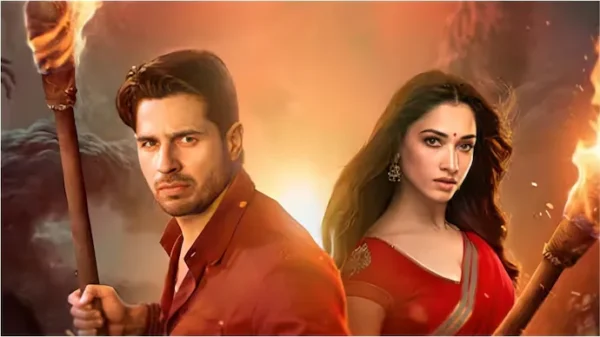
Opinion : Sidharth Malhotra and Tamannaah Bhatia’s The Vvaan: Force of the Forrest arrives in theatres on September 25 amid an interesting box-office situation. The film does not appear to be entering the market with the kind of nationwide advance-booking frenzy normally associated with a major Bollywood event release. Yet, beneath the relatively measured national response, a different pattern has emerged: Bihar, parts of Jharkhand and eastern Uttar Pradesh are showing meaningful interest in the film.
That regional response could become one of the most important stories surrounding The Vvaan.
The film combines folklore, mystery, fantasy and elements of Bihar’s cultural traditions, with Chhath Puja forming an important part of its promotional identity. The story is inspired by folklore associated with the Van Devi Temple in Bihta, near Patna, bringing a relatively local cultural setting into a mainstream Hindi film.
Advance-booking data available before release also showed a mixed picture. NDTV Profit reported on September 24 that the film had recorded around ₹2.51 crore in advance bookings across India, with more than 100,000 tickets sold across thousands of shows. At the same time, Bollywood Hungama reported that national-chain sales were comparatively limited, while noting stronger movement in mass-market territories such as Bihar and Uttar Pradesh.
The numbers suggest that The Vvaan may not fit the conventional Bollywood opening formula.

Instead of depending entirely on metropolitan multiplex audiences, the film appears to be developing a different kind of regional curiosity.
Bihar Could Become the Film’s Defining Market
The most interesting aspect of The Vvaan is the cultural connection between the film and Bihar.
Bollywood has frequently used Bihar as a setting, but films that place Bihar’s religious traditions, folklore and local cultural atmosphere at the centre of their narrative remain relatively uncommon in mainstream Hindi cinema.

The Vvaan is attempting something more specific.
The film draws inspiration from the Van Devi Temple in Bihta, an area connected with local legends and beliefs. The temple has attracted renewed attention because of the film, with reports describing its association with folklore involving a sacred forest and traditions surrounding the site after sunset.
That gives the film something beyond the usual star-driven promotional material.
It gives audiences a sense of recognition.
For viewers from Bihar, Jharkhand and eastern Uttar Pradesh, seeing familiar cultural references in a large Hindi production can create curiosity even before they know whether the film itself will work.
That curiosity is commercially important.
A viewer may not necessarily book a film because of its lead actor alone. They may book it because the film reminds them of their culture, traditions, hometown, religious practices or childhood experiences.
That is potentially the space in which The Vvaan is finding an audience.
The Chhath Puja Factor
The biggest cultural element associated with the film is Chhath Puja.
The makers released the song Chhathi Maiya, featuring Tamannaah Bhatia, as part of the film’s promotional campaign. The song presents Chhath-related imagery and attempts to bring the festival’s devotional atmosphere into mainstream Hindi cinema.
The film’s connection with Chhath has also attracted cultural discussion.
India Today reported that people from Bihar and Jharkhand saw elements of authenticity in the song while also pointing out cinematic liberties. The report noted that Chhath is a four-day festival involving fasting, discipline, prayers and offerings to the setting and rising Sun, while some of these aspects are presented differently or less prominently in the film’s song.

This is an important point.
Cultural representation in cinema is rarely a simple question of whether something is “correct” or “incorrect.” Filmmakers have to translate lived traditions into a visual narrative designed for a mass audience.
The challenge is to preserve enough cultural detail that people familiar with the tradition recognise themselves in it, while making the material accessible to viewers who may have little knowledge of it.
The Vvaan is attempting that balance.
Whether audiences consider the result authentic, stylised or overly cinematic may become part of the film’s post-release discussion.
Bihar’s Audience May Be Looking for Recognition
There is another reason the Bihar response is interesting.
Cinema is not only entertainment. It is also a form of cultural representation.
When audiences see their language, festivals, landscapes, customs and local stories represented on a large screen, the experience can become more personal.
For many viewers in Bihar, Chhath is not simply a decorative festival sequence. It is connected with family, faith, community and tradition.
That emotional familiarity can potentially provide a film with a stronger regional connection than a conventional urban action or romantic drama.
The question is whether that connection will translate into sustained ticket sales after the opening day.
Advance booking can indicate initial curiosity, but it cannot determine the entire theatrical journey.
Word of mouth will matter.
If audiences respond positively to the story, performances and cultural representation, regional support could continue beyond the first weekend.
If viewers find the film disconnected from the traditions it attempts to represent, the same cultural positioning could become a point of criticism.
Patna and the Mass-Market Connection
The reported interest in Patna is particularly significant.
Patna represents an important urban centre within Bihar, but its moviegoing audience is not identical to audiences in Mumbai, Delhi or Bengaluru.
A film connected directly to local folklore and cultural traditions can have a different promotional advantage there.
The Vvaan team itself has recognised this connection.
Sidharth Malhotra and Tamannaah Bhatia visited Patna ahead of the release and participated in cultural and religious activities, including a visit to the Van Devi Temple and a reported Kosi Bharna ritual associated with Chhath.
Such promotional activities are more than conventional celebrity appearances.
They connect the actors with the geographical and cultural identity of the film.
For a movie based on Bihar-related folklore, promoting the film in Bihar allows the marketing campaign to become part of the story itself.
Urban Markets Tell a Different Story
The picture is different in major metropolitan markets.
According to NDTV Profit’s September 24 report, Delhi led the reported advance-booking figures with approximately ₹23.74 lakh, followed by Mumbai at around ₹20.10 lakh.
Bollywood Hungama, meanwhile, reported that The Vvaan had sold around 15,000 tickets in the three major national chains as of September 24 afternoon and projected closure around the 30,000-ticket mark for those chains. The publication also described the response as stronger in mass-market territories, particularly Bihar and Uttar Pradesh.
These numbers illustrate the difference between urban multiplex interest and regional single-screen or mass-market interest.
A film does not necessarily need identical demand in every territory.
Different films appeal to different audiences.
A movie centred on a metropolitan relationship, corporate life or urban comedy may naturally find greater resonance in Mumbai, Delhi and Bengaluru.
A film rooted in Bihar folklore and Chhath traditions may generate a different pattern.
That is not necessarily a weakness. It is a different market structure.
The Film’s Regional Identity Could Be Its Biggest Strength
The interesting question is whether The Vvaan should be viewed primarily as a Bollywood film starring Sidharth Malhotra and Tamannaah Bhatia or as a folklore-driven film with a strong Bihar identity.
The answer may influence its commercial performance.
If the film is marketed primarily around the stars, audiences will judge it against other star-led Bollywood productions.
If it is understood as a distinctive folklore fantasy rooted in Bihar, audiences may approach it with different expectations.
The second identity may prove particularly important because the film’s cultural subject gives it something immediately recognisable.
Sidharth Malhotra’s presence brings mainstream visibility, while Tamannaah Bhatia’s involvement adds another familiar face to the project.
But the cultural setting is what differentiates the film.
Sidharth Malhotra’s Box-Office Context
The release also arrives at an important point in Sidharth Malhotra’s career.
Every new theatrical release brings expectations for an actor, particularly when the project is built around a lead role.
However, the pressure surrounding a particular film should not be reduced entirely to its opening-day collection.
A film’s theatrical performance depends on many variables, including production scale, release competition, screen allocation, ticket pricing, genre, reviews, audience word of mouth and the strength of the overall market.
For The Vvaan, the unusual regional response could therefore be particularly valuable.
A strong opening in Bihar and eastern India could create an audience base that complements the film’s performance elsewhere.
But sustained success would still depend on what audiences think after watching the film.
Advance Booking Is Only the Beginning
One of the biggest mistakes in box-office analysis is treating advance booking as a final verdict.
Advance booking measures anticipation among people who purchase tickets before watching the film.
It does not fully measure walk-in audiences, last-minute bookings or post-release word of mouth.
This is especially relevant for films aimed at broader mass audiences.
Some viewers may not book tickets days in advance.
They may decide to watch a film after hearing reactions from friends, relatives or local audiences.
That means The Vvaan could potentially have a different theatrical pattern from a heavily urbanised multiplex film.
The first day will provide useful information, but the first weekend may offer a clearer picture.
The second weekend could be even more revealing.
Cultural Cinema Can Create a New Audience Conversation
Another important development is the growing presence of regional cultural themes in mainstream Indian cinema.
For many years, Bollywood frequently drew from broad national themes while treating specific regional cultures as secondary settings.
That approach is changing.
Audiences increasingly expect cultural details to feel meaningful rather than merely decorative.
The interest surrounding The Vvaan reflects this broader development.
The film has brought attention to a relatively lesser-known temple near Patna and to cultural traditions associated with Bihar. NDTV and Indian Express both reported on the Van Devi Temple and the folklore that inspired the project.
This creates an unusual promotional effect.
The movie is not only selling a fictional story.
It is also introducing audiences to a real cultural landscape.
But Representation Comes With Responsibility
The greater the cultural emphasis, the greater the responsibility to represent it thoughtfully.
Chhath Puja has a deep religious and cultural significance for millions of people.
Therefore, cinematic representation will naturally attract closer scrutiny from audiences familiar with the festival.
The discussion around Chhathi Maiya already demonstrates this.
India Today reported that people from Bihar and Jharkhand appreciated aspects of the devotional atmosphere while also identifying differences between the cinematic sequence and actual Chhath practices.
That conversation is not necessarily harmful to the film.
In fact, it demonstrates that the film has succeeded in creating discussion around the tradition.
The important question is whether that discussion ultimately encourages audiences to engage with the film’s story or becomes dominated by arguments about representation.
Competition Will Also Matter
The Vvaan is not releasing in isolation.
The theatrical environment in which a film opens is just as important as its own content.
The availability of screens, competing releases, audience preferences and the timing of subsequent films can influence how long a movie remains commercially viable.
Bollywood Hungama noted that The Vvaan faces competition from Drishyam 3 in its second week.
That means the film has a relatively important initial window to establish itself.
If the opening audience response creates strong word of mouth, the film may benefit from sustained interest before major competition becomes a larger factor.
Again, this is not a prediction of the final result; it is simply a reflection of how theatrical competition can affect a film’s run.
Another Film Enters the Chhath Conversation
The cultural relevance of Chhath has also extended beyond The Vvaan.
Reports have noted that Yeh Prem Mol Liya has also used Chhath-related aesthetics in one of its songs, creating an interesting comparison between the two films’ approaches to the festival.
This is significant because it suggests that filmmakers increasingly see value in regional cultural imagery.
However, representation is not merely about putting a festival into a song.
The strongest cultural storytelling generally connects the tradition with characters, relationships and the larger narrative.
That is ultimately what audiences will assess.
What Will Decide The Vvaan?
The film’s box-office journey will likely depend on several factors.
First, the strength of the opening response.
Advance bookings provide an early indication, but actual theatre occupancy will reveal the first major audience response.
Second, Bihar and eastern India’s performance.
If the regional interest visible in advance sales translates into sustained footfall, the film could develop a meaningful territory-specific audience.
Third, word of mouth.
A folklore-driven film depends heavily on whether viewers recommend it after watching.
Fourth, cultural reception.
The manner in which Chhath and Bihar’s traditions are incorporated into the narrative will likely remain an important discussion point.
Fifth, competition.
The film’s ability to maintain screens and audience attention will matter as other major releases arrive.
A Different Kind of Bollywood Experiment
Perhaps the most interesting aspect of The Vvaan is that it represents a different kind of Bollywood experiment.
It is not simply asking whether Sidharth Malhotra can open a film.
It is asking whether a mainstream Hindi film can take a deeply regional cultural setting and turn it into a nationwide cinematic experience.
That is a more ambitious question.
The film’s early numbers suggest that its regional identity is generating measurable curiosity, particularly in areas connected to the cultural world portrayed on screen. At the same time, national-chain numbers show that the response is not uniform across India.
That contrast makes the release particularly interesting to watch.
Opinion
The Vvaan: Force of the Forrest enters theatres on September 25 with a box-office story that is already different from the conventional Bollywood template.
The film’s advance booking has been described as measured overall, but Bihar, Uttar Pradesh and other eastern markets have shown signs of stronger curiosity. The movie’s connection with Bihar folklore, the Van Devi Temple in Bihta and Chhath Puja gives it a cultural identity that distinguishes it from many mainstream releases.
Whether that identity can translate into sustained commercial success will depend on what happens after audiences enter theatres.
For Sidharth Malhotra and Tamannaah Bhatia, the film offers an opportunity to connect with audiences through a story that moves beyond conventional urban Bollywood settings.
For Bihar, the film represents something else: the arrival of local folklore and a major regional festival into a mainstream cinematic space.
And for the Hindi film industry, The Vvaan provides an interesting case study in how cultural specificity can influence audience curiosity.
The most important story may therefore not be whether Mumbai or Bihar “wins” the advance-booking race.
It may be whether a film rooted in one region can create a larger national audience without losing the cultural identity that made it distinctive in the first place.
As theatres open on September 25, the answer will begin to emerge from the audience itself.