

Dhanshristi Promotes Financial Inclusion and Women’s Entrepreneurship in Raniganj
Awareness Programme Highlights Digital Finance, Responsible Borrowing and Small-Business Loan Options for Women and Micro-Entrepreneurs

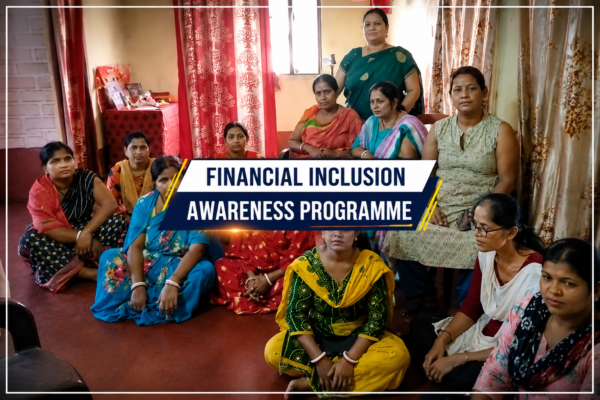
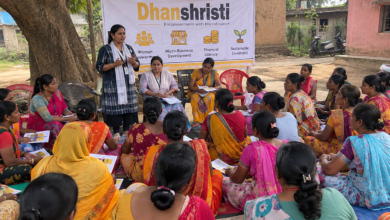
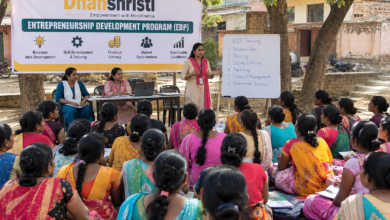
Raniganj, West Bengal | Special Correspondent: Dhanshristi Bhavishya Nidhi Trust organized a financial inclusion awareness programme in Raniganj, West Bengal, with the objective of empowering women, promoting self-employment and creating greater awareness about financial options available to small business owners, aspiring entrepreneurs and micro-enterprises.
The programme brought together local women who participated enthusiastically in discussions covering small-business finance, self-employment opportunities, digital financial services, loan procedures, KYC requirements, documentation, repayment responsibilities and the importance of making informed financial decisions.
Rather than focusing solely on borrowing, the programme emphasized the broader concept of financial inclusion—ensuring that individuals understand how formal financial services work and can make responsible decisions regarding savings, credit, digital payments and business finance.
During the programme, Poonam Upadhyay, Executive Director of Dhanshristi, addressed the participants and discussed the importance of financial awareness for women who wish to establish or expand small businesses. She explained that lack of initial capital can often become a major challenge for women with business skills and entrepreneurial ambitions. In such circumstances, awareness of legitimate financial channels and available credit options can help potential entrepreneurs evaluate suitable opportunities.


Dhanshristi Introduces Instant P2P Loan Model Service
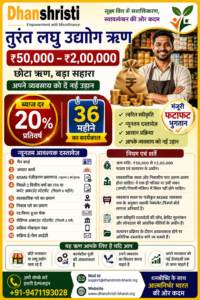
A major focus of the programme was the introduction of the “Dhanshristi Instant P2P Loan Model Service.” According to information shared by the organization, the service has been initiated with the objective of connecting small traders, self-employed youth, startups and micro-entrepreneurs with potential financial assistance options.
Under the proposed model, eligible applicants may have access to Small Business Loan facilities ranging from ₹50,000 to ₹2,00,000, subject to eligibility assessment and approval by the concerned financial institution.
The organization stated that the loan-processing model aims to facilitate completion of the process in approximately 3 to 4 working days in eligible cases. However, the actual approval timeline can vary depending on documentation, KYC verification, credit assessment, applicant profile and the internal procedures of the concerned lender.

Importantly, the programme clarified that the availability of a loan option does not mean that every applicant will automatically receive financing. Final approval, interest rates, applicable charges, tenure, loan amount and disbursement remain subject to the policies, eligibility criteria, credit assessment and regulatory requirements of the concerned bank, NBFC or other authorized lender.
Digital Application Process to Make Access More Convenient
According to Dhanshristi, the proposed loan facility is designed around a digital application and verification process. Eligible applicants may apply through the DhanSrishti digital platform or through the official digital channels of the concerned partner bank or NBFC, wherever applicable.
During the application process, applicants may generally be required to provide information relating to their identity, business, income and banking details.
The move toward digital financial services can make access to financial products more convenient and potentially reduce the need for repeated physical visits. At the same time, participants were advised to remain cautious while using digital financial services and to ensure that applications are submitted only through authorized websites, official mobile applications or verified digital platforms.
Digital convenience, the programme emphasized, should always be accompanied by digital responsibility.
How Instant Eligibility Assessment Works
The programme also explained the concept of an instant eligibility assessment.
Once an application is submitted, the concerned financial institution may evaluate several aspects of the applicant’s financial and business profile. These may include income, business status, financial records and, wherever applicable, credit history or credit score.
Applicants who already meet certain criteria or have a pre-approved relationship with a lender may receive an initial eligibility assessment relatively quickly.
However, the programme stressed an important distinction: instant eligibility does not necessarily mean instant or guaranteed loan approval.
Final approval remains subject to the lender’s verification procedures, documentation, KYC requirements, credit assessment, risk policies and other applicable conditions.
This distinction is particularly important for first-time borrowers who may otherwise misunderstand the meaning of pre-eligibility or preliminary approval.
Digital KYC and Document Verification
Another important component discussed during the programme was digital KYC and document verification.
Depending on the requirements of the lender, applicants may be required to upload documents such as:
- Aadhaar card or other officially accepted identity documentation
- PAN card
- Bank statements
- Income-related information
- Business-related documents, wherever required
- Other documents prescribed by the lender
In certain cases, video KYC or another digital verification process may also be required in accordance with regulatory and institutional requirements.
Participants were advised to ensure that all information submitted during the application process is accurate and genuine. Any mismatch between application details and supporting documents may delay the process or affect eligibility.
The organizers also highlighted the importance of protecting personal financial information. Applicants should not share OTPs, UPI PINs, ATM PINs, passwords or other confidential banking credentials with unauthorized individuals.
Loan Approval and Disbursement
After submission of the application, the concerned lender may conduct document verification, KYC checks and credit assessment.
If the applicant meets the lender’s eligibility criteria and the application is approved, the sanctioned amount may be transferred directly to the applicant’s bank account according to the lender’s established procedures.
DhanSrishti stated that the proposed model aims to facilitate the process within approximately 3 to 4 working days in eligible cases. However, actual processing time may vary depending on the completeness of documents, KYC verification, credit assessment and the procedures followed by the concerned financial institution.
Therefore, applicants should consider the stated timeline as a potential processing objective rather than a guaranteed approval or disbursement period.
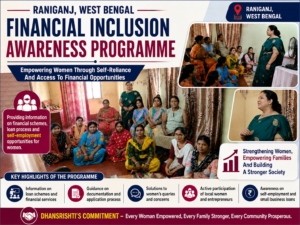
Women’s Economic Empowerment Through Self-Employment
Women’s economic empowerment remained one of the central themes of the Raniganj programme.
Addressing the participants, Poonam Upadhyay highlighted the importance of financial independence in strengthening women’s role within families and communities.
Economic empowerment is not limited to earning an income. It can also contribute to greater participation in household financial decisions, increased confidence and improved ability to plan for the future.
A small business started at the household or community level can potentially develop into a sustainable source of income when supported by proper planning, market understanding, financial discipline and customer-focused operations.
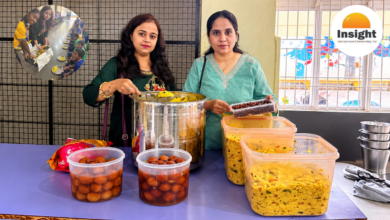
Participants were encouraged to explore business opportunities based on their skills and local demand. Potential areas may include tailoring and embroidery, homemade products, food processing, small retail businesses, handicrafts, personal services, digital services and other locally relevant activities.
However, the programme also emphasized that business selection should be based on realistic assessment rather than simply on the availability of credit.
Before taking a loan, an entrepreneur should consider market demand, competition, operating costs, expected income, business risks and repayment capacity.
Borrowing Is a Responsibility, Not Simply an Opportunity
One of the most important messages of the awareness programme was that receiving a loan is not, by itself, a measure of financial success.
A loan becomes productive when it is used appropriately and when the borrower has the capacity to repay it according to the agreed schedule.
For example, an entrepreneur considering a loan of ₹50,000 or ₹2,00,000 should first estimate the expected income from the proposed business. The entrepreneur should then determine whether that income can reasonably support loan repayments, interest and other business expenses.
The programme therefore connected financial inclusion with financial literacy.
Understanding how much to borrow, why to borrow, where to invest the money and how to repay it can be just as important as obtaining access to credit.
Participants Raise Questions About Loans and Business Finance
The programme was designed as an interactive awareness session rather than merely a one-way presentation.
Women participants were given an opportunity to raise questions concerning loan eligibility, required documents, application procedures, business planning, digital verification and repayment responsibilities.
The discussions highlighted the need for applicants to understand the complete terms of any financial product before proceeding.
Participants were encouraged to carefully examine factors such as:
- Interest rate
- Processing fee
- Other applicable charges
- Loan tenure
- Repayment schedule
- Late-payment charges
- Total repayment obligation
- Eligibility requirements
- KYC requirements
- Conditions governing disbursement
The organizers emphasized that prospective borrowers should not rely solely on promotional messages while evaluating financial products. Official documents and applicable terms should be carefully reviewed before making a financial commitment.
Understanding the Broader Meaning of Financial Inclusion
Financial inclusion is much broader than opening a bank account or obtaining a loan.
It includes the ability of individuals and communities to access and responsibly use formal financial services such as banking, savings, insurance, credit, digital payments and other financial products.
For women, financial inclusion can have a particularly meaningful impact.
When women understand how bank accounts, savings instruments, digital payments and credit facilities operate, they may be better positioned to participate in household and business-related financial decisions.
However, access without understanding can create risks. Financial literacy is therefore an essential part of meaningful financial inclusion.
A borrower should know not only how to obtain credit, but also how much credit is appropriate, what the actual cost of borrowing is, how repayments will be made and what consequences may arise from delayed repayment.
Small Businesses Can Support Local Employment
A micro-business can begin as an individual income-generating activity but may eventually create opportunities for others.
For example, a woman starting a home-based food business may later require assistance with packaging, delivery or production. A tailoring enterprise may grow and employ additional workers. A small retail operation may create local employment as its customer base expands.
In this way, micro and small businesses can contribute to the local economy.
Nevertheless, capital alone cannot guarantee business success.
Entrepreneurs also need market knowledge, product quality, customer service, bookkeeping, cost control, digital payment awareness and financial discipline.
The awareness programme sought to communicate this broader perspective to participants.
Importance of Regular Financial Awareness Campaigns
The enthusiastic participation of women in the Raniganj programme also highlighted the continuing need for financial awareness initiatives at the local level.
In many rural and semi-urban communities, potential entrepreneurs may know about banking services but may not fully understand the differences between financial products, associated costs, eligibility conditions and repayment obligations.
Regular awareness programmes can help bridge this information gap.
Such initiatives can encourage individuals to ask the right questions before taking a financial decision and to verify information through official sources.
For women considering self-employment, financial awareness can also help transform entrepreneurial interest into more structured planning.
Digital Finance Requires Digital Safety
The increasing use of digital lending and online financial services offers convenience, but it also makes digital safety increasingly important.
During the programme, participants were advised to exercise caution while using online financial platforms.
Applicants should never share confidential information such as OTPs, UPI PINs, ATM PINs, internet banking passwords or other security credentials with unknown persons.
Before submitting an application, individuals should verify that the website or mobile application belongs to the authorized organization or lender.
Applicants should also be cautious if someone demands an unexplained payment or asks them to transfer money to an unofficial account. Any applicable fee or charge should be verified through official documentation and proper channels.
Dhanshristi’s Focus on Financial Awareness
According to the organization, DhanSrishti Bhavishya Nidhi Trust aims to promote awareness among women, small traders, self-employed youth and micro-entrepreneurs about available financial options.
The Raniganj programme represented a local effort toward this objective.
The focus was not merely on encouraging people to borrow money but on helping potential borrowers understand responsible credit use, financial discipline and the importance of assessing the viability of a business before taking financial commitments.
The initiative also sought to promote the idea that entrepreneurship can begin at a small scale and gradually develop with appropriate planning and responsible financial management.
From Awareness to Self-Reliance
Economic empowerment requires both opportunity and knowledge.
The Raniganj financial inclusion awareness programme brought these two aspects together by discussing self-employment, small businesses, digital financial services, loan procedures and responsible borrowing.
For women who possess entrepreneurial skills but face financial constraints, awareness of legitimate financial channels can help them explore possibilities. At the same time, responsible financial decision-making remains essential to ensure that credit becomes a productive tool rather than an additional burden.
The programme conveyed a broader message: awareness can lead to informed decisions, informed decisions can support entrepreneurship, and responsible entrepreneurship can contribute to greater self-reliance.
The participation of local women also indicated the importance of continuing such initiatives in different communities.
A Broader Vision for Women-Led Entrepreneurship
Women-led micro-enterprises have the potential to contribute to household income, local employment and community development.
When women are equipped with financial knowledge, business skills and access to legitimate financial services, they may be better positioned to evaluate entrepreneurial opportunities.
The challenge, however, is to ensure that financial access is accompanied by responsible borrowing and adequate awareness.
The Raniganj programme attempted to address this balance by combining information about loan facilities with discussions on documentation, KYC, digital safety, repayment and business planning.
Such a balanced approach can help potential entrepreneurs understand that financial empowerment is not simply about obtaining funds; it is about using financial resources wisely and sustainably.
Conclusion
The financial inclusion awareness programme organized by Dhanshristi Bhavishya Nidhi Trust in Raniganj, West Bengal, placed women’s economic empowerment, self-employment and responsible access to finance at the centre of its discussions.
The introduction of the Dhanshristi Instant P2P Loan Model Service, as explained by the organization, is intended to provide eligible small traders, self-employed individuals, startups and micro-entrepreneurs with potential access to small-business financing in the range of ₹50,000 to ₹2,00,000, subject to lender approval and applicable conditions.
The programme also highlighted the importance of digital applications, KYC, document verification, financial assessment and responsible repayment.
For women aspiring to establish or expand small businesses, the message was clear: financial opportunities become more meaningful when combined with awareness, planning and discipline.
As India continues to expand digital financial services and entrepreneurship opportunities, initiatives that improve financial literacy at the community level can play a constructive role in helping people make better-informed financial decisions.
Important Financial Disclaimer
According to the information provided by DhanSrishti Bhavishya Nidhi Trust, the organization acts as a digital application and facilitation service provider (Facilitator). Final loan approval, interest rate, fees, tenure, sanctioned amount, eligibility, KYC, credit assessment and disbursement remain subject to the policies, regulatory requirements and approval processes of the concerned bank, NBFC or other authorized lender.
The stated ₹50,000–₹2,00,000 loan range and approximately 3–4 working-day processing objective are not a guarantee of loan approval or disbursement for every applicant. Prospective borrowers should independently verify the lender, read all official terms and conditions, understand interest and applicable charges, repayment obligations and total payable amount before accepting any loan offer.