

North Korea’s Expanding Nuclear Arsenal Raises Strategic Concerns for Global Security
World War

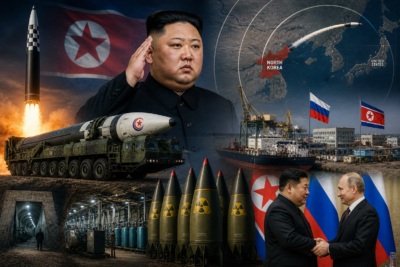
WAR-REPORT: North Korea is expected to significantly expand its nuclear weapons arsenal over the next decade, a development that is likely to reshape the global security environment and intensify concerns among major powers. Analysts warn that this expansion could challenge existing deterrence strategies and force the United States and South Korea to reassess their military preparedness.
North Korea Nuclear Expansion Raises Global Alarm
Recent estimates suggest that North Korea has the capacity to produce enough fissile material for up to 20 nuclear warheads each year. This projection, based on statements from Lee Jae Myung, indicates a rapid acceleration in North Korea’s nuclear production capabilities.
If this rate continues, North Korea could accumulate approximately 290 nuclear warheads by 2035. Such a stockpile would place it on par with France, one of the world’s leading nuclear powers. This potential parity underscores the scale of North Korea’s ambitions and the seriousness of the emerging threat.
Security experts, including analysts from the Institute for the Study of War, believe that North Korea is expanding its uranium enrichment infrastructure. These facilities are essential for producing fissile material, and their growth suggests a long-term commitment to increasing nuclear output.
The direction of North Korea’s nuclear strategy has been shaped by Kim Jong Un, who has emphasized the development of both strategic and tactical nuclear weapons. During the 9th Congress of the Workers’ Party of Korea, Kim outlined plans to produce large nuclear warheads capable of targeting distant adversaries and smaller weapons designed for regional deterrence.

This dual approach is intended to strengthen the credibility and survivability of North Korea’s nuclear deterrent. By increasing the number and variety of its weapons, North Korea reduces its reliance on a limited set of systems and enhances its ability to withstand potential preemptive strikes.
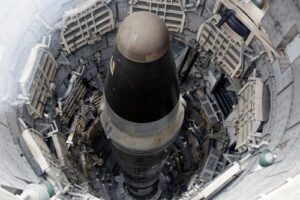
A key element of this strategy is the continued development of intercontinental ballistic missiles. North Korea has already demonstrated the ability to launch missiles capable of reaching the United States. However, questions remain about whether it can deploy these systems in sufficient numbers to overcome advanced missile defense networks.

An increase in fissile material production could allow North Korea to expand its missile force and improve its chances of penetrating defensive systems. This would significantly complicate the strategic calculations of the United States and its allies.
For South Korea and the United States, this evolving threat may require adjustments in defense planning. These could include enhancements to missile interception systems, greater emphasis on early warning capabilities, and a reassessment of preemptive strike doctrines.
In addition to its military advancements, North Korea is also pursuing economic initiatives that could support its long-term objectives. Recent reports highlight increasing cooperation between North Korea and Russian regional authorities.
The government of Primorsky Krai has announced plans to establish a working group aimed at expanding trade with North Korea. This initiative is expected to facilitate business partnerships and increase the flow of goods between the two regions.
One area of focus is the Rason Special Economic Zone, which is designed to attract foreign investment and promote economic development. Strengthening this zone could help North Korea diversify its economic relationships and reduce its dependence on China.
Reports indicate that Russian companies have already begun expanding their involvement in North Korea. Joint ventures include plans for a plastics manufacturing facility in Vladivostok and a meat-processing plant developed by North Korean entities in Russia. These projects reflect a growing economic partnership that may provide North Korea with additional resources.
The strengthening of ties between Russia and North Korea also carries broader geopolitical implications. Increased cooperation could reduce the effectiveness of international sanctions and provide North Korea with alternative channels for trade and investment.
As North Korea continues to advance its nuclear capabilities, the international community faces a complex and evolving challenge. The combination of increased production capacity, technological development, and expanding economic partnerships suggests that North Korea is positioning itself as a long-term nuclear power.
This trajectory raises important questions about global security, deterrence, and the future of arms control. Governments and international organizations will need to carefully consider their responses to ensure stability in the region.
Our Media Opinion, North Korea’s expanding nuclear arsenal represents a significant shift in the global security landscape. The potential for a large and diverse stockpile of nuclear weapons, combined with ongoing missile development and economic cooperation, highlights the urgency of addressing this issue. The actions taken in response will play a critical role in shaping the future of international security.