

Bengaluru Woman Duped of ₹24 Crore in Massive “Digital Arrest” Cyber Fraud
Karnataka Cyber Command Cracks Nationwide Scam Network
 Samir Singh 'Bharat'-Editor-in-Chief
Send an email
25 May 2026
Samir Singh 'Bharat'-Editor-in-Chief
Send an email
25 May 2026
New Delhi-Bangalore: In one of the biggest cyber fraud cases reported in Karnataka in recent years, the Karnataka State Cyber Command has uncovered a massive “digital arrest” scam in which a 74-year-old Bengaluru woman was allegedly cheated of nearly ₹24 crore by cyber criminals posing as senior officers from central investigative agencies. The shocking case has once again exposed the growing threat of sophisticated cybercrime networks that use fear, intimidation and psychological manipulation to target elderly citizens and financially vulnerable individuals.
The fraud came to light after alert banking officials intervened just in time to prevent the victim from transferring an additional ₹3 crore to the accused. Following a detailed investigation spanning multiple states, the Karnataka State Cyber Command arrested six accused allegedly involved in the cyber fraud racket and recovered more than ₹5.46 crore.
According to an official statement issued by Punab Mohanty, Director General of Police, Cyber Command, Bengaluru, the accused operated an organized interstate cybercrime network that systematically manipulated the victim over a period of more than two months.
Elderly Woman Targeted Through “Digital Arrest” Scam
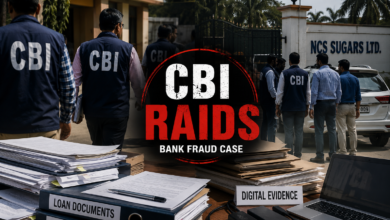
Police identified the victim as Lakshmi Ramamurthy, a senior citizen from Bengaluru. Investigators said the accused contacted her while impersonating officials from the Central Bureau of Investigation and the Enforcement Directorate.
The fraudsters allegedly convinced the elderly woman that she was linked to serious financial crimes and illegal activities under investigation by central agencies. Using fear tactics and continuous psychological pressure, the accused reportedly placed the woman under what cybercrime experts describe as a “digital arrest.”

In such scams, victims are isolated emotionally and mentally through repeated calls, fake legal notices, video conferencing, forged documents and threats of arrest. Victims are often instructed not to contact family members, lawyers or local police while the fake “investigation” is underway.
Officials said the accused maintained constant communication with the woman and manipulated her into believing that transferring money was necessary to “verify” her accounts and avoid legal action.
₹24 Crore Transferred Through 26 Transactions
According to the Karnataka State Cyber Command, the victim transferred approximately ₹24 crore from her ICICI Bank account through 26 separate transactions between February 10 and April 24, 2026.

Investigators revealed that the money was transferred into 23 root accounts spread across 10 different banks located in various parts of India. The use of multiple bank accounts and layered transactions indicates a highly organized money laundering mechanism designed to make tracking difficult for investigators.
Police believe the accused deliberately structured the transfers in phases to avoid immediate suspicion and banking alerts.
Officials said the victim remained under intense psychological pressure throughout the period and genuinely believed she was cooperating with legitimate central agencies.
ICICI Bank Officials Prevent Further ₹3 Crore Loss
The scam might have resulted in even greater losses had bank officials not intervened at a crucial stage.
On April 24, the victim reportedly planned to transfer an additional ₹3 crore after arranging a gold loan. However, alert officials of ICICI Bank became suspicious after noticing unusual financial activity and immediately informed the Cyber Command unit.
Police teams quickly intervened and stopped the transaction before the money could reach the fraudsters.
Cyber officials praised the vigilance of the bank staff, stating that their timely action prevented further financial devastation for the victim.
Nationwide Investigation Launched
After receiving the complaint, the Karnataka State Cyber Command launched a large-scale interstate investigation into the fraud network.
Investigators traced the movement of funds through several layers of bank accounts, commonly referred to as “first-tier” or “root” accounts. These accounts are often used by cybercriminals to initially receive stolen funds before quickly dispersing them through multiple channels.
With assistance from the National Cyber Crime Reporting Portal, authorities managed to freeze several bank accounts linked to the scam.
Officials confirmed that approximately ₹4 crore was frozen and recovered during the financial tracking operation.
Additionally, another ₹1.46 crore was recovered through court orders, taking the total recovered amount to over ₹5.46 crore.
Police said efforts are continuing to trace the remaining money and identify additional individuals connected to the fraud network.
Six Accused Arrested From Multiple States
The Karnataka Cyber Command arrested six accused from different parts of the country in connection with the case.
The arrested accused have been identified as:
- N. Shivanam from Erode, Tamil Nadu,
- Akkach Mallik from Mumbai, Maharashtra,
- Palak Bhai Patel from Ahmedabad, Gujarat,
- Amit Narendra Patel from Ahmedabad, Gujarat,
- Om Prakash Rajut from New Delhi,
- and Gaurav Kumar from Bihar.
Police believe the accused were operating as part of a larger cybercrime syndicate with interstate and possibly international connections.
During raids and arrests, investigators seized six mobile phones allegedly used in carrying out the fraud operations. Authorities are now conducting forensic examinations of the devices to identify communication records, banking details, digital evidence and links to other fraud cases.
Rise of “Digital Arrest” Scams Across India
Cybercrime experts say “digital arrest” scams have become increasingly common across India in recent years. Fraudsters impersonate:
- police officers,
- CBI officials,
- ED officers,
- customs officers,
- income tax officials,
- or telecom regulators
to create panic among victims.
Typically, scammers claim that:
- the victim’s Aadhaar number was misused,
- illegal parcels were sent using their identity,
- money laundering transactions were detected,
- or arrest warrants have been issued against them.
Victims are then pressured into transferring money for “verification,” “security clearance,” or “temporary freezing” purposes.
Elderly citizens are particularly vulnerable because scammers often exploit fear of legal action and limited familiarity with cybercrime tactics.
Cyber Experts Warn About Psychological Manipulation
Officials involved in the investigation said the case highlights how modern cyber fraud relies not only on technology but also on psychological manipulation.
The accused allegedly:
- isolated the victim emotionally,
- created urgency and fear,
- impersonated authority figures,
- and maintained continuous communication to control the victim’s decisions.
Cybercrime investigators say victims are often instructed:
- not to disconnect calls,
- not to inform family members,
- and to keep all communications confidential.
Such tactics create mental pressure similar to physical detention, leading experts to describe the process as a “digital arrest.”
Police Issue Public Advisory
Following the case, Karnataka Cyber Command issued a strong advisory urging citizens to remain cautious of suspicious calls claiming to be from government agencies.
Officials emphasized that:
- no legitimate government agency demands money transfers during investigations,
- no police or central agency conducts investigations exclusively through video calls,
- and citizens should never share banking details or transfer funds under pressure.
The police advised people to:
- immediately disconnect suspicious calls,
- verify identities independently,
- contact local police stations,
- and report incidents through the National Cyber Crime Helpline 1930.
Authorities also encouraged family members to regularly educate elderly relatives about emerging cyber fraud techniques.
Financial Institutions Asked to Increase Vigilance
The case has also highlighted the important role financial institutions can play in preventing cyber fraud.
Cyber officials said banks should:
- strengthen monitoring systems for unusual transactions,
- improve customer awareness,
- and train staff to identify signs of coercion-based scams.
The intervention by ICICI Bank officials in this case demonstrated how prompt action by banking personnel can prevent major financial losses.
Larger Network Under Scanner
Investigators suspect that the arrested accused may only represent one layer of a much larger cybercrime ecosystem.
Police are examining:
- bank transaction trails,
- call records,
- IP addresses,
- and digital payment networks
to identify additional handlers, coordinators and financial beneficiaries.
Authorities also suspect the involvement of “mule accounts,” fake identities and professional money laundering channels used to rapidly move stolen funds across states.
Further arrests are expected as the investigation progresses.
Growing Need for Cyber Awareness
The Bengaluru fraud case serves as a stark warning about the rapidly evolving nature of cybercrime in India. As digital banking and online financial transactions become more common, fraudsters are adopting increasingly sophisticated methods to exploit fear, trust and technology.
Cyber experts say public awareness remains the strongest defense against such scams.
Officials stressed that citizens should remember one critical principle:
“No genuine investigating agency will ever ask individuals to transfer money to prove innocence.”
The Karnataka State Cyber Command has urged people to stay alert, verify all suspicious communications and immediately report any attempt at cyber intimidation or financial fraud.
As investigations continue, the case stands as one of the country’s largest known “digital arrest” scams and highlights the urgent need for stronger cyber awareness, faster financial monitoring and coordinated nationwide enforcement against organized cybercrime networks.
Bengaluru has been shaken by one of Karnataka’s biggest cyber fraud cases after a 74-year-old Bengaluru woman allegedly lost nearly ₹24 crore in a sophisticated “digital arrest” scam operated by cyber criminals posing as CBI and ED officers. According to the Karnataka State Cyber Command in Bengaluru, the fraudsters psychologically manipulated the senior citizen for more than two months through fake legal threats, forged documents, video calls, and continuous intimidation. The Bengaluru victim was falsely told she was linked to money laundering and criminal investigations, forcing her into what officials described as a “digital arrest.”
Investigators in Bengaluru revealed that the victim transferred approximately ₹24 crore through 26 separate transactions into multiple bank accounts spread across India. The fraud was finally detected after alert ICICI Bank officials in Bengaluru noticed suspicious financial activity and prevented an additional ₹3 crore transfer. Karnataka Cyber Command teams in Bengaluru later launched a nationwide investigation and arrested six accused from different states including Gujarat, Maharashtra, Bihar, Delhi, and Tamil Nadu.
Authorities in Bengaluru recovered more than ₹5.46 crore and warned citizens against fake calls from individuals posing as CBI, ED, police, or government officials. Cyber experts in Bengaluru stressed that no legitimate agency ever demands money transfers during investigations.