

CBI Traps and Arrests Junior Assistant in Jammu Bribery Case
Bribe Allegedly Demanded for Pension Case Clearance
 Samir Singh 'Bharat'-Editor-in-Chief
Send an email
26 May 2026
Samir Singh 'Bharat'-Editor-in-Chief
Send an email
26 May 2026
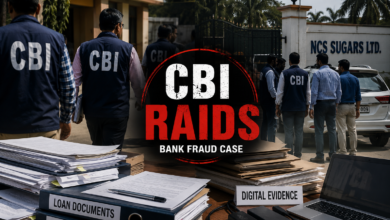
New Delhi : In a significant action against corruption in government offices, the Central Bureau of Investigation has arrested a Junior Assistant posted in the office of the Superintending Engineer, PHE Mechanical Urban Circle, Narwal, Jammu, for allegedly demanding and accepting a bribe from a complainant in connection with processing a pension case.
The arrest was made following a trap operation conducted by the CBI after receiving a formal complaint regarding the alleged demand for illegal gratification.
Bribe Allegedly Demanded for Pension Case Clearance
According to officials, the case was registered by the CBI on May 24, 2026, after a complainant approached the agency alleging that the accused government employee had demanded ₹4,500 as a bribe for processing and clearing his pension-related file.
Investigators stated that the complainant was reportedly under pressure as the pension case had been pending, and the accused allegedly refused to move the file forward without receiving the illegal payment.
The incident once again highlights the difficulties faced by many retired employees and pension beneficiaries who often have to struggle with bureaucratic delays and alleged corruption in government departments.

QR Code Shared Through WhatsApp for Bribe Payment
In a notable aspect of the case, officials revealed that the accused allegedly shared a QR code with the complainant through WhatsApp to receive the bribe amount digitally.
The use of digital payment platforms and QR codes in bribery transactions is increasingly becoming a challenge for anti-corruption agencies, as corrupt officials attempt to avoid handling physical cash directly.
CBI officials said the digital trail, however, also provides crucial electronic evidence during investigations.

CBI Conducts Trap Operation
After verifying the complaint, the CBI organized a trap operation on May 24, 2026.
According to investigators, the complainant transferred the alleged bribe amount through the QR code provided by the accused. Immediately after confirmation of the transaction, the CBI team intervened and caught the accused red-handed while receiving the illegal gratification through the digital payment mechanism.
Officials stated that all necessary legal formalities were completed during the operation and electronic evidence related to the transaction was secured.
Following the successful trap, the accused Junior Assistant was formally arrested on May 25, 2026.
Investigation Underway
CBI officials confirmed that further investigation into the matter is continuing.
Investigators are now examining:
- the digital transaction records,
- communication exchanged through WhatsApp,
- banking details,
- and any possible involvement of additional officials.
The agency may also scrutinize whether similar complaints or suspicious financial transactions are linked to the accused.
Rising Trend of Digital Bribery
Anti-corruption agencies across India have increasingly observed a shift from traditional cash bribes to digital payment methods such as:
- UPI transfers,
- QR code payments,
- e-wallet transactions,
- and online banking.
Officials believe some accused individuals consider digital transactions safer or less suspicious than cash dealings. However, cyber forensic tools and banking records are enabling investigating agencies to track such payments effectively.
Experts say the Jammu case reflects how corruption methods are evolving with technology, making digital evidence collection a critical part of modern anti-corruption investigations.
Strong Message Against Corruption
The CBI stated that strict action against corrupt public servants demonstrates the agency’s firm commitment to maintaining transparency and accountability in public administration.
Officials emphasized that government employees involved in demanding illegal payments for official work would face stringent legal consequences under anti-corruption laws.
The agency has repeatedly appealed to citizens to report instances of bribery, harassment or corruption through proper complaint channels so that prompt action can be taken.
Public Concern Over Corruption in Public Offices
Cases involving alleged bribery in pension processing often trigger strong public reactions because pension benefits are considered a crucial financial support system for retired employees and senior citizens.
Experts note that delays in pension approvals can create serious financial hardships for retirees, making them vulnerable to exploitation by corrupt officials.
The latest arrest has once again drawn attention to the need for:
- greater transparency in public service delivery,
- digital monitoring of file movement,
- stronger grievance redressal systems,
- and stricter vigilance mechanisms within government departments.
Anti-Corruption Agencies Increasing Surveillance
Officials say anti-corruption agencies are increasingly relying on:
- digital surveillance,
- cyber forensic analysis,
- banking transaction monitoring,
- and electronic communication records
to investigate corruption-related offences.
The use of technology has significantly improved the ability of agencies like the CBI to track financial transactions and collect admissible evidence during investigations.
Authorities believe such strict enforcement actions help deter corrupt practices and reinforce public trust in investigative agencies.
Legal Proceedings Expected
Following the arrest, the accused is expected to be produced before the competent court as part of the legal process.
The CBI is likely to seek further custodial interrogation if required for gathering additional evidence and verifying financial records linked to the case.
Officials reiterated that the investigation remains active and additional details may emerge as the probe progresses.