


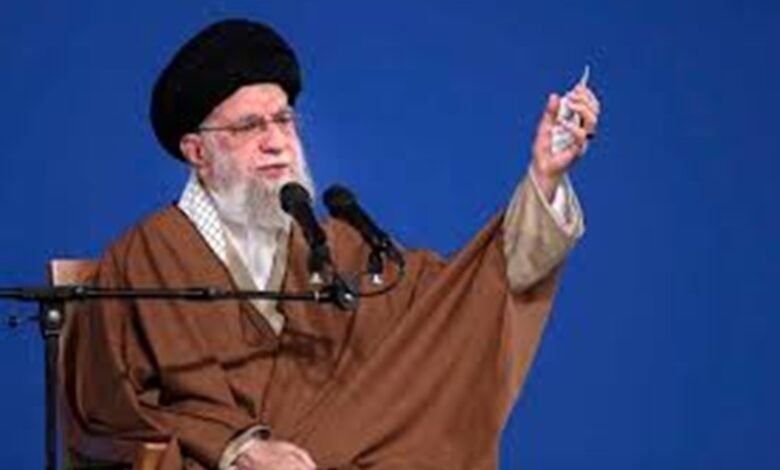
WAR-REPORT: Tehran – Iranian Supreme Leader Ayatollah Ali Khamenei has dismissed growing appeals from reformist officials urging changes in Iran’s domestic and foreign policies. Speaking on August 24, Khamenei claimed that Iran’s adversaries, having failed to defeat the country during the recent Israel-Iran conflict, are now seeking to destabilize it through “discord and division.” He accused U.S. and Israeli agents, along with “heedless speakers and writers,” of fueling internal strife—a remark widely interpreted as a reference to reformist figures.
Former President Hassan Rouhani earlier this month urged the government to ease tensions with the West, strengthen public resilience, and make concessions to address popular demands. Similarly, the Reformist Front, in an August 17 statement, called for political reforms and foreign policy shifts, including suspending uranium enrichment under International Atomic Energy Agency (IAEA) supervision. Khamenei firmly rejected these appeals, stressing that Iran’s dispute with the United States is “unsolvable” and ruling out direct talks, though he did not explicitly dismiss indirect negotiations.

Mounting Pressure Ahead of E3 Deadline
The remarks come as Iran faces mounting international pressure to return to nuclear negotiations before a critical August 31 deadline set by the E3 powers—the United Kingdom, France, and Germany. The E3 has warned that unless Iran shows meaningful progress toward a nuclear agreement, they will trigger the “snapback mechanism,” reinstating United Nations Security Council (UNSC) sanctions.
An Iranian delegation led by Deputy Foreign Affairs Minister for Political Affairs Majid Takht Ravanchi is scheduled to meet E3 officials in Geneva on August 26. The talks will focus on averting sanctions and salvaging prospects for diplomacy. On August 22, UK Foreign Secretary David Lammy warned that without a “verifiable, durable deal,” sanctions would be restored. A French diplomat told Saudi media on August 25 that the Geneva meeting represents “the last window open to the Iranian side.”
The snapback mechanism, currently set to expire in October 2025, would reimpose six UNSC resolutions banning arms transfers, restricting missile development, and curtailing uranium enrichment activities. The E3 has offered to delay this expiration to give Iran more time for negotiations, but Tehran has resisted, arguing that postponement would only allow Europe more opportunity to trigger sanctions.

Internal Debate Over Nuclear Policy
Within Iran, divisions are emerging over how to respond. Supreme National Security Council (SNSC) Secretary Ali Larijani is reportedly urging the regime to reduce uranium enrichment levels from 60 percent to 20 percent to avoid snapback sanctions and possible U.S. or Israeli strikes. A senior Iranian official told The Telegraph on August 24 that Larijani fears another military confrontation would severely strain the regime.
Larijani, who succeeded Ali Akbar Ahmadian as SNSC secretary on August 5 after the Israel-Iran war, is considered a moderate and was a supporter of the 2015 Joint Comprehensive Plan of Action (JCPOA). However, his push for de-escalation faces strong resistance from hardliners, particularly within the Islamic Revolutionary Guard Corps (IRGC).
Despite this opposition, reports suggest momentum is shifting toward resuming negotiations. The Washington Post noted on July 13 that there is growing consensus among Iran’s political elite on the need to re-engage with the U.S. to prevent further isolation. This trend signals that moderates, favoring diplomacy, may be gaining ground over hardliners who oppose any compromise.
Outlook
With the August 31 E3 deadline looming and snapback sanctions on the horizon, Iran’s leadership faces a critical decision point. Khamenei’s categorical rejection of reformist calls underscores the ideological rigidity of the regime’s top leadership. Yet, mounting external pressure and internal debates over uranium enrichment suggest that moderates within the system may continue to push for limited concessions to avoid deeper international isolation and renewed conflict.