

Zelensky and Trump Discuss Ukraine War, US Support, and Tomahawk Missiles at White House
By Samir Singh 'Bharat': Chief Editor

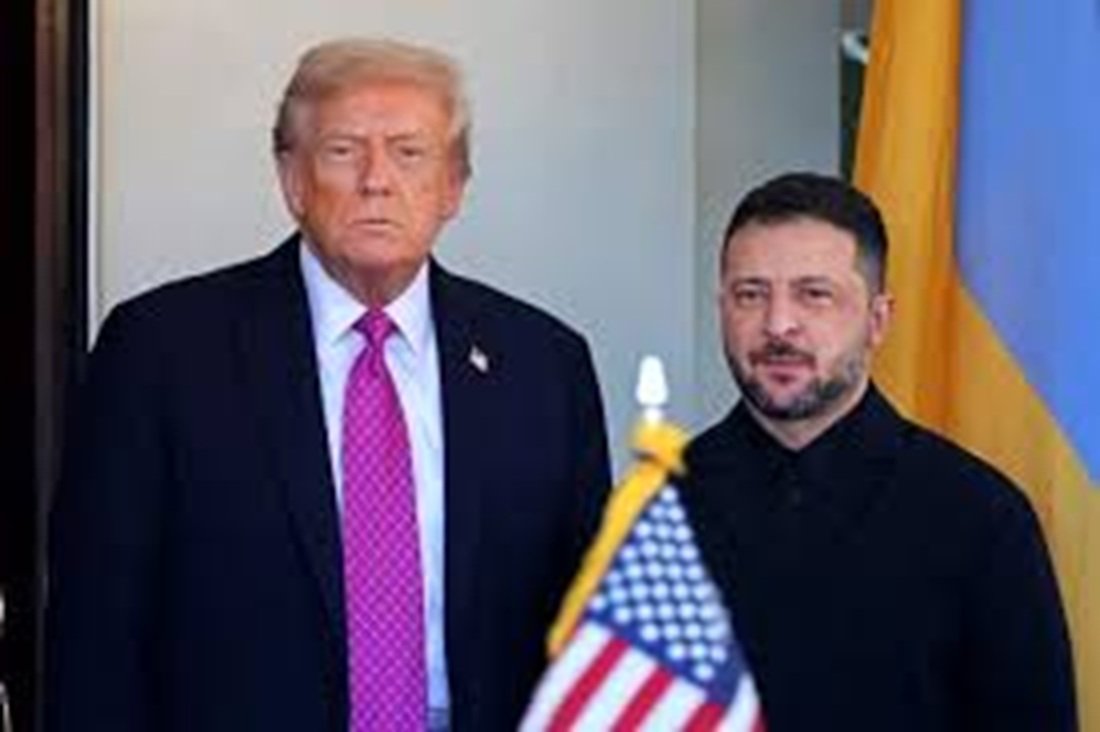
Washington, D.C., — Ukrainian President Volodymyr Zelensky met with US President Donald Trump at the White House to discuss continued American support for Ukraine and possible strategies to end the ongoing war with Russia.
President Trump expressed optimism about his ability to bring the conflict to an end, stating that both Zelensky and Russian President Vladimir Putin appear interested in peace. Zelensky reiterated that he remains open to direct or trilateral talks with Putin to achieve a negotiated settlement.
During the meeting and subsequent press conference, Zelensky emphasized Ukraine’s interest in acquiring US-made Tomahawk missiles to strengthen its defense and offensive capabilities. He explained that combining these long-range missiles with domestically produced strike drones would significantly enhance Ukraine’s ability to target legitimate Russian military sites.
“Striking strategic Russian targets requires not only thousands of drones but also powerful missiles,” Zelensky said, noting that Ukraine currently lacks sufficient missile capacity. Tomahawk missiles, capable of carrying large payloads and traveling at high speeds, could penetrate Russian air defenses and damage heavily fortified military installations.
Military analysts have previously stated that the addition of Tomahawk missiles could allow Ukraine to strike deep into Russian territory, targeting critical military assets such as the Shahed drone factory in Yelabuga, Tatarstan, and the Engels-2 Air Base in Saratov Oblast, which houses strategic bombers used in missile attacks against Ukraine. These strikes could weaken Russia’s ability to sustain its long-range operations and frontline logistics.


Kremlin Employs Dual Strategy of Economic Overtures and Threats
Meanwhile, the Kremlin is pursuing a two-pronged strategy—offering potential economic cooperation while issuing veiled threats—to influence Washington’s stance on Ukraine.
Kirill Dmitriev, CEO of the Russian Direct Investment Fund (RDIF) and a close Kremlin negotiator, posted a series of English-language messages on X (formerly Twitter) on October 16–17, proposing possible US-Russian joint economic ventures. Analysts suggest these posts were aimed at persuading the Trump administration that closer economic ties could benefit both nations, bypassing direct peace talks with Kyiv.

Russian intelligence chief Sergei Naryshkin warned on October 17 that supplying Tomahawk missiles to Ukraine would be viewed as a “hostile act” endangering global security. He accused European nations supporting such arms transfers of forming a “war party” opposed to peace.
Kremlin officials, including President Putin, have repeatedly characterized potential US missile deliveries as a dangerous “escalation,” pairing such rhetoric with economic incentives and nuclear threats to discourage Western military aid.
However, defense experts continue to assess that the provision of Tomahawk missiles to Ukraine would not trigger significant escalation, arguing that Russia itself routinely employs long-range cruise missiles against Ukrainian targets.
Russia Cuts Recruitment Bonuses Amid Strain on War Effort
In a separate development, the Kremlin has begun reducing financial incentives for volunteer soldiers as part of an effort to centralize military recruitment and sustain its prolonged campaign in Ukraine.
Ukraine’s Center for Countering Disinformation reported on October 17 that several Russian regions have slashed or canceled enlistment bonuses for new contract soldiers.
-
In the Republic of Mari El, bonuses fell from 3 million rubles (≈ $31,600) to 800,000 rubles (≈ $9,800).
-
In Chuvashia, from 2.5 million (≈ $26,300) to 800,000 rubles.
-
In Samara Oblast, from 3.6 million (≈ $37,900) to 400,000 rubles (≈ $4,900).
Other reductions were also reported in Yamalo-Nenets Autonomous Okrug, Nizhny Novgorod Oblast, and Bashkortostan.
In St. Petersburg, officials retroactively canceled the governor’s 1.6 million ruble enlistment bonus. Local outlet Fontanka reported that volunteers and members of Russia’s Combat Army Reserve (BARS) were denied previously promised payments. Sources indicated that a classified regional decree issued on August 26, 2025, nullified enlistment bonuses retroactively from August 1.
Authorities claimed the cuts only apply to volunteer recruits, while those signing regular military contracts with the Russian Ministry of Defense will continue receiving payments.
Analysts interpret these reductions as signs of financial strain and internal restructuring, as the Kremlin seeks to sustain troop levels amid declining volunteer interest and growing economic pressure from the ongoing war.