

Dhanshristi Surveys Bamboo Artisans in Bagdih
Dhanshristi Bhavishya Nidhi Trust Surveys Bamboo Artisans in Bagdih, Plans EDP Training and Market Linkage

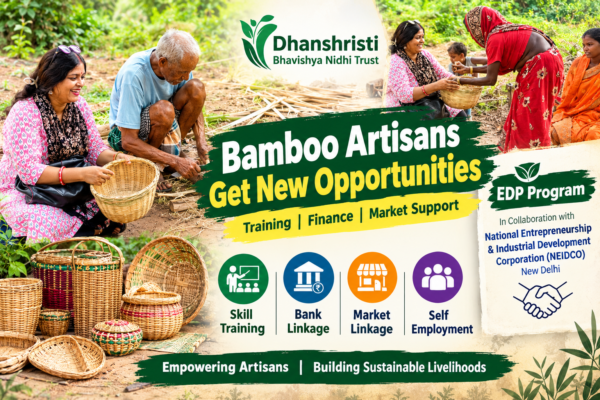
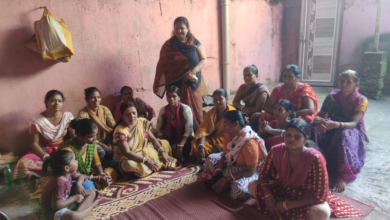
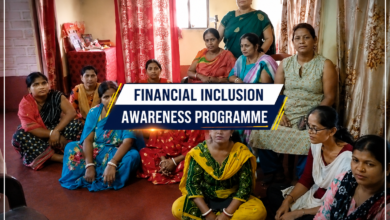
Dhanbad | Area Correspondent: A team from Dhanshristi Bhavishya Nidhi Trust visited Mohli Tola in Bagdih village, under Govindpur Block of Dhanbad district, on Thursday to interact with families engaged in traditional bamboo craftsmanship.
The survey was conducted to understand the socio-economic conditions of bamboo artisans, their income, product demand, design requirements, access to markets and the challenges affecting their livelihoods.
Led by General Secretary Sarita Singh, the Trust’s team held direct discussions with several artisan families. During the interaction, artisans explained that they have been making bamboo baskets, soop and other household utility products for generations. However, they often struggle to receive fair prices for their products.
Artisans also highlighted that their dependence on traditional designs limits their access to changing consumer demand. They expressed a need for training in modern designs, product development and improved production techniques.
The survey team documented their requirements and began the process of identifying potential beneficiaries for a proposed training programme.

According to the Trust, selected artisans will be organised into groups and provided training under an Entrepreneurship Development Programme (EDP) in Bamboo Craft. After the training, efforts will be made to connect eligible artisans with Bank Linkage and Market Linkage opportunities.
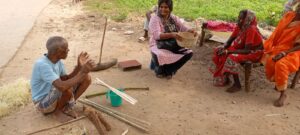
55–60 Mohli Families Depend on Bamboo Craft
The survey found that approximately 55 to 60 Mohli families live in Bagdih village, with a significant number depending on bamboo craftsmanship for their livelihood.

For these families, bamboo is more than a raw material. It represents a traditional livelihood and a skill passed down from one generation to another.
Bamboo baskets, soop and other household products continue to be produced using traditional techniques and limited resources.
However, the survey also highlighted the economic difficulties faced by these artisans. Despite having traditional skills, many struggle to obtain prices that adequately reflect their labour, raw material costs and craftsmanship.
Their products are largely sold through local markets, while limited market access, middlemen, traditional designs and changing consumer preferences affect their earning potential.
The survey has therefore identified market access and skill development as important areas requiring attention.
“We Make the Products, But We Do Not Get a Fair Price”
During the interaction, bamboo artisan Motilal Mohali said that although the community produces a variety of bamboo items, artisans often do not receive satisfactory prices in the market.
His concern highlighted a central issue facing the community.
The challenge is not simply the ability to manufacture bamboo products. The artisans already possess that skill. The larger challenge is connecting their craftsmanship with the right market.
Many artisans have limited access to information about product pricing, modern designs, packaging, branding and consumer preferences.
An artisan may spend several hours producing a basket, but if the final selling price does not adequately cover the raw material, labour and skill involved, the traditional craft becomes difficult to sustain as a livelihood.
For this reason, skill development needs to be accompanied by market access and business support.
Artisans Seek Training in Modern Designs
During the survey, artisans Ram Chandra Mohali and Sukumuni Mohali expressed the need for training in new and modern bamboo product designs.
They said that learning contemporary designs could help them develop products with greater market potential.
The market for bamboo products extends beyond traditional household items. Modern consumers may also seek decorative products, home décor items, storage baskets, trays, gift articles, lampshades, office-use products and other handicraft products.
Developing products according to changing consumer preferences could help artisans explore new market opportunities.
The proposed EDP in Bamboo Craft is therefore being considered not simply as a technical handicraft programme but as an entrepreneurship-oriented intervention.
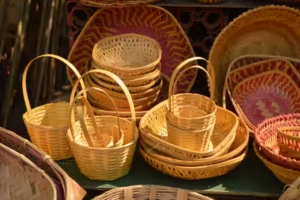
Training Programme Planned for Selected Artisans
Following the survey, Dhanshristi Bhavishya Nidhi Trust has started identifying artisans who could benefit from the proposed training.
According to the Trust, selected artisans will be organised into groups and trained in phases.
The Trust plans to organise an EDP (Entrepreneurship Development Programme) in Bamboo Craft for bamboo artisans in Bagdih village, Govindpur, Dhanbad, with the support of National Entrepreneurship & Industrial Development Corporation (NEIDCO), New Delhi.
The proposed programme is expected to cover:
- Modern bamboo craft designs
- Product development
- Business management
- Cost calculation and pricing
- Quality improvement
- Market-oriented production
- Entrepreneurship development
After completion of training, efforts will be made to provide selected and certified artisans with guidance related to Bank Linkage, Market Linkage and self-employment expansion.
The objective is to help artisans move beyond traditional production and gradually develop their craft activities into organised small enterprises.
Sarita Singh Assures Artisans of Training Support
Sarita Singh, General Secretary of Dhanshristi Bhavishya Nidhi Trust, interacted with the artisans during the survey and listened to their concerns.
She assured the artisans that the Trust would soon organise an EDP in Bamboo Craft Training Programme.
The proposed training will focus on modern designs, product development and understanding market requirements.
The Trust also plans to work towards connecting trained artisans with further economic opportunities after completion of the programme.
The proposed approach is to link training with finance and market access, rather than limiting the intervention to skill development alone.
Bank and Market Linkage to Follow Training
For many rural artisans, receiving training is only the first step. Access to capital and markets is equally important for turning a traditional skill into a sustainable business.
An artisan who learns new designs may need additional capital to purchase bamboo and other raw materials, acquire tools, increase production and improve packaging.
This is why Bank Linkage has been included in the proposed support mechanism.
However, access to finance alone does not guarantee business success. Products must also reach customers.
Therefore, Market Linkage is another important component.
For bamboo artisans, market linkage could potentially include local markets as well as retail outlets, exhibitions, handicraft fairs, institutional buyers and online sales channels.
Microfinance Plan Proposed from April 2027
During the survey programme, members of the Dhanshristi Support Team and Harshit Rastogi, associated with the Delhi National Office, were also present.
According to information shared during the programme, Dhanshristi’s Micro Finance Division is working on a proposal to provide microfinance support to Joint Liability Groups (JLGs) from April 2027.
The proposed initiative may support groups interested in starting or expanding small businesses.
The activities discussed include clothing shops, Pooja-material shops, tailoring businesses, vegetable shops and bamboo craft activities.
For bamboo artisans, access to working capital could help address some of the challenges related to purchasing raw materials, increasing production and expanding their business activities.
Any such financial support would need to be accompanied by appropriate assessment of repayment capacity, loan conditions and financial risks.
From Traditional Craft to Rural Enterprise
In many rural communities, traditional craftsmanship remains primarily a household livelihood activity rather than a formally organised business.
Artisans produce goods, sell them locally and use the income to support their families. Expansion beyond this cycle can be difficult.
The situation observed among the Mohli families of Bagdih reflects this challenge.
Training in design, pricing, quality control, packaging, branding, marketing and financial management could help artisans strengthen their existing activities.
Such an approach could also create opportunities for younger members of artisan families.
When traditional skills do not provide sustainable income, younger generations may move towards other occupations. Developing viable business opportunities around traditional craftsmanship could help preserve the skill while creating new livelihood possibilities.
From a Bamboo Basket to the Market
A simple bamboo basket may appear inexpensive to a customer, but producing it involves several stages of skilled labour.
The process includes sourcing bamboo, cutting and preparing the raw material, shaping it, weaving it and completing the final product.
If these traditional products are redesigned according to contemporary market demand, their quality and commercial potential may improve.
This is where modern skill development can make a difference.
The objective of training should not be merely to reproduce traditional products. It should help artisans apply their existing skills to new designs, new products and new market opportunities.
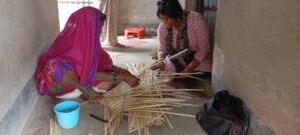
Women Could Also Benefit from Group-Based Training
Women in traditional artisan families can play an important role in production, weaving, finishing and household-level manufacturing.
If the proposed training is organised through groups, women could also receive opportunities to participate in entrepreneurship development, financial literacy and market-oriented activities.
Group-based structures such as Joint Liability Groups may provide a framework for collective financial activities. However, participants would need clear information about loan terms, repayment obligations, financial risks and business viability.
Including financial awareness alongside entrepreneurship training could therefore be an important part of future interventions.
Survey Highlights the Need for Market, Finance and Skill Development
The Bagdih survey highlights a challenge that extends beyond one village.
Traditional artisans in rural areas often possess considerable craftsmanship but face gaps in market access, modern design, finance, technology and institutional support.
Consumer preferences are changing rapidly, while many artisans continue to depend on traditional products and local selling systems.
Bridging this gap requires coordination among community organisations, financial institutions, government programmes, training organisations and market participants.
The survey conducted by Dhanshristi Bhavishya Nidhi Trust can be seen as an initial effort to understand these requirements before implementing the proposed intervention.
The Real Test Will Be the Results After Training
The success of a development programme cannot be measured only by the number of people who attend training.
The more important indicators will be:
How many artisans increase their income?
How many develop new products?
How many access formal financial services?
How many reach new markets?
Do artisans receive better prices for their products?
Does the next generation see bamboo craftsmanship as a viable livelihood?
These outcomes will ultimately determine the practical impact of the proposed training, financial linkage and market-linkage initiatives.
The Skill Already Exists; the Challenge Is Connecting It to the Market
The survey conducted by Dhanshristi Bhavishya Nidhi Trust in Bagdih village, under Govindpur Block of Dhanbad, has highlighted the economic challenges faced by traditional bamboo artisans.
Approximately 55–60 Mohli families are reported to live in the village, with a significant number traditionally engaged in bamboo craftsmanship.
The artisans already possess experience and traditional skills. Their stated requirements include fairer prices, modern designs, product development and wider market access.
Motilal Mohali highlighted the problem of inadequate prices, while Ram Chandra Mohali and Sukumuni Mohali expressed the need for training in new designs.
The Trust has begun identifying potential beneficiaries for the proposed EDP in Bamboo Craft. The plan includes skill development followed by efforts towards Bank Linkage and Market Linkage, with a proposed Micro Finance initiative for JLGs from April 2027.
If implemented effectively, the initiative could help artisans move from traditional household-level production towards more organised rural enterprises.
The artisans of Bagdih already have the most important foundation: traditional skill.
The next challenge is to connect that skill with modern training, appropriate finance and sustainable markets.
If that connection succeeds, the traditional bamboo basket could become more than a household utility—it could become a product supporting a viable rural enterprise.