

Kremlin Downplays Orbán Defeat as Russia Faces Strategic Setback in Europe 2026
By Samir Singh 'Bharat': Editor In Chief
 war-times.com
Send an email
14 April 2026
war-times.com
Send an email
14 April 2026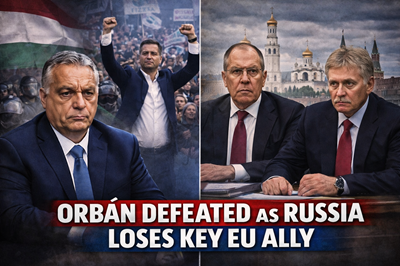
Special Report : The political landscape of Europe has undergone a significant shift following the unexpected electoral defeat of Hungarian Prime Minister Viktor Orban, a long-standing figure who had governed Hungary for sixteen years and maintained close ties with Moscow. His loss to opposition leader Peter Magyar marks not only a domestic turning point for Hungary but also a broader geopolitical development with implications for Russia’s influence within the European Union.
Despite the magnitude of this political change, the Kremlin has sought to minimize its significance. Russian officials have publicly downplayed the outcome, emphasizing continuity in strained relations with Europe rather than acknowledging the potential loss of a key ally within the European political system.
A Political Earthquake in Hungary
The election result delivered a decisive victory for the opposition Tisza party, which secured more than two-thirds of the seats in the Hungarian parliament. This overwhelming mandate not only ends Orbán’s long tenure but also provides the incoming government with the constitutional authority to implement sweeping reforms.
Orbán had been one of the most prominent and controversial leaders in Europe. Known for his nationalist policies and criticism of European Union institutions, he often positioned Hungary as an independent actor within the bloc. His government frequently clashed with Brussels over issues ranging from migration to rule of law standards.
More importantly, Orbán maintained a pragmatic and often sympathetic stance toward Russia. While Hungary remained formally aligned with the European Union, Orbán repeatedly challenged collective decisions that he believed were detrimental to Hungarian interests, particularly sanctions against Russia and military support for Ukraine.

His defeat, therefore, represents a significant loss for Moscow, which had relied on his government to slow or block European initiatives perceived as hostile.

Kremlin’s Calculated Response
In the immediate aftermath of the election, Dmitry Peskov made it clear that the Kremlin would not formally congratulate Peter Magyar. Speaking on Russian state television, he characterized Hungary as an “unfriendly country” due to its support for European sanctions against Russia.

Peskov further argued that relations between Russia and the European Union were already at their lowest point and could not deteriorate further as a result of Hungary’s political change. This statement reflects a broader effort by Russian officials to project stability and resilience in the face of geopolitical setbacks.
However, this public posture may mask deeper concerns within the Russian leadership. The loss of a sympathetic government within the European Union reduces Moscow’s ability to influence decision-making processes from within the bloc.
Signals from Russian Diplomacy
Russian Foreign Minister Sergei Lavrov adopted a more measured tone, stating that Russia remains open to building a relationship with Hungary’s new government. However, he emphasized that the future of bilateral relations would depend on how Hungary defines its national interests under its new leadership.
This statement suggests that Moscow is preparing to adjust its diplomatic approach while maintaining a degree of caution. The Kremlin appears to be signaling a willingness to engage with the new government, but only if it demonstrates a pragmatic approach to relations with Russia.
Reaction Among Russian Commentators
Within Russia, reactions to Orbán’s defeat have been mixed. Some commentators have sought to downplay the significance of the loss, arguing that Orbán’s alignment with Moscow was often overstated or inconsistent. Others, however, have expressed concern that Russia has lost one of its most important allies within the European Union.
For years, Orbán had played a critical role in shaping European policy toward Russia. By opposing or delaying sanctions and questioning military aid to Ukraine, he provided Moscow with valuable political leverage. His absence from power removes a key obstacle to greater unity within the European Union on issues related to Russia.
Orbán’s Strategic Importance to Russia
Orbán’s relationship with Russia extended beyond rhetoric. He consistently opposed European efforts to provide large-scale military and financial assistance to Ukraine, aligning with Russian interests during a period of heightened conflict.
His government also maintained economic ties with Russia, particularly in the energy sector, and resisted calls to fully sever these connections. This approach allowed Russia to retain a degree of influence within the European Union, even as relations with most member states deteriorated.
Russian President Vladimir Putin openly supported Orbán during the 2026 election, underscoring the importance Moscow placed on his continued leadership. The electoral outcome, therefore, represents a clear setback for Russian strategic objectives in Europe.
Broader Implications for Europe
The change in leadership in Hungary could have significant implications for the European Union. With Orbán no longer in power, the EU may find it easier to reach consensus on policies related to Russia and Ukraine.
This could lead to stronger sanctions, increased military support for Ukraine, and a more unified European stance in international forums. For Russia, this represents a potential tightening of political and economic pressure at a time when it is already facing significant challenges.
Kremlin’s Narrative of Confidence
Despite these challenges, the Kremlin has sought to maintain a narrative of confidence. By downplaying the significance of Orbán’s defeat, Russian officials aim to project an image of stability and control.
This approach is consistent with broader Russian messaging, which emphasizes resilience in the face of external pressure and portrays setbacks as temporary or insignificant. However, such narratives may not fully reflect the strategic realities facing Russia.
Recruitment Challenges in Russia
At the same time, Russia is facing growing challenges on the domestic front, particularly in maintaining adequate military manpower. Recent analysis suggests that recruitment rates have declined even as battlefield casualties continue to rise.
According to economist Janis Kluge of the German Institute for International and Security Affairs, Russian forces recruited between 800 and 1,000 soldiers per day during the first quarter of 2026. This represents a decline from the 1,000 to 1,200 daily recruits reported during the same period in 2025.
This roughly 20 percent decrease highlights the growing difficulty Russia faces in sustaining its military operations over time.
Rising Costs and Incentives
To counter declining recruitment, Russian authorities have increased financial incentives for new soldiers. Average signing bonuses reached a record high of approximately 1.47 million rubles in March 2026.
Despite these increases, recruitment has continued to slow, suggesting that financial incentives alone are insufficient to offset the risks and realities of military service.
The rising cost of recruitment places additional strain on Russia’s economy, which is already under pressure from international sanctions and the demands of prolonged conflict.
Casualties and Their Impact
Data from the Russian Finance Ministry indicates that compensation payments were made to the families of approximately 25,000 soldiers killed in the first quarter of 2026. This represents a significant increase compared to around 20,000 deaths during the same period in 2025 and approximately 10,000 in 2024.
While these figures are based on limited data and cannot be independently verified, they align with broader indicators suggesting rising casualties and increasing pressure on Russian military resources.
High casualty rates not only affect military effectiveness but also influence public perception and willingness to enlist, further complicating recruitment efforts.
Strategic and Military Implications
The combination of declining recruitment and rising casualties presents a significant challenge for Russia’s long-term military strategy. Maintaining operational capacity requires a steady flow of personnel, and any imbalance between recruitment and losses can weaken overall effectiveness.
Reports of recruiting shortfalls, the use of reserve forces, and expanded mobilization efforts all point to a system under strain. These challenges may limit Russia’s ability to sustain prolonged military operations at their current intensity.
Our Media Opinion
The defeat of Viktor Orbán represents a pivotal moment in European politics and a strategic setback for Russia. While the Kremlin has sought to downplay its significance, the loss of a key ally within the European Union could have far-reaching consequences.
At the same time, Russia faces mounting domestic challenges, including declining military recruitment and rising casualties. These factors combine to create a complex and evolving strategic environment.
As Europe moves toward greater unity and Russia confronts internal pressures, the balance of power in the region may continue to shift. The coming months will be critical in determining how these developments shape the future of European security and international relations.
war-times.com
Send an email
14 April 2026