


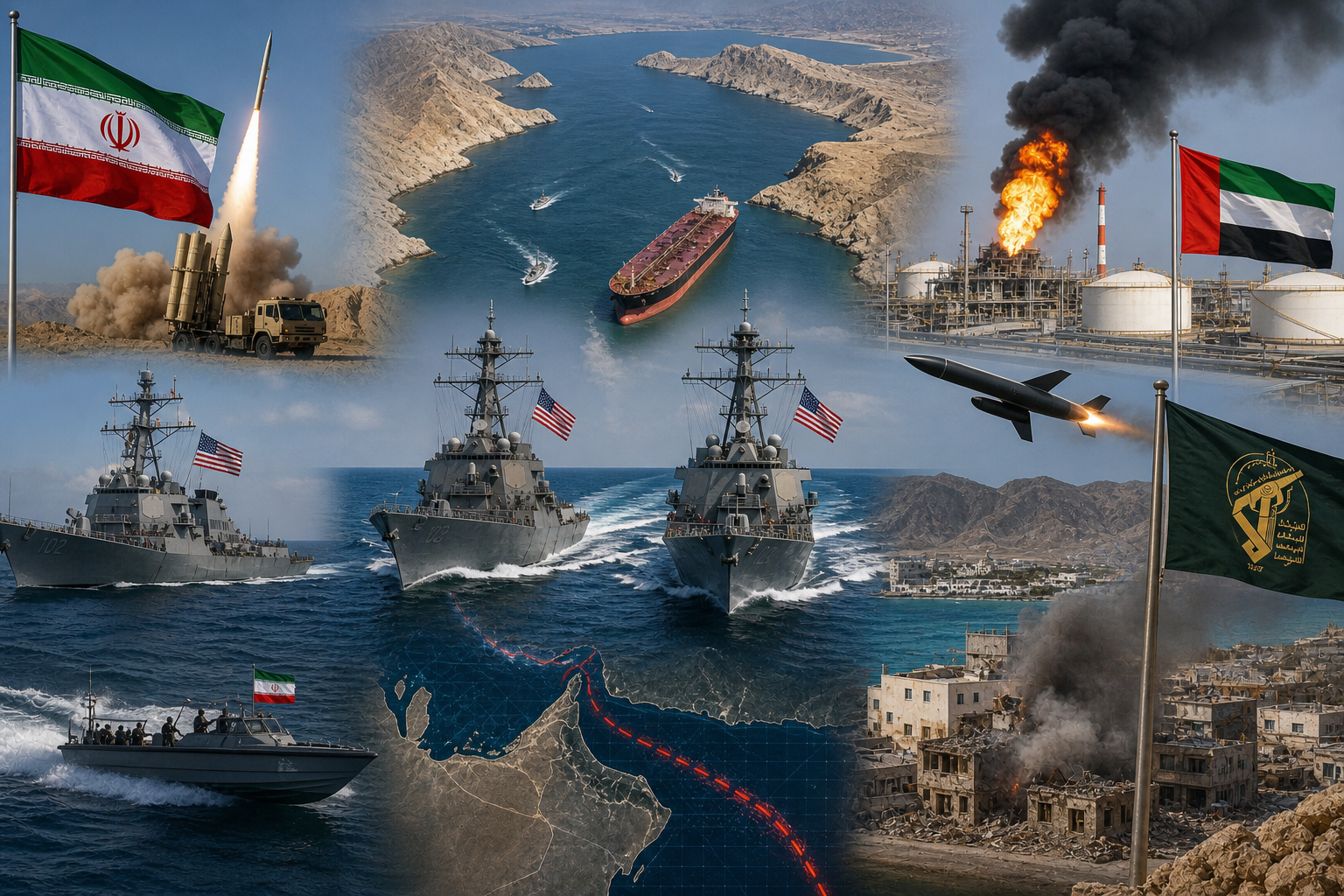
WAR-REPORT: The ongoing confrontation between Iran, Israel, and the United States has evolved far beyond a traditional regional conflict. What initially appeared to be a struggle centered on military retaliation and deterrence is increasingly revealing a broader and more ambitious Iranian strategy aimed at fundamentally reshaping the balance of power in the Persian Gulf and redefining international maritime norms. At the center of this strategy lies the Strait of Hormuz — one of the world’s most strategically important waterways and the lifeline of global energy markets.
Iran’s leadership is no longer focused solely on surviving military pressure or preserving regime stability. Tehran is now attempting to secure positive strategic gains from the conflict, particularly through international recognition of Iranian sovereignty and control over the Strait of Hormuz. Such recognition, if achieved through diplomatic negotiations or international concessions, could transform Iran into the dominant maritime authority in the Gulf and grant Tehran unprecedented leverage over global trade, regional security, and international energy flows.
The Strait of Hormuz remains one of the most critical maritime chokepoints in the world. Nearly one-fifth of globally traded oil passes through the narrow waterway every day, connecting the Persian Gulf to international markets. Any disruption in the Strait immediately impacts global oil prices, shipping costs, insurance markets, and economic stability across Asia, Europe, and North America. For decades, the United States and its regional allies have viewed freedom of navigation through the Strait as a non-negotiable international principle. Iran, however, increasingly appears determined to challenge that principle.

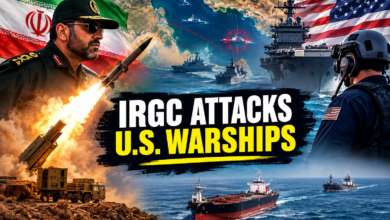
Throughout the current war, Iran has demonstrated its ability to disrupt shipping traffic in the Strait through a combination of naval mines, missile launches, drone strikes, and aggressive harassment operations conducted by fast attack craft belonging to the Islamic Revolutionary Guard Corps Navy. These operations have significantly increased risks for commercial vessels and forced international shipping companies to reconsider routes and security protocols.

Yet Iranian officials understand that military disruption alone cannot guarantee long-term control over the Strait. Temporary denial operations create instability but do not establish legal authority. Tehran’s larger strategic objective appears to be securing formal or de facto international recognition of Iranian control over maritime passage through the Strait. Such recognition would fundamentally alter international law and maritime norms by granting Iran legitimacy to regulate, tax, inspect, and potentially restrict shipping traffic according to Iranian interests.
Iranian negotiators have reportedly prioritized discussions surrounding maritime authority and Gulf security arrangements in diplomatic contacts. Tehran appears convinced that recognized control over the Strait of Hormuz would provide a long-term strategic safeguard against future military conflicts involving Israel and the United States. Iranian leaders likely believe that such control would create a powerful deterrent mechanism capable of inflicting severe economic pain on adversaries and regional rivals whenever tensions escalate.
If Iran achieved recognized authority over the Strait, Tehran could theoretically close or restrict maritime access during political disputes, impose regulations on shipping companies, and pressure Gulf Arab states accused of cooperating with Israel or the United States. Iran could also establish a system of transit fees or tolls that would generate substantial revenue for the regime while simultaneously increasing international dependence on Iranian cooperation.

Such a scenario would represent a dramatic transformation in regional geopolitics. The United States has historically defended the principle that international waterways must remain open to all nations under international maritime law. Recognition of Iranian claims would undermine decades of American naval doctrine and potentially weaken Washington’s broader security architecture in the Middle East.
Iran has already begun taking practical steps that suggest how it envisions this future order. Reports indicate that an organization identifying itself as the “Persian Gulf Strait Authority” sent communications to international shipping firms operating in the Persian Gulf. The communication allegedly instructed shipping companies that vessels seeking safe passage through the Strait must comply with Iranian financial and administrative requirements, including payments made in Iranian rials and financial guarantees issued by Iranian banks.
These conditions carry enormous geopolitical implications. By demanding transactions in Iranian currency and involving sanctioned Iranian financial institutions, Tehran is effectively challenging the international sanctions regime led by the United States. Compliance with such demands could place international shipping firms and governments in violation of existing US sanctions laws.
The message from Iranian authorities also reportedly implied that countries wishing to maintain access to the Strait would need to ease or remove sanctions against Iran. This represents a strategic attempt to convert geographic leverage into political and economic concessions from the international community.
If the United States or other Western powers were to formally recognize Iranian authority over the Strait as part of a negotiated settlement, Tehran’s actions would gain an entirely different level of legitimacy. Iran would then claim legal justification for intercepting vessels, enforcing compliance with its regulations, and penalizing states or companies that refuse to cooperate. Any future attempts by the United States, Israel, or Gulf nations to interfere with Iranian maritime enforcement operations could then be portrayed by Tehran as violations of Iranian sovereignty or acts of aggression.
Such developments would likely produce deep concern among Gulf Arab states, many of which already fear growing Iranian influence across the region. Countries such as Saudi Arabia, the United Arab Emirates, Bahrain, and Kuwait rely heavily on uninterrupted maritime trade and energy exports through the Persian Gulf. Iranian control over the Strait could leave these states economically vulnerable and strategically constrained.
Israel also appears deeply concerned about the broader consequences of any diplomatic agreement that strengthens Iran economically or strategically. Israeli officials reportedly fear that economic concessions tied to negotiations could enable Iran to rebuild military capabilities damaged during the recent conflict, particularly its ballistic missile infrastructure.
Iran’s pursuit of economic relief forms another major pillar of its strategic objectives. Severe international sanctions, particularly those targeting Iranian oil exports and banking operations, have significantly weakened Tehran’s economy in recent years. Reduced oil revenue has constrained the regime’s ability to finance military modernization programs, proxy operations, and domestic economic stabilization efforts.
Iran is now reportedly seeking major sanctions relief as part of broader negotiations linked to the ongoing conflict. Tehran is particularly interested in gaining access to nearly $100 billion in frozen Iranian assets held abroad. Access to these funds could dramatically improve Iran’s financial position and provide the resources needed to rebuild strategic military industries damaged during the war.
Large portions of Iran’s ballistic missile production network have reportedly suffered significant destruction during recent Israeli and American operations. Missile manufacturing plants, steel production facilities, research centers, and logistics infrastructure have all been targeted. Reconstructing these capabilities would require enormous financial investment, advanced industrial materials, and technological procurement efforts.
Iran’s ballistic missile arsenal remains one of the most important components of its military doctrine. Tehran has repeatedly used ballistic missiles in attacks against American military bases, Israeli-linked targets, and regional adversaries. During previous confrontations, including the so-called “12 Day War,” Iranian missile strikes demonstrated both the reach and symbolic power of Tehran’s strategic weapons programs.
Israeli officials reportedly believe that lifting sanctions without strict restrictions on Iran’s missile development activities would create a dangerous situation in which Tehran could rapidly rearm and emerge from the conflict stronger than before. According to various international reports, Israel has pushed for negotiations to include firm limitations on missile production, testing, and deployment.
Economic relief would also help Iran address serious domestic pressures. Years of inflation, unemployment, currency collapse, and international isolation have generated widespread frustration among ordinary Iranians. Public protests and anti-government demonstrations have repeatedly erupted across the country, threatening regime stability. Economic recovery could reduce internal unrest and strengthen the government’s political position at a time of regional uncertainty.
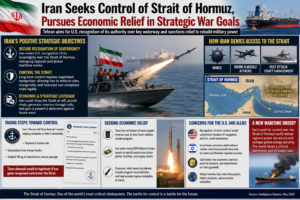
From Tehran’s perspective, securing sanctions relief and maritime recognition would represent a dual strategic victory. Iran would not only survive the current conflict but potentially emerge with expanded regional influence, enhanced economic capabilities, and increased leverage over global markets.
For the United States, however, the stakes remain extremely high. Washington’s traditional Gulf strategy has relied on maintaining freedom of navigation, protecting allied states, and preventing any single regional power from dominating critical energy corridors. Recognition of Iranian authority over the Strait of Hormuz would challenge all three objectives simultaneously.
American policymakers also worry that concessions to Iran could establish a precedent encouraging other regional powers to challenge international maritime norms. The broader implications could extend beyond the Middle East, influencing disputes in other strategically important waterways around the world.
Global energy markets are already reacting nervously to the possibility of prolonged instability in the Gulf. Shipping insurance costs have risen sharply, tanker operators are adopting more cautious navigation patterns, and energy-importing countries are monitoring developments closely. Even limited disruptions in the Strait can trigger spikes in oil prices and create inflationary pressure across the global economy.
China, India, Japan, and several European nations depend heavily on energy shipments passing through the Strait of Hormuz. Any long-term restructuring of authority over the waterway would therefore carry worldwide economic consequences. Many governments may face difficult choices between maintaining sanctions pressure on Iran and ensuring uninterrupted access to critical energy supplies.
The current conflict has therefore become far more than a military confrontation. It is increasingly a struggle over international norms, economic leverage, strategic geography, and the future balance of power in the Middle East. Iran’s evolving objectives reveal a leadership attempting not merely to resist pressure but to reshape the regional order in ways that could permanently alter global geopolitics.
Whether Tehran succeeds will depend on several factors, including the outcome of ongoing military operations, the unity of Western alliances, the willingness of Gulf states to resist Iranian demands, and the broader international community’s commitment to defending existing maritime principles.
For now, the Strait of Hormuz remains one of the world’s most dangerous flashpoints — a narrow waterway carrying enormous geopolitical weight. As diplomatic negotiations continue alongside military tensions, the future status of the Strait may determine not only the outcome of the current conflict but also the future structure of power across the Middle East and the global economy for years to come.