

Explosive Russia–Iran Intelligence Sharing Escalates Middle East Conflict: 7 Critical Global Impacts
By Samir Singh 'Bharat': Editor In Chief

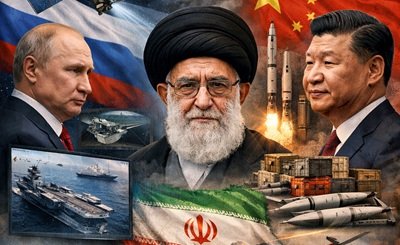
WAR-REPORT : The geopolitical landscape of the Middle East is undergoing a rapid transformation as global powers become increasingly entangled in the region’s escalating security crisis. Reports emerging from Western intelligence sources suggest that Russia has begun sharing sensitive military intelligence with Iran to aid Iranian operations targeting United States forces in the Middle East. At the same time, there are indications that China may also be preparing to assist Tehran by providing financial aid and key components for its missile program.
These developments highlight a deepening strategic alignment among three major powers often seen as adversaries of the United States: Russia, China, and Iran. Their growing cooperation comes at a time when tensions in the Middle East have intensified following joint American and Israeli strikes against Iranian targets earlier this year. The evolving situation raises concerns about a widening geopolitical confrontation that could reshape the balance of power across the region.
Russia’s Intelligence Support to Iran
According to multiple officials familiar with classified intelligence assessments, Russia has been sharing highly detailed information with Iran about the locations and movements of U.S. military assets stationed across the Middle East. These reports were first detailed in an investigation by the The Washington Post, which cited three officials who have direct knowledge of the intelligence cooperation.
The officials revealed that since the joint U.S.–Israeli strikes against Iranian facilities on February 28, Moscow has reportedly supplied Tehran with the coordinates and operational details of American military platforms. These include the positions of warships, aircraft, and other key infrastructure belonging to the United States and its allies.
One official familiar with the intelligence described Russia’s assistance as a “pretty comprehensive effort,” suggesting that Moscow’s support may go beyond limited intelligence sharing and instead represent a systematic campaign to strengthen Iran’s operational capabilities.

Such intelligence could significantly enhance Iran’s ability to plan and execute attacks against U.S. military assets deployed across the Middle East. With accurate information about American deployments, Iran or its allied militias could target vulnerable infrastructure, including temporary command posts, radar installations, and logistical facilities.
Strategic Implications of the Intelligence Sharing
Military analysts believe that Russia’s intelligence sharing may already be influencing the pattern of Iranian attacks on U.S. positions in the region. Observers have noted that recent Iranian strikes appear to have targeted specific types of infrastructure—particularly command and control systems, radar networks, and temporary military structures.
Experts argue that this targeting pattern suggests access to highly detailed intelligence.

One prominent analyst, Mike Peterson, a principal research scientist at the Center for Naval Analyses, explained that Russia likely possesses the technological capability to provide Iran with high-quality satellite imagery.
According to Peterson, such imagery could allow Iran to identify exactly which bases the United States and its allies are currently using, where aircraft are stationed, and how logistical operations are being conducted.
High-resolution satellite images can reveal an enormous amount of operational information. Analysts can detect aircraft types, determine the readiness of bases, monitor the construction of temporary facilities, and track supply movements. When combined with other intelligence sources, such imagery becomes a powerful tool for planning military strikes.
Iran’s Dependence on Satellite Intelligence
Iran has developed significant missile and drone capabilities over the past two decades, but its access to advanced reconnaissance systems remains limited. Unlike the United States, Russia, or China, Iran does not operate a large constellation of high-resolution reconnaissance satellites.
As a result, Tehran often relies on foreign partners or commercial imagery providers to obtain detailed satellite data.
However, access to commercial satellite imagery has recently become more restricted due to security concerns surrounding the ongoing conflicts in the Middle East. Companies that normally supply satellite images to governments and research organizations have begun limiting the release of imagery from sensitive areas.
One of the most prominent commercial satellite companies, Planet Labs, recently announced a new policy restricting the release of imagery from certain regions of the Gulf. On March 6, the company introduced a mandatory 96-hour delay before publishing new satellite images covering Gulf states and nearby conflict zones.
The policy notably excludes Iran itself but delays imagery from other areas where U.S. and allied military bases are located. The delay is intended to prevent real-time intelligence from being exploited during active military operations.
Additionally, several commercial satellite providers already maintain strict policies prohibiting the release of imagery showing American or allied military bases. These restrictions further limit Iran’s ability to gather intelligence independently.
Given these limitations, analysts believe that Russian intelligence support could fill a critical gap in Iran’s reconnaissance capabilities.
Deepening Russia–Iran Military Cooperation
The intelligence sharing appears to be part of a broader pattern of expanding military cooperation between Moscow and Tehran.
Over the past several years, Russia and Iran have developed increasingly close defense ties. Iran has provided Russia with large numbers of drones used in military operations, particularly during conflicts in Eastern Europe. In return, Russia has reportedly offered Iran military technology, training, and intelligence support.
The partnership reflects shared strategic interests. Both countries view the United States as their primary geopolitical rival and seek to challenge American influence in multiple regions.
For Russia, assisting Iran may serve several purposes. It allows Moscow to indirectly pressure U.S. forces in the Middle East while diverting American attention and resources away from other strategic theaters.
For Iran, access to Russian intelligence and technology strengthens its ability to project power across the region and defend itself against Western military pressure.
China’s Possible Role in Supporting Iran
In addition to Russia’s reported intelligence assistance, there are growing concerns that China may also be preparing to provide support to Iran.
Multiple individuals familiar with U.S. intelligence assessments have indicated that China could be planning to offer Tehran both financial assistance and components for missile production.
Although these reports have not yet been officially confirmed, they align with a longstanding pattern of cooperation between Beijing and Tehran in areas related to missile technology.
Historically, China has supplied Iran with key chemical materials used in ballistic missile manufacturing. One of the most important of these materials is sodium perchlorate, a chemical compound that serves as a precursor for solid rocket fuel.
Solid propellants are essential for many modern missile systems because they allow rockets to be stored and launched quickly without requiring complex fueling procedures.
According to European intelligence sources cited by CNN, Iran received approximately 2,000 tons of sodium perchlorate in several shipments delivered from China in October 2025.
The shipments reportedly arrived at the Iranian port city of Bandar Abbas, a major hub for Iran’s maritime trade and military logistics.

Iran’s Efforts to Rebuild Its Missile Program
The delivery of missile-related materials reportedly occurred during a period when Iran was attempting to rebuild and expand its ballistic missile program.
Iran’s missile infrastructure had suffered significant damage during the Israel–Iran conflict of June 2025, when Israeli strikes targeted multiple facilities associated with missile production and storage.
Following that conflict, Iranian authorities launched a major effort to restore their missile capabilities. The shipments of sodium perchlorate were believed to be part of that rebuilding effort.
If China continues to supply missile components or financial assistance, it could accelerate Iran’s recovery and potentially expand its arsenal beyond pre-war levels.
Such developments would likely intensify concerns among Western governments and regional allies about Iran’s growing missile capabilities.
Ukraine’s Role in Countering Iranian Drones
While Russia and potentially China appear to be strengthening Iran’s military capabilities, other countries are seeking ways to counter Iran’s expanding arsenal of drones.
According to a report published by Reuters, officials from the United States and Qatar are currently in discussions with Ukraine regarding the purchase of Ukrainian interceptor drones designed specifically to destroy Iranian-made drones.
These interceptor drones are intended to target the Shahed drone, a type of loitering munition widely used by Iran and its allies.
Shahed drones have gained international attention for their use in conflicts across several regions. They are relatively inexpensive compared to traditional missiles and can travel long distances before striking their targets.
Because of their low cost and mass-production capability, these drones have become a significant challenge for air defense systems.
Ukraine’s Experience With Drone Defense
Ukraine has developed significant expertise in defending against large-scale drone attacks. Over the past several years, the country has faced almost nightly waves of drone and missile strikes launched by Russian forces.
Many of these attacks have included Iranian-origin drones similar to those currently deployed in the Middle East.
In response, Ukrainian engineers and military units have developed a range of innovative counter-drone technologies. Among these are low-cost interceptor drones that can destroy incoming drones before they reach their targets.
These interceptor systems reportedly cost only a few thousand dollars each to produce—far cheaper than traditional surface-to-air missiles.
Ukrainian defense officials claim that their interception rate against hostile drones has reached nearly 90 percent in some areas, making the technology highly attractive to other countries facing similar threats.
Advanced Drone Detection Technology
Beyond interceptor drones, discussions between Western officials and Ukraine reportedly include the transfer of advanced detection and electronic warfare technologies.
These systems are designed to detect the acoustic signatures of incoming drones and disrupt their communication signals.
Acoustic sensors can identify drones by analyzing the unique sound patterns produced by their engines. When combined with electronic warfare systems, defenders can jam or interfere with the drone’s navigation signals, causing it to lose control or crash before reaching its target.
Such technologies could significantly improve the ability of U.S. and allied forces to defend military bases against drone attacks.
British Drone Operators Deploy to the Middle East
The growing importance of drone warfare has also prompted the United Kingdom to expand its involvement in regional defense efforts.
According to a report from The Telegraph, the United Kingdom deployed a group of British drone operators to the Middle East in early March.
These operators were trained in Ukraine and have extensive experience working in high-intensity drone combat environments.
Their mission is to help defend British military installations in the region against potential drone attacks. Additional personnel may be deployed in the coming weeks as the security situation evolves.
A Western defense official told The Telegraph that the operators bring valuable knowledge gained during their work in Ukraine, particularly in coordinating layered drone detection systems.
This approach involves using multiple sensors and surveillance platforms to detect, track, and intercept hostile drones at various stages of their flight.
A Growing Global Security Challenge
The developments involving Russia, China, Iran, and Western countries highlight the increasingly global nature of modern conflicts.
Technologies such as drones, satellite intelligence, and electronic warfare systems are rapidly transforming how wars are fought. At the same time, geopolitical alliances are shifting as countries seek partners to counter their rivals.
The reported intelligence cooperation between Russia and Iran—and the possibility of Chinese assistance—signals a growing alignment among nations challenging U.S. influence.
Meanwhile, the United States and its allies are strengthening their own partnerships to counter emerging threats.
Uncertain Future for Regional Stability
The Middle East has long been a region shaped by complex rivalries and shifting alliances. The involvement of global powers such as Russia and China adds a new layer of complexity to an already volatile situation.
If intelligence sharing and military support between these countries continues to expand, it could significantly alter the strategic balance of the region.
At the same time, advancements in drone defense technologies may offer new tools for protecting military assets and civilian populations from increasingly sophisticated attacks.
As these developments unfold, policymakers around the world will be closely watching how the evolving partnerships and technological innovations shape the next phase of global security competition.
For now, the situation remains fluid—and the potential consequences extend far beyond the borders of the Middle East.