

Strait of Hormuz Standoff: Iran’s Push for Control Risks Global Trade
By Samir Singh 'Bharat': Editor In Chief

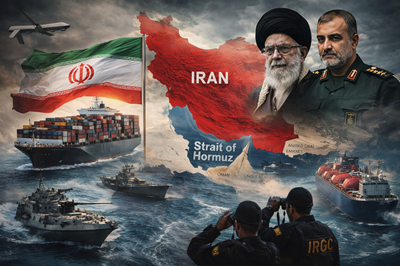
WAR-REPORT : The Strait of Hormuz has once again emerged as a focal point of global geopolitical tension, as Iran intensifies efforts to assert control over one of the world’s most critical maritime chokepoints. Any agreement or settlement by the United States that allows Iran to regulate or influence transit through this strategic waterway would represent a major strategic setback for Washington. More importantly, it would set a dangerous precedent with far-reaching implications for global trade, energy security, and the foundational principle of freedom of navigation.
A Vital Artery of Global Energy
The Strait of Hormuz connects the Persian Gulf with the Arabian Sea and serves as a crucial transit route for global energy supplies. Approximately 20 percent of the world’s oil and a significant portion of liquefied natural gas (LNG) exports pass through this narrow waterway each day. Any disruption in this region has immediate and widespread consequences for global energy markets, driving up prices and creating uncertainty across international economies.
Given its geographic position between Iran to the north and Oman and the United Arab Emirates to the south, the strait is both strategically indispensable and highly vulnerable to political and military interference.
Iran’s Claims Versus International Law
Iran has repeatedly claimed sovereignty over the Strait of Hormuz, asserting that it has the authority to regulate maritime traffic within the region. However, under international law—particularly the principles established by the United Nations Convention on the Law of the Sea (UNCLOS)—the strait is classified as an international waterway. This designation guarantees all vessels the right of transit passage, meaning ships can pass through without interference, provided they comply with internationally recognized navigation rules.
Despite this legal framework, Iran has consistently attempted to challenge these norms. By directing vessels through Iranian territorial waters, imposing informal regulations, and asserting control over navigation routes, Tehran has sought to establish a de facto authority over the strait.

Conditional Transit: A Shift in Strategy
Recent Iranian proposals to the United States and the international community suggest a shift toward conditional access. Iran has indicated that it would “allow” vessels to transit the strait under certain conditions. While presented as a cooperative gesture, this language implies that Iran has the authority to grant or deny passage—an interpretation that directly contradicts international maritime law.
Accepting such a framework would fundamentally alter the concept of free navigation. Instead of being an open international passage, the Strait of Hormuz would effectively become a controlled corridor, subject to Iranian discretion. This would enable Tehran to exert influence over global shipping routes and use access as leverage in broader geopolitical negotiations.
The Emergence of a Maritime Protection System
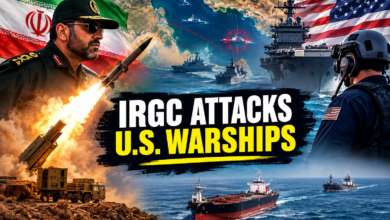
Iran’s actions increasingly resemble a structured system of control that analysts describe as a “protection model.” Reports indicate that vessels transiting the strait are being offered priority passage if they comply with protocols set by the Islamic Revolutionary Guard Corps and pay substantial security fees.

According to available information, ships that agree to these terms are allowed smoother transit, while those that refuse may face delays or operational restrictions. The reported fee—around $2 million per vessel—places a heavy financial burden on commercial shipping operators and introduces a new layer of complexity to maritime logistics.
This approach allows Iran to generate revenue amid ongoing economic sanctions while simultaneously reinforcing its influence over one of the world’s most critical shipping routes.
Impact on Shipping and Energy Markets
The consequences of Iran’s actions are already becoming visible. Several liquefied natural gas (LNG) tankers have reportedly altered their routes or reversed course after receiving warnings from Iranian authorities. In some cases, vessels were informed that the strait had been closed, prompting immediate changes in navigation plans.
Such disruptions create instability in global energy markets. LNG shipments are essential for energy security in regions such as Europe and Asia, and any interruption in supply can lead to price volatility and shortages. Additionally, shipping companies must now contend with increased risks, including higher insurance costs, potential delays, and the threat of confrontation.
Escalation Through Control of Transit Routes
Beyond financial measures, Iranian forces have taken direct action to control maritime movement. The IRGC has reportedly prevented certain vessels from transiting the strait and has redirected others through designated routes under Iranian supervision.
This represents a significant escalation in tactics. Rather than merely signaling authority, Iran is actively enforcing control over navigation patterns, effectively positioning itself as the gatekeeper of the strait.
Economic Drivers Behind Iran’s Actions
Iran’s strategy is closely tied to its economic situation. Facing significant financial pressure due to international sanctions, Tehran is seeking alternative sources of revenue. Charging transit fees to commercial vessels offers a lucrative opportunity to offset these economic challenges.
At the same time, controlling access to the Strait of Hormuz provides Iran with a powerful geopolitical tool. The ability to influence global trade flows gives Tehran leverage in negotiations with major powers, including the United States.
Strategic Implications for the United States
For the United States, any acceptance of Iran’s role in regulating transit through the strait would represent a major strategic defeat. The principle of freedom of navigation has long been central to US maritime policy, ensuring open and secure sea lanes for global commerce.
Allowing Iran to impose conditions on transit would undermine this principle and set a precedent that could be replicated in other strategic waterways. It would signal a shift away from established international norms and weaken the global maritime order.
Consequences for Global Trade
The broader impact on global trade could be severe. The Strait of Hormuz is a critical link in the international supply chain, and disruptions in this region can affect everything from fuel prices to the cost of goods transported by sea.
If Iran successfully establishes control, shipping companies may be forced to reroute vessels, increasing transit times and operational costs. Insurance premiums could rise significantly, and smaller operators may struggle to remain competitive.
A Challenge to International Maritime Norms
The situation in the Strait of Hormuz represents a direct challenge to the principles that govern international waterways. Freedom of navigation is a cornerstone of global trade, ensuring that no single nation can unilaterally control access to critical routes.
Iran’s efforts to redefine this principle risk creating a fragmented maritime environment, where access to key waterways is determined by political or economic considerations rather than established legal norms.
Our Media Opinion : A Defining Moment for Global Stability
The unfolding in the Strait of Hormuz is more than a regional dispute; it is a defining moment for global trade and international law. Iran’s push to assert control over this vital waterway has the potential to reshape the dynamics of global commerce and challenge long-standing principles of maritime governance.
Any agreement that legitimizes Iran’s ability to regulate transit would have profound consequences, not only for the United States but for the entire international community. Conversely, a firm and coordinated response could reinforce the principle of free navigation and ensure the continued openness of one of the world’s most critical maritime corridors.
As tensions continue to evolve, the outcome of this standoff will play a decisive role in shaping the future of global trade, energy security, and geopolitical stability.