

Bangladesh’s New Leadership Faces Crucial Test After Historic Election Victory
Editorial
 war-times.com
Send an email
23 April 2026
war-times.com
Send an email
23 April 2026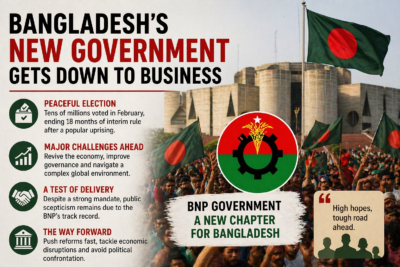
Dhaka-New Delhi : Bangladesh has entered a new political chapter following a landmark national election that has brought a fresh government to power after a prolonged period of uncertainty. The transition marks the end of eighteen months of interim administration that followed a mass uprising which led to the removal of former Prime Minister Sheikh Hasina. With the electoral victory of the Bangladesh Nationalist Party, the country now stands at a critical juncture, where public expectations are high and the challenges facing the new leadership are both immediate and complex.
The election, held in February, witnessed participation from tens of millions of voters across the country. Observers noted that the voting process was largely peaceful, a significant achievement given the political tensions that had characterized the preceding months. For many citizens, the election represented not only a return to democratic governance but also an opportunity for political renewal and stability after a turbulent period.

Despite the smooth conduct of the election, the new government inherits a fragile political and economic landscape. The interim period, while necessary to restore order, left several unresolved issues that now demand urgent attention. The BNP government must quickly transition from campaign promises to effective governance, demonstrating its ability to address the pressing concerns of the population.
One of the most immediate challenges facing the new administration is the state of the economy. Bangladesh, which had previously experienced steady growth, has in recent times encountered economic disruptions that have affected key sectors. Inflationary pressures, fluctuations in global markets, and supply chain disruptions have contributed to rising costs of living. For ordinary citizens, this has translated into increased financial strain and uncertainty about the future.

The government is expected to prioritize economic recovery by implementing policies that stabilize prices, encourage investment, and create employment opportunities. Reviving industrial output, supporting small and medium enterprises, and strengthening export sectors will be crucial components of this effort. Additionally, maintaining fiscal discipline while addressing social welfare needs will require careful planning and execution.
Another significant area of concern is governance. Over the years, questions have been raised about transparency, accountability, and institutional effectiveness in Bangladesh. The new government has an opportunity to address these issues by introducing reforms that strengthen public institutions and restore confidence in the system. Measures aimed at reducing corruption, improving administrative efficiency, and ensuring fair implementation of laws will be essential in building trust among citizens.
The BNP’s past record in governance has been a subject of debate, and this adds to the scepticism among certain sections of the population. While the party enjoys a strong electoral mandate, it must work diligently to overcome doubts about its ability to deliver on its promises. Demonstrating a commitment to inclusive governance and avoiding practices that could be perceived as partisan or exclusionary will be key to maintaining public support.

Political stability is another critical factor that will shape the success of the new government. Bangladesh has a history of intense political rivalry, particularly between the BNP and the Awami League. Managing this relationship in a constructive manner will be essential to prevent further polarization. The government is advised to avoid confrontational approaches and instead seek dialogue and cooperation on key national issues.
One specific area where restraint and balance will be important is in dealing with legal cases involving members of the opposition. Reviewing cases against Awami League activists in a fair and transparent manner could help reduce tensions and signal a commitment to justice rather than political retaliation. Such steps would contribute to a more stable and cooperative political environment.
Bangladesh Enters New Political Era After Election
In addition to domestic challenges, the new government must navigate a complex international landscape. Global geopolitical developments, including conflicts and shifting alliances, have direct implications for Bangladesh’s economy and security. In particular, economic disruptions linked to tensions in the Middle East, including the Iran conflict, could affect energy prices and trade flows. As a country that relies on imports for certain essential resources, Bangladesh must carefully manage these external risks.
Strengthening diplomatic relations and diversifying economic partnerships will be important strategies in this context. The government will need to engage with international partners to secure favorable trade agreements, attract foreign investment, and ensure access to critical resources. At the same time, maintaining a balanced foreign policy that protects national interests without becoming entangled in external conflicts will be crucial.
Security is another area that requires attention. While the election was largely peaceful, underlying tensions and potential flashpoints remain. Ensuring law and order, preventing violence, and addressing any emerging threats will be essential for maintaining stability. The government must also focus on strengthening institutions responsible for internal security and ensuring that they operate within the framework of the law.
Public expectations from the new administration are high, and the initial period following the election presents a unique opportunity often referred to as the “honeymoon phase.” During this time, the government enjoys a degree of goodwill and public support that can be leveraged to implement important reforms. Acting decisively and delivering early results can help build momentum and establish credibility.
However, this window of opportunity is limited. Delays or perceived inaction could quickly erode public confidence and lead to dissatisfaction. In a country where political awareness is high and citizens are increasingly vocal about their expectations, maintaining trust requires consistent and visible progress.

The role of communication cannot be overlooked in this process. The government must effectively communicate its policies, decisions, and achievements to the public. Transparency in decision-making and openness in addressing challenges can help bridge the gap between expectations and reality. Engaging with civil society, media, and other stakeholders will also contribute to a more inclusive and participatory approach to governance.
Another important aspect is social cohesion. Bangladesh is a diverse society with varying economic, cultural, and regional differences. Ensuring that development benefits are distributed equitably and that no group feels marginalized is essential for long-term stability. Policies aimed at reducing inequality, improving access to education and healthcare, and supporting vulnerable populations will play a key role in this regard.
The private sector is expected to be a major partner in the country’s development efforts. Encouraging entrepreneurship, supporting innovation, and creating a favorable business environment can drive economic growth and job creation. At the same time, regulatory frameworks must be strengthened to ensure fair competition and protect consumer interests.
Infrastructure development will also remain a priority. Investments in transportation, energy, and digital infrastructure can enhance productivity and connectivity, contributing to overall economic progress. The government will need to balance these investments with fiscal constraints, ensuring that projects are sustainable and deliver long-term benefits.
Education and skill development are equally important for the country’s future. Preparing the workforce to meet the demands of a changing global economy requires reforms in the education system and greater emphasis on vocational training. By investing in human capital, Bangladesh can position itself for sustained growth and competitiveness.
As the new government begins its tenure, it faces the dual challenge of managing immediate pressures while laying the foundation for long-term development. The decisions made in the coming months will have a lasting impact on the country’s trajectory.
Our Media Opinion, the transition to a new government led by the Bangladesh Nationalist Party marks an important moment in Bangladesh’s political history. While the election has provided a mandate for change, the path ahead is filled with challenges that require careful and decisive action. By focusing on economic recovery, governance reforms, political stability, and effective international engagement, the government has the opportunity to meet public expectations and guide the country toward a more stable and prosperous future.
war-times.com
Send an email
23 April 2026