

INTERPOL Heads of NCBs Convene to Shape the Future of Global Policing
By Samir Singh 'Bharat': Editor In Chief

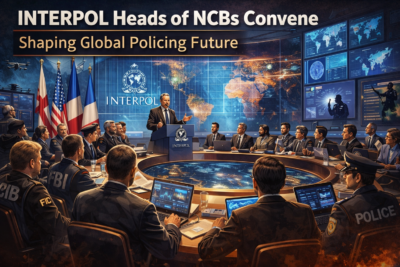
Special Report : In an increasingly interconnected world marked by complex transnational threats, the role of international policing cooperation has never been more critical. Against this backdrop, senior law enforcement officials from across the globe gathered under the banner of INTERPOL for a high-level meeting of Heads of National Central Bureaus (NCBs). This significant convening aimed to redefine strategies, strengthen collaboration, and set a forward-looking agenda for tackling emerging global security challenges.
The meeting brought together representatives from member countries’ NCBs, which serve as the primary liaison points between national law enforcement agencies and INTERPOL’s global network. These bureaus play a pivotal role in facilitating real-time information exchange, coordinating international investigations, and ensuring swift responses to cross-border crimes. As crime increasingly transcends national boundaries, the importance of these institutions continues to grow.

At the heart of the discussions was the evolving nature of global crime. Traditional forms of criminal activity such as drug trafficking, human smuggling, and organized crime remain persistent threats. However, newer challenges—including cybercrime, financial fraud, terrorism, and the misuse of emerging technologies—have added layers of complexity to law enforcement efforts. Delegates emphasized that modern policing must adapt rapidly to these changes, leveraging innovation and intelligence-driven approaches.
One of the key themes of the meeting was the integration of advanced technology into policing frameworks. Artificial intelligence, big data analytics, and digital forensics were highlighted as critical tools in identifying patterns, predicting criminal behavior, and enhancing investigative capabilities. INTERPOL officials underscored the need for member countries to invest in technological infrastructure while ensuring that these tools are used responsibly and ethically.

Cybercrime emerged as a particularly pressing concern during the discussions. With the rapid digitization of economies and societies, cybercriminals are exploiting vulnerabilities at an unprecedented scale. From ransomware attacks targeting critical infrastructure to online financial scams affecting millions of individuals, the scope of cyber threats continues to expand. Participants called for stronger international cooperation, standardized protocols, and capacity-building initiatives to combat cybercrime effectively.
Another major focus was counterterrorism. Delegates reiterated the importance of intelligence sharing and coordinated operations in preventing terrorist activities. INTERPOL’s global databases, including those related to foreign terrorist fighters and stolen travel documents, were recognized as vital resources in this fight. Enhancing the accessibility and accuracy of such databases remains a priority for the organization.
The meeting also addressed the growing challenge of financial crime and corruption. Illicit financial flows, money laundering, and fraud schemes not only undermine economic stability but also fund other criminal activities. Experts highlighted the need for robust regulatory frameworks, cross-border financial tracking mechanisms, and closer collaboration between law enforcement and financial institutions.

Human trafficking and migrant smuggling were discussed as humanitarian as well as criminal issues. Delegates stressed the importance of victim-centered approaches, ensuring that law enforcement actions prioritize the protection and support of victims. Strengthening border controls, dismantling trafficking networks, and raising public awareness were identified as key strategies in addressing these crimes.
Environmental crime was another area of concern. Illegal logging, wildlife trafficking, and pollution-related offenses have far-reaching consequences for ecosystems and communities. Participants acknowledged that environmental crimes are often linked to organized criminal networks, requiring coordinated international responses and stricter enforcement measures.
Capacity building and training formed a central pillar of the meeting’s agenda. Recognizing disparities in resources and expertise among member countries, INTERPOL emphasized the importance of providing training programs, technical assistance, and knowledge-sharing platforms. Such initiatives aim to ensure that all member states can effectively participate in and benefit from the global policing network.
The role of partnerships was also highlighted. Collaboration with regional organizations, private sector entities, and civil society groups is increasingly seen as essential in addressing complex security challenges. Public-private partnerships, in particular, were identified as valuable in areas such as cybersecurity and financial crime prevention.
Data security and privacy considerations were carefully examined during the discussions. While information sharing is crucial for effective policing, it must be balanced with the protection of individual rights and data integrity. INTERPOL reaffirmed its commitment to maintaining high standards of data protection and ensuring that its systems are used in compliance with international legal frameworks.
Leadership and governance within NCBs were also discussed. Delegates explored ways to enhance coordination, improve communication, and strengthen accountability within their respective organizations. The importance of strong leadership in driving reforms and fostering a culture of integrity was emphasized.
The meeting concluded with a shared commitment to strengthening global policing efforts. Participants agreed on a roadmap that includes enhancing technological capabilities, expanding international cooperation, and addressing emerging threats with agility and innovation. The outcomes of this convening are expected to shape INTERPOL’s strategic direction in the coming years.
As the world continues to face evolving security challenges, the role of organizations like INTERPOL remains indispensable. By bringing together law enforcement leaders from around the globe, the Heads of NCBs meeting serves as a vital platform for collaboration, innovation, and collective action. The decisions and strategies formulated during this gathering will play a crucial role in ensuring a safer and more secure world.

In conclusion, the convening of INTERPOL Heads of NCBs represents a proactive step toward redefining global policing in the 21st century. Through strengthened partnerships, technological advancement, and a shared commitment to justice, the international community is better equipped to مواجهة the complex and dynamic threats of our time.