

CEC Gyanesh Kumar Meets Benin’s Ambassador to Enhance Democratic Institutions
Special Correspondent

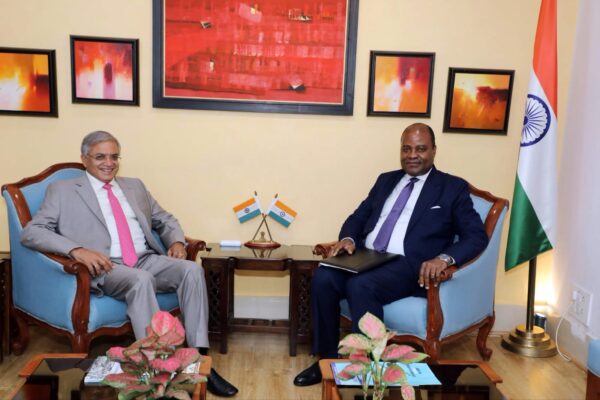
India and Benin Strengthen Electoral Cooperation:
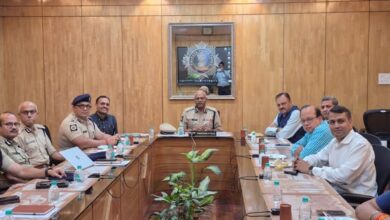
New Delhi: In a significant step toward strengthening international cooperation in electoral governance, Chief Election Commissioner (CEC) of India and Chairman of the Council of Member States of the International Institute for Democracy and Electoral Assistance (International IDEA), Shri Gyanesh Kumar, held a high-level meeting with His Excellency Mr. Erick Jean-Marie Zinsou, Ambassador of the Republic of Benin to India, at Nirvachan Sadan in New Delhi.
The meeting reflected the growing importance of global collaboration in ensuring free, fair, transparent, and technologically advanced electoral systems. Both leaders reaffirmed their commitment to deepening bilateral engagement in election management, institutional capacity building, and professional training of election officials.
Strengthening Democratic Partnerships
India has emerged as one of the world’s leading democracies with decades of experience in conducting elections on an unprecedented scale. Benin, one of West Africa’s democratic nations, has also been working to strengthen its electoral institutions through reforms and international cooperation.
During the discussions, both sides agreed to closely pursue the objectives outlined during the International Institute for Democracy and Electoral Assistance Democracy Forum (IICDEM) 2026, recognizing that international dialogue and knowledge-sharing are essential for modern electoral administration.
Officials noted that cooperation between the Election Commission of India and democratic institutions worldwide contributes significantly to improving electoral transparency, institutional resilience, and voter confidence.

Focus on Election Management
A major outcome of the meeting was the mutual decision to enhance collaboration in the field of election management.
The Election Commission of India has gained worldwide recognition for successfully organizing elections involving hundreds of millions of voters across diverse geographical, cultural, and linguistic regions. India’s experience in electoral planning, logistics, voter registration, polling station management, election security, and digital innovations has become a valuable model for many democracies.
Benin expressed interest in learning from India’s institutional experience and best practices to further strengthen its own electoral administration.

The discussions explored opportunities for exchanging expertise on:
- Electoral planning and administration
- Voter registration systems
- Electoral technology
- Poll management
- Election transparency
- Institutional governance
- Capacity development
- Democratic best practices
Both sides agreed that continuous dialogue would contribute to improving election integrity and administrative efficiency.
Training of Election Personnel
Capacity building emerged as another important area of cooperation.
India has consistently emphasized that professionally trained election officials are fundamental to conducting credible elections. During the meeting, both delegations agreed to work together on specialized training programmes for election staff.
Future cooperation may include:
- Professional training workshops
- Technical seminars
- Knowledge exchange programmes
- Administrative capacity-building initiatives
- Leadership development for election officials
- Exposure visits
- Digital election management training
Such initiatives are expected to help strengthen institutional competence while promoting uniform standards of electoral administration.
Role of International IDEA
The discussions also highlighted the importance of International IDEA, an intergovernmental organization dedicated to supporting democracy worldwide.
As Chairman of the Council of Member States of International IDEA, Chief Election Commissioner Shri Gyanesh Kumar reiterated India’s commitment to promoting democratic values through international engagement and collaborative initiatives.
International IDEA serves as a global platform where member countries share experiences, research, policy recommendations, and innovative electoral practices. The organization plays an important role in helping democracies improve governance, strengthen electoral institutions, and enhance citizen participation.
The meeting reaffirmed the commitment of both India and Benin to actively contribute to these global democratic objectives.
Expanding India’s Global Democratic Outreach
Over the years, the Election Commission of India has become an internationally respected institution, regularly hosting election management bodies from various countries for training, observation, and technical cooperation.
India’s expertise covers several key areas, including:
- Conducting elections in geographically challenging regions
- Large-scale voter awareness campaigns
- Use of technology in elections
- Electoral dispute management
- Inclusion of marginalized communities
- Accessible voting for persons with disabilities
- Electoral security and logistics
The meeting with Benin represents another step in India’s expanding engagement with democratic institutions across Africa and other regions.
Importance for Africa–India Relations
India and African nations have steadily expanded cooperation across education, healthcare, trade, technology, governance, and institutional development.
Electoral cooperation has emerged as a new pillar of this relationship.
Benin’s willingness to collaborate with India’s Election Commission demonstrates growing confidence in India’s democratic institutions and technical capabilities.
Observers believe such partnerships strengthen not only bilateral relations but also democratic governance across developing nations.
Promoting Transparent Elections
Transparent elections remain the cornerstone of every democratic society.
Both India and Benin acknowledged that public trust in electoral institutions depends upon:
- Transparency
- Accountability
- Professional administration
- Independent institutions
- Continuous institutional improvement
- Technological innovation
- Voter confidence
The meeting emphasized that cooperation between election management bodies can help countries address evolving challenges such as cybersecurity, misinformation, electoral logistics, and voter participation.
Future Roadmap
Officials from both sides expressed optimism that the discussions would soon translate into practical initiatives.
Potential future collaborations may include:
- Bilateral institutional agreements
- Exchange of technical experts
- Joint electoral workshops
- Capacity-building programmes
- Research collaborations
- International conferences
- Election observation initiatives
- Digital governance partnerships
These efforts are expected to strengthen democratic institutions while promoting mutual learning and long-term cooperation.
Our Media Opinion
The meeting between Chief Election Commissioner Shri Gyanesh Kumar and Benin’s Ambassador Mr. Erick Jean-Marie Zinsou represents another milestone in India’s growing role as a global partner in democratic governance.
By agreeing to strengthen cooperation in election management, institutional development, and training of election personnel, both nations reaffirmed their commitment to promoting transparent, efficient, and inclusive electoral systems.
As democracies worldwide face new administrative and technological challenges, partnerships such as this demonstrate the importance of international collaboration in protecting electoral integrity, enhancing institutional capacity, and reinforcing public confidence in democratic processes. Through continued engagement under the framework of International IDEA and bilateral cooperation, India and Benin aim to contribute meaningfully to the global advancement of free, fair, and credible elections.