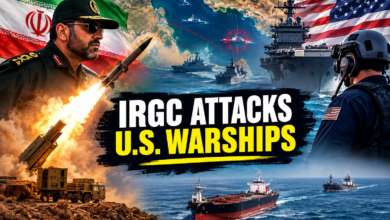



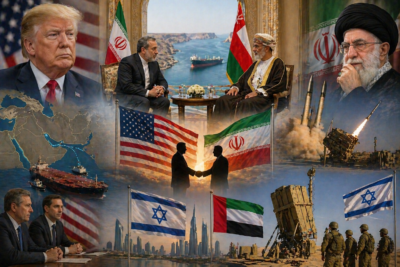
WAR-REPORT: Prospects for meaningful negotiations between the United States and Iran remain uncertain as internal power dynamics within Iran continue to complicate diplomatic engagement. Analysts believe that the dominant influence of the Islamic Revolutionary Guards Corps over key decision-making processes has reduced the likelihood of compromise, raising concerns about the future of diplomacy and regional stability.
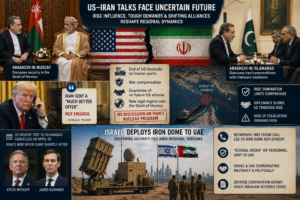
Recent diplomatic movements by Abbas Araghchi reflect the complexity of the situation. On April 26, Araghchi travelled to Oman and met Haitham bin Tariq to discuss security issues in the Strait of Hormuz. This narrow waterway is one of the world’s most important oil transit routes, making its stability critical for global energy supply and economic security.

During the meeting, discussions focused on maritime security and regional tensions. Iranian officials also raised the idea of establishing a new legal framework governing the Strait of Hormuz, indicating Tehran’s intention to reshape control and influence over this strategic passage.
After Oman, Araghchi travelled to Pakistan for further discussions with mediators. Talks in Islamabad focused on Iran’s conditions for resuming negotiations with the United States. One of the main demands was the removal of the US blockade on Iranian ports, which Iran considers a major obstacle to meaningful dialogue.

Reports indicate that Iran’s position includes additional demands such as war compensation and guarantees against future US attacks. These demands show that Iran is seeking both economic relief and long-term security assurances before engaging fully in negotiations.
However, there was no significant discussion about Iran’s nuclear program during these talks. This remains a major issue for the United States and highlights the gap between the priorities of both sides. Without progress on this issue, reaching a comprehensive agreement will remain difficult.
At the same time, Donald Trump stated that Iran recently presented a revised proposal. He described it as “much better” than earlier versions and said it included commitments related to not pursuing nuclear weapons. However, he also made it clear that the proposal was still insufficient from the US perspective.

This new proposal reportedly came shortly after the cancellation of a planned visit by US officials, including Steve Witkoff and Jared Kushner, who were expected to travel to Islamabad for talks. The timing suggests that both sides are adjusting their strategies in response to changing conditions.
While diplomatic efforts continue, the regional security environment is also evolving. One of the most important developments is the strengthening relationship between Israel and the United Arab Emirates.
Israel recently deployed an Iron Dome battery along with military personnel to the UAE. This move followed direct communication between Benjamin Netanyahu and Mohammed bin Zayed Al Nahyan, showing strong coordination between the two countries.
The deployment reflects growing defense cooperation and shared concerns about regional threats. It also demonstrates how alliances in the Middle East are changing in response to ongoing tensions.
This cooperation has been developing since the signing of the Abraham Accords, which normalized relations between Israel and several Arab nations. Since then, cooperation has expanded across multiple sectors, including security and defense.
The strengthening of Israel–UAE ties has broader implications for regional power balance. As these partnerships grow, they may influence how Iran and other countries respond to security challenges.
At the same time, internal dynamics within Iran remain a major factor affecting negotiations. The strong influence of the IRGC has led to a more rigid approach, making compromise more difficult. This has slowed diplomatic progress and increased uncertainty.
Both sides are also maintaining military readiness, even while discussing diplomacy. This combination of negotiation and preparation creates a tense situation where the risk of escalation remains high.
Experts believe that a lack of trust continues to be one of the biggest barriers to progress. Years of conflict and political tension have created deep divisions that cannot be resolved quickly. Building trust will require consistent communication and practical steps from both sides.

Mediators such as Oman and Pakistan play an important role by providing neutral platforms for dialogue. Their efforts can help reduce misunderstandings and keep communication open, but success depends on the willingness of the main parties to cooperate.
In conclusion, the future of US–Iran negotiations remains uncertain. Internal divisions within Iran, continued pressure from the United States, and shifting regional alliances all contribute to a complex and unstable situation. While diplomacy is still possible, significant challenges must be addressed before any meaningful agreement can be reached.