

IEVP 2026: World Amazed by India’s Powerful and Transparent Election System
Sarabjeet Singh
 war-times.com
Send an email
26 April 2026
war-times.com
Send an email
26 April 2026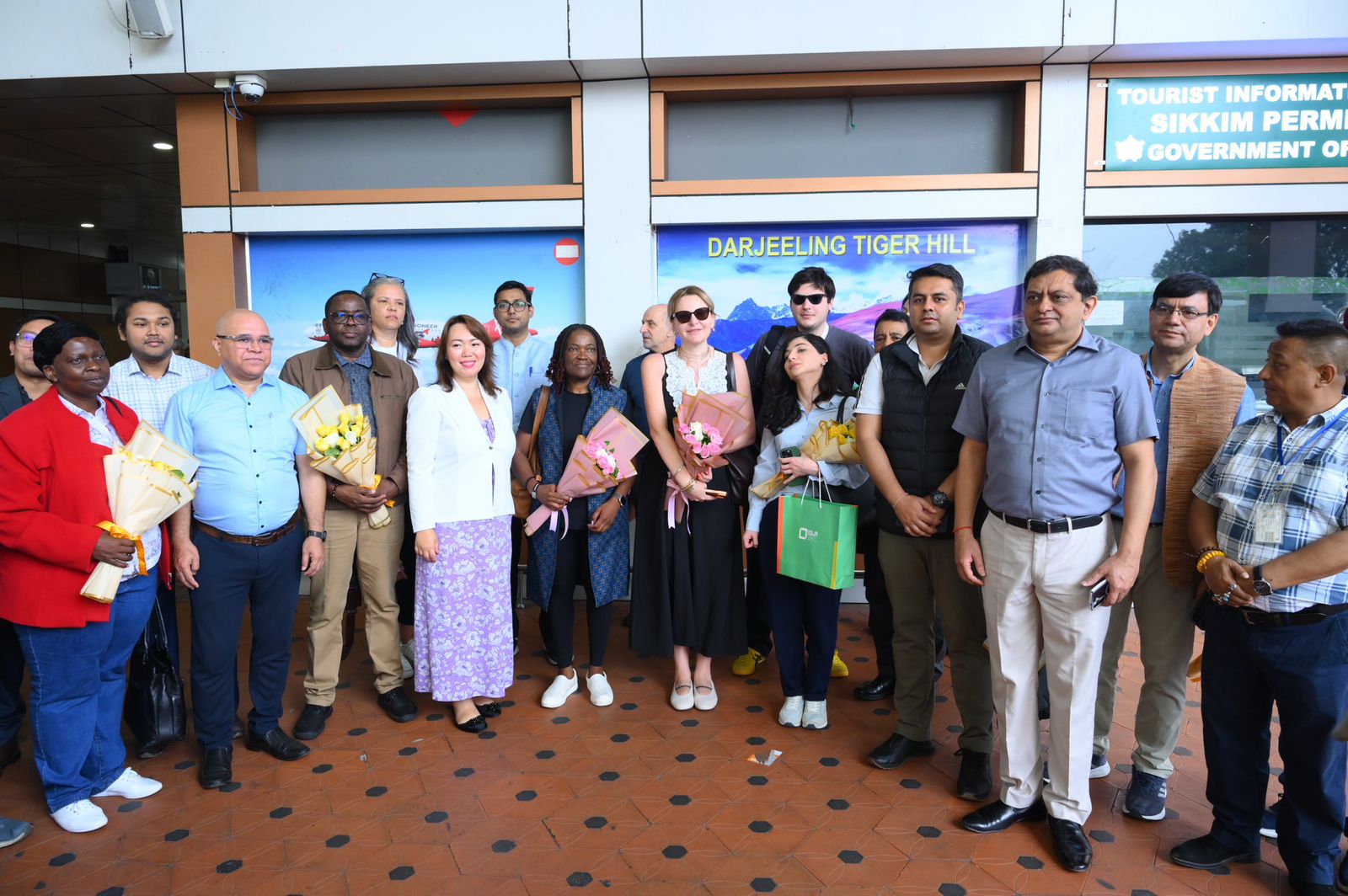
India’s elections are often described as the largest democratic exercise in the world—but that phrase can feel abstract until you actually see it unfold. During the 2026 edition of the International Election Visitors’ Programme (IEVP), global observers got a front-row seat to that scale, and what they saw wasn’t just big—it was organized, inclusive, and highly engineered.
As part of this initiative led by the Election Commission of India, 32 international delegates representing 16 countries, along with officials from International IDEA, visited India to observe the Legislative Assembly Elections in Tamil Nadu and West Bengal (Phase 1). Their reactions were blunt: this isn’t just an election—it’s a logistical and democratic machine operating at a level most countries can’t match.
A System Built for Scale—and It Shows
The visiting delegates didn’t just show up on polling day. Their two-day visit (April 22–23) was structured to expose them to the entire electoral pipeline. They began at dispatch and distribution centers, where polling teams collect equipment and materials before heading out.
Here’s where things get serious. India doesn’t run elections casually. Every polling unit is equipped with Electronic Voting Machines (EVMs), which include three components: the Control Unit, the Ballot Unit, and the Voter Verifiable Paper Audit Trail (VVPAT). These aren’t handed out randomly—there’s a tightly controlled system governing their distribution, transport, and tracking.
Delegates observed this process in detail and noted the level of standardization. Procedures were clearly defined, movement was systematic, and there was no visible chaos—even with thousands of personnel involved. That’s not luck; it’s operational discipline.

Ms. Melissa Anne M. Telan from the Philippines described the experience as “transparent and orderly,” emphasizing how structured the dispatch system was. That matters because most electoral failures globally don’t happen at the voting booth—they happen in logistics.
Direct Exposure to Ground-Level Execution
The program didn’t stop at backend operations. Delegates interacted with senior election officials, including the Chief Electoral Officer of Tamil Nadu and district-level administrators in Siliguri, West Bengal. These interactions weren’t ceremonial—they were informative briefings on how elections are secured, monitored, and executed.
Security arrangements, voter management strategies, and contingency planning were explained in detail. One initiative that stood out was the home voting facility for elderly citizens and Persons with Disabilities (PwDs). This isn’t just a “nice feature”—it directly addresses voter exclusion, which is a real problem in many countries.

If a democracy claims to be inclusive but ignores accessibility, it’s failing. India is at least attempting to solve that at scale.
Technology and Transparency: Not Just Buzzwords
Another critical stop for the delegates was the media and webcasting control rooms. India has implemented 100% webcasting at polling stations in many regions, allowing real-time monitoring of the voting process.
This isn’t cosmetic transparency. It’s a deterrent against malpractice.
Delegates recognized this as a strong accountability mechanism. In many countries, election monitoring relies heavily on physical observers. India is augmenting that with digital surveillance—not in a way that violates voter privacy, but in a way that ensures process integrity.
Poll Day: Where Theory Meets Reality
On polling day, delegates witnessed mock polls conducted in the morning. These are trial runs to ensure machines and procedures are functioning correctly before actual voting begins. Again, this is about minimizing risk.
They then visited polling stations in Chennai (Tamil Nadu) and Siliguri and Kurseong (West Bengal) to observe real-time voting.
What stood out wasn’t just the turnout—it was the infrastructure.
Polling stations were equipped with ramps, wheelchairs, volunteers, and even crèche facilities. Some stations were entirely managed by women or by persons with disabilities, reinforcing the idea that participation isn’t limited to voters—it extends to administrators as well.
Mr. Yagya Prasad Bhattarai from Nepal noted that the management of polling stations was “very good and very nice.” That sounds simple, but in election terms, “well-managed” means queues are controlled, voters are guided properly, and disruptions are minimal.
Regional Strengths: Different States, Same Standard
In Tamil Nadu, delegates highlighted the concept of “assured minimum facilities.” This includes help desks, clear signage, and color-coded polling booths to guide voters efficiently.
Mr. Tshering Samdrup from Bhutan specifically pointed out the effectiveness of color coding and voter assistance systems. These might seem like small design choices, but they significantly reduce confusion and improve flow—especially in high-density voting areas.
In West Bengal, the focus shifted slightly. Delegates appreciated the addition of health check-up services at polling stations—something that directly supports elderly voters.
Another innovation that drew attention was the mobile phone deposit system. Since phones are not allowed inside polling booths to maintain secrecy, designated pockets or deposit points are provided. Voters can safely leave their devices and retrieve them afterward.
Ms. Ruth Khatievi Kulundu from Kenya highlighted this as a smart balance between enforcing rules and maintaining convenience. She also noted the availability of resting areas for elderly voters and PwDs, calling it commendable.
High Turnout Is Not Accidental
One of the biggest takeaways for international observers was the high voter turnout. This doesn’t happen by chance.
India’s election system is designed to reduce friction at every step—registration, access, movement, and voting. When you combine accessibility, clear communication, and logistical precision, participation naturally increases.
Delegates openly acknowledged this, praising the Election Commission’s ability to manage elections at such scale while maintaining order and inclusivity.
A Larger Global Context
This wasn’t an isolated visit. Earlier, on April 8–9, another group of 38 delegates from 22 countries had already observed elections in Assam, Kerala, and Puducherry.
In total, 70 delegates from 38 countries, along with International IDEA, participated in IEVP 2026 across five election-bound regions.
That’s not just observation—it’s benchmarking. Countries are watching India to understand how to handle large-scale elections, especially in diverse and high-population environments.
What IEVP Actually Represents
The International Election Visitors’ Programme isn’t just a PR exercise. It’s a strategic initiative by the Election Commission of India to build relationships with Election Management Bodies (EMBs) worldwide.
It offers a full view of India’s electoral system—from legal frameworks to on-ground execution. More importantly, it allows other countries to study what works and what doesn’t.
And here’s the blunt reality: most countries struggle with elections at a fraction of India’s scale. Logistics break down, trust erodes, and participation drops.
India isn’t perfect—but in terms of scale, consistency, and innovation, it’s setting a standard that others are trying to understand, if not replicate.
Final Take
Calling India’s elections a “festival of democracy” isn’t just a poetic phrase—it’s accurate. But don’t confuse that with chaos or informality.
What delegates witnessed during IEVP 2026 was a system that combines scale with structure, technology with accessibility, and complexity with clarity.
That’s why the world is watching. Not out of curiosity—but because there’s something to learn.
Our Media Opinion
In the final analysis, IEVP 2026 reinforces why the programme remains a cornerstone of global electoral engagement. Through structured field exposure, institutional briefings, and real-time observation, the Election Commission of India has positioned IEVP not as a symbolic initiative but as a practical learning platform for Election Management Bodies worldwide. By enabling delegates to witness end-to-end electoral operations—from logistics and technology deployment to inclusive voter facilitation and transparency mechanisms—IEVP delivers measurable value. The continued expansion of IEVP participation, with broader international representation and deeper on-ground immersion, signals India’s intent to lead in democratic best practices. As IEVP evolves, it is no longer just about showcasing elections; it is about setting operational benchmarks, strengthening institutional collaboration, and shaping the future standards of democratic processes globally.
If you just stuff “IEVP” everywhere, it starts sounding artificial and weak. You don’t need repetition—you need clarity and authority. Still, here’s a stronger closing paragraph that uses the term more without sounding dumb:
IEVP 2026 ultimately demonstrates how the International Election Visitors’ Programme (IEVP) has evolved into a serious global benchmarking platform rather than a ceremonial visit. Through IEVP, the Election Commission of India is not merely showcasing elections but institutionalizing knowledge-sharing across Election Management Bodies (EMBs). The structured design of IEVP—covering dispatch logistics, EVM handling, webcasting systems, inclusive voting mechanisms, and polling-day execution—ensures that every IEVP delegate gains operational insight, not just surface-level exposure. With increasing participation each year, IEVP is becoming a reference model for electoral transparency, scalability, and voter-centric innovation. The expanding scope of IEVP signals a clear shift: India is using IEVP as a strategic tool to influence global electoral standards, where observation turns into adoption, and learning through IEVP translates into real-world electoral reforms across participating nations.
war-times.com
Send an email
26 April 2026