


Mirzapur: The Movie Roars at the Box Office
Pankaj Tripathi, Ali Fazal and Divyenndu’s gangster saga crosses ₹50 crore in two days as the franchise turns OTT fandom into a theatrical force

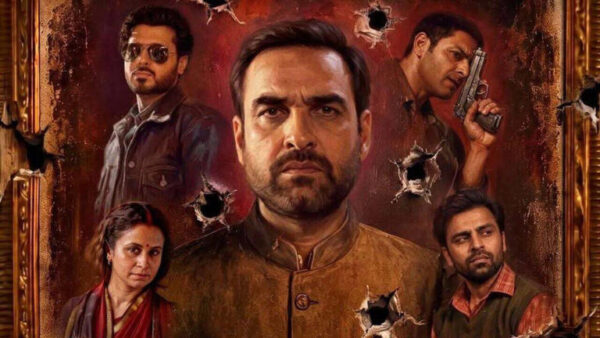
Opinion | Entertainment : There are films that arrive in theatres with publicity, films that arrive with stars, and then there are films that arrive with a ready-made audience. Mirzapur: The Movie belongs firmly to the third category.
The much-awaited theatrical continuation of the popular Mirzapur universe has delivered a strong opening at the box office, proving that a franchise built originally for streaming can successfully make the transition to the big screen. According to trade figures reported on September 6, 2026, the film collected around ₹32 crore net in India on Day 2, taking its two-day India net total to approximately ₹57.75 crore. Its India gross was reported at about ₹69.30 crore, while worldwide gross estimates were already around the ₹80-crore mark.
The numbers are impressive—but the bigger story is not merely the money.
The bigger story is brand power.
For years, Mirzapur has existed as more than a television or streaming property. It has become part of India’s pop-culture vocabulary. Dialogues became memes, characters became internet personalities, and the fictional battle for the throne of Mirzapur became a familiar reference point across social media.

Now the question is whether that popularity can sustain a full theatrical run.
The early answer appears to be yes.
From OTT Phenomenon to Big-Screen Experiment
The move from streaming platform to cinema hall was never guaranteed to work.

OTT audiences are accustomed to watching episodes from the comfort of their homes. They can pause, rewind, binge-watch and discuss every scene online. A theatrical film demands something different: audiences must leave home, buy a ticket and spend several hours inside a cinema hall.
That makes Mirzapur: The Movie an important experiment for the Indian entertainment industry.
The film arrived in theatres on September 4, 2026, following three seasons of the original series. The theatrical version brings back several familiar faces, including Pankaj Tripathi, Ali Fazal, Divyenndu Sharma, Shweta Tripathi and Shriya Pilgaonkar, with the story continuing the franchise’s familiar struggle for power.
The success of the first two days suggests that the audience did not consider the cinema release merely an extended episode.
They treated it as an event.
And that distinction matters.
Day 2 Is Perhaps More Important Than Day 1
Opening-day numbers often reflect curiosity.
Day 2 numbers reflect something more valuable—audience acceptance.
The film opened strongly on Friday, with reported India net collections in the ₹24.75–₹25.75 crore range depending on the trade source and methodology used. On Saturday, however, collections increased significantly, reaching around ₹31–32 crore.
That increase is important.
A film can achieve a big opening because fans rush to theatres on the first day. But when collections rise on the second day, it indicates that word of mouth, weekend demand and franchise loyalty are working together.
According to Sacnilk figures cited by multiple outlets, Day 2 occupancy also showed strong momentum, with the film registering around 52.7% occupancy across reported shows.
In other words, Mirzapur did not simply open loudly.
It continued loudly.
The ₹50 Crore Barrier Falls Quickly
Crossing ₹50 crore in India within two days gives the film a powerful early position.
The reported ₹57.75 crore India net figure after two days means the movie crossed the milestone faster than many would have expected from a franchise that originated on OTT.
The achievement becomes even more interesting when viewed from the perspective of the changing Hindi film industry.
The old formula was straightforward:
Big star + theatrical release + massive promotion = opening weekend.
But the modern formula is becoming more complicated.
Today, a powerful intellectual property, loyal digital audience and recognisable characters can sometimes be as valuable as traditional star power.
Mirzapur demonstrates exactly that.
Kaleen Bhaiya Still Has the Power
At the centre of the franchise stands Pankaj Tripathi’s Kaleen Bhaiya.
The character’s popularity has become inseparable from the identity of Mirzapur. Even critics who have reservations about the franchise’s storytelling have acknowledged the importance of Tripathi’s presence.
The Indian Express review described Tripathi’s performance as the film’s anchor and argued that his return helped revive some of the energy associated with the original series.
That observation is significant.
A franchise can survive a complicated plot.
It can survive a long runtime.
It can even survive mixed reviews.
But it cannot easily survive the loss of the emotional connection audiences have with its central characters.
Kaleen Bhaiya remains one of those characters.
Ali Fazal and Divyenndu Add Another Layer
The Mirzapur universe, however, was never a one-man show.
Ali Fazal’s Guddu Pandit has developed into one of the franchise’s defining figures. His transformation from a relatively ordinary young man into a ruthless power player has been one of the central arcs of the story.
Then there is Divyenndu’s Munna Tripathi, a character whose unpredictable personality helped turn the original series into a social-media phenomenon.
The chemistry—and conflict—between these characters created much of the franchise’s appeal.
The movie therefore carries the burden of satisfying viewers who have followed these characters for years.
That is not an easy task.
The audience is no longer watching simply to discover what happens next.
It is also watching to see whether the characters behave in ways consistent with the identities audiences have developed in their minds.
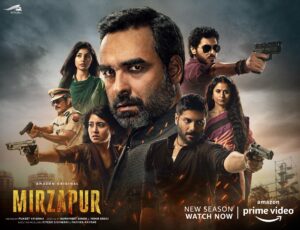
The Real Box Office Star May Be the Franchise
There is an important lesson here for Bollywood.
The success of Mirzapur: The Movie cannot be explained only through Pankaj Tripathi, Ali Fazal or Divyenndu.
It is the franchise itself that has become the star.
The Mirzapur brand has accumulated years of audience engagement. Viewers have invested emotional energy in its characters, conflicts, locations and dialogues.
That accumulated investment has now converted into ticket sales.
This is precisely why entertainment companies are increasingly interested in established intellectual properties.
A completely new film must first explain itself to audiences.
A franchise does not.
The audience already knows the world.
It only needs to be convinced that the new chapter is worth watching.
A Film Can Be Successful Even Without Universal Critical Approval
One of the interesting aspects of Mirzapur: The Movie is the difference between critical evaluation and audience enthusiasm.
The Indian Express review praised Tripathi’s performance and the return of the franchise’s gritty atmosphere, while also pointing to the film’s excessive length and pacing issues.
That is an important reminder.
Box office success and critical perfection are not the same thing.
A movie can have structural weaknesses and still entertain its intended audience.
Conversely, a critically acclaimed film can fail commercially.
Cinema is not mathematics.
There is no formula saying that a three-star review must produce a certain box-office number.
Audience emotion often operates differently.
If viewers feel connected to the characters, if they enjoy the dialogues, if they want to experience the story with a crowd, they may overlook weaknesses that a critic cannot.
The Theatre Experience Changes the Equation
Another important factor is the transformation of Mirzapur from a personal viewing experience into a collective theatrical experience.
The original series was primarily consumed privately.
The movie changes that.
A popular dialogue in a cinema hall produces a different reaction from the same dialogue watched alone on a phone.
An action sequence becomes louder.
A surprise becomes collective.
A familiar character’s entrance can produce cheers.
This is one reason franchise movies continue to have theatrical value even in the streaming era.
Cinema is not simply about seeing images.
It is about sharing reactions.
But the Film Also Faces a Serious Challenge
The early success should not lead to premature conclusions.
The biggest challenge now is sustainability.
The first weekend is only the beginning.
The real test will come when the franchise audience has watched the movie and the film must attract broader audiences who may not have followed all three seasons of the series.
That audience could determine whether Mirzapur: The Movie becomes a strong theatrical success or merely a powerful franchise opening.
The next few days will therefore be crucial.
If Monday holds reasonably well, the film could demonstrate genuine theatrical legs.
If collections fall sharply after the weekend, the opening may ultimately be remembered primarily as a fan-driven event.
The Worldwide Number Adds Another Dimension
The film’s overseas performance also deserves attention.
Reports indicated that the movie collected around ₹6–8 crore from overseas markets on Day 2, depending on the source and accounting method, pushing the worldwide gross toward the ₹80-crore range after two days.
That suggests the Mirzapur phenomenon is not restricted entirely to its core Indian audience.
The Indian diaspora and international streaming audience have also contributed to the franchise’s recognition.
For an Indian crime saga with a strongly regional setting and Hindi-language identity, that international curiosity is noteworthy.
The Bigger Question: Can OTT Franchises Become Theatrical Brands?
This may ultimately be the most important question raised by the film.
If Mirzapur: The Movie continues to perform strongly, producers may become more confident about taking successful streaming franchises into theatres.
That could create an entirely new category of cinema.
Instead of asking:
“Should this story become a series or a film?”
Producers may begin asking:
“Can this successful series become a theatrical event?”
That would change the economics of Indian entertainment.
A successful streaming series could become a long-term intellectual property, generating revenue through streaming, theatrical releases, merchandise, music and international distribution.
Theatrical success would then become another chapter in the life of a franchise rather than its starting point.
But Bigger Numbers Mean Bigger Expectations
There is a flip side.
Once a franchise becomes commercially powerful, expectations increase.
If Mirzapur: The Movie earns ₹100 crore, audiences may expect the next installment to earn ₹150 crore.
If the next film is weaker, disappointment can be greater.
Success creates pressure.
The creators must therefore balance two competing demands:
Give audiences what they love.
and
Give them something they have not already seen.
That is perhaps the biggest creative challenge facing the Mirzapur universe.
Nostalgia Is Powerful—But It Cannot Work Forever
There is no denying that nostalgia is helping the film.
Fans remember the first season.
They remember the characters.
They remember the dialogues.
They remember the memes.
They remember the controversies.
But nostalgia has a shelf life.
If every new chapter depends entirely on memories of earlier seasons, the franchise risks becoming repetitive.
The movie’s future success will therefore depend on whether it can use nostalgia as a starting point rather than a substitute for storytelling.
The Audience Has Changed Too
The modern Indian moviegoer is not the same audience that existed a decade ago.
Today’s viewer has access to cinema from across the world.
Streaming platforms have exposed audiences to different storytelling structures, production values and genres.
Viewers are therefore more demanding.
They can enjoy mass entertainment while simultaneously identifying flaws.
They can praise an actor and criticise a screenplay.
They can celebrate a franchise and question its creative choices.
Mirzapur: The Movie is operating within precisely this environment.
Its box-office performance shows that audiences remain willing to support familiar worlds—but continued success will require more than familiarity.
The ‘Bhaukaal’ Factor
The word most associated with the franchise’s box-office performance is perhaps “bhaukaal.”
And there is some justification for it.
The film crossed the ₹50-crore India net mark within two days, according to reported trade figures.
But the real bhaukaal is not simply the number.
It is the ability of a streaming-born franchise to create a theatrical crowd.
That is the experiment Bollywood should be watching.
If audiences continue turning up, Mirzapur may prove that the boundary between OTT and cinema is becoming increasingly artificial.
A story can begin on a streaming platform and still become a theatrical event.
What Happens Next?
The immediate target is obvious.
The film now has to convert its strong two-day performance into a powerful opening weekend.
Trade figures already indicate a substantial weekend trajectory, with later reports placing the three-day India performance at a very strong level.
But beyond numbers, the more important question is whether audiences continue recommending the film.
Because today, word of mouth spreads faster than any conventional advertising campaign.
A single viral dialogue can sell thousands of tickets.
A negative audience reaction can do the opposite.
The franchise therefore has a direct relationship with its viewers.
Opinion: The ₹50 Crore Figure Is More Than a Milestone
The ₹50-crore mark is certainly worth celebrating, but it should not be treated simply as another box-office statistic.
It represents a shift in the way Indian cinema can build theatrical audiences.
Mirzapur: The Movie has demonstrated that a strong digital identity can translate into physical footfall.
It has also demonstrated that character-driven franchises can create commercial value long after their original format has become established.
Pankaj Tripathi’s Kaleen Bhaiya remains a major attraction. Ali Fazal’s Guddu continues to carry substantial audience interest. Divyenndu’s Munna remains one of the franchise’s most recognisable figures.
Together, they have helped create a theatrical product from a world that audiences previously experienced primarily through streaming.
That is the real story behind the numbers.
The Gaddi Has Moved to the Big Screen
Mirzapur: The Movie has started its theatrical journey with considerable force.
With around ₹57.75 crore India net after two days according to one of the reported trade estimates, the film has already crossed the ₹50-crore milestone. Its second-day growth and strong worldwide performance indicate that the franchise continues to command considerable audience loyalty.
But the bigger achievement may be cultural rather than financial.
A streaming franchise has walked into the cinema hall and discovered that its audience was willing to follow.
Now comes the difficult part.
Can Mirzapur maintain its momentum?
Can it attract viewers beyond its hardcore fan base?
Can the makers balance nostalgia with innovation?
And most importantly, can the franchise continue to make the audience believe that the fight for the gaddi is still worth watching?
For now, the answer appears encouraging.
The numbers are speaking.
The audience is turning up.
And Mirzapur—true to its reputation—is once again creating bhaukaal.