

Kremlin Pushes Wartime Narrative Ahead of Trump Calls
While Ukraine Rejects Russian Battlefield Claims

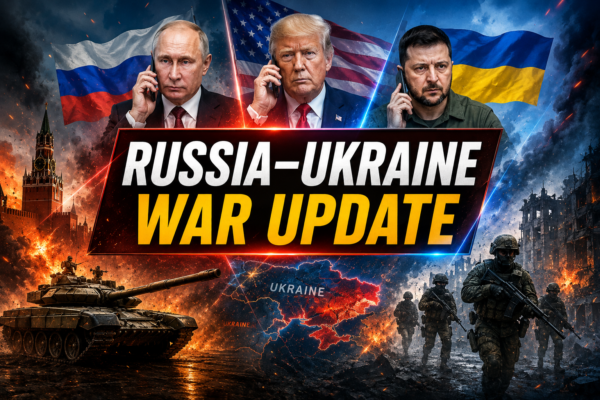
War-Report : As diplomatic engagement over the Russia–Ukraine war continues, the Kremlin has intensified what analysts describe as a strategic information campaign aimed at shaping international perceptions of the conflict. Russian President Vladimir Putin used a high-profile phone conversation with U.S. President Donald Trump to project confidence in Russia’s battlefield performance, claiming that Russian forces had captured the strategically important city of Kostyantynivka in eastern Ukraine.
However, Ukrainian military officials and independent battlefield assessments strongly dispute those assertions, maintaining that Ukrainian troops continue to operate inside the city and that fierce fighting remains underway.
The contrasting narratives highlight the growing importance of information warfare, where military operations are increasingly accompanied by competing political and psychological campaigns designed to influence governments, public opinion, and future peace negotiations.
Trump Holds Separate Calls With Putin and Zelensky
On July 4, President Donald Trump held separate telephone conversations with Russian President Vladimir Putin and Ukrainian President Volodymyr Zelensky.
According to Kremlin Presidential Aide Yuriy Ushakov, the United States initiated the call between Trump and Putin. During their discussion, the leaders reportedly addressed several key issues, including:

- The ongoing war in Ukraine
- The upcoming NATO Summit
- Military and political developments
- Economic relations
Putin reportedly told Trump that Western governments have an inaccurate understanding of battlefield realities and argued that Russian forces are steadily advancing across the front.
The Kremlin particularly emphasized what it described as the successful capture of Kostyantynivka, presenting the city as a gateway toward Russia’s broader objective of controlling the remainder of Donetsk Oblast.
Ushakov further claimed that Russian forces would “certainly” continue advancing toward the rest of Ukraine’s heavily fortified defensive belt.

Following his discussion with Putin, Trump also spoke with Ukrainian President Volodymyr Zelensky regarding frontline developments and ongoing diplomatic initiatives aimed at ending the conflict.
Moscow Presents Kostyantynivka as Strategic Victory
Russian officials have significantly amplified the narrative surrounding Kostyantynivka.
Russian Security Council Deputy Chairman Dmitry Medvedev, writing on his English-language Telegram channel, described the alleged capture of the city as:
- A major battlefield victory
- A decisive step toward securing Donbas
- Evidence that Russia’s military objectives are being achieved
The messaging appears carefully designed not only for domestic audiences but also for Western policymakers following developments in the conflict.
Ukraine Rejects Russian Claims
Despite Moscow’s confident statements, Ukrainian military officials insist that Russian forces have not captured Kostyantynivka.
According to Ukrainian authorities:
- Ukrainian troops remain deployed throughout the city.
- Defensive operations continue.
- Russian assault groups attempting to infiltrate urban areas are being actively targeted.
Several Russian military bloggers—often supportive of Russian operations—have also acknowledged that Ukrainian forces continue to hold positions in northwestern sections of the city, where fighting remains intense.
These accounts contradict the Kremlin’s assertion that the city has already fallen under Russian control.
Information Warfare Becomes Central Battlefield
Military analysts increasingly view Russia’s latest announcements as part of a broader cognitive warfare strategy rather than simply battlefield reporting.
The approach seeks to:
- Magnify tactical gains
- Create an impression of inevitable Russian victory
- Influence Western political decision-making
- Pressure Ukraine during diplomatic negotiations
Analysts note that Russia has repeatedly portrayed localized advances as strategic breakthroughs, often well before full military control has actually been established.
Such narratives are intended to shape perceptions rather than merely report military developments.
Timing Before Trump Conversation Raises Questions
Observers note that the Kremlin’s messaging appeared carefully synchronized with President Trump’s scheduled conversation.
One day before the July 4 phone call, Putin held meetings with senior Russian military commanders during which he publicly repeated claims about the alleged capture of Kostyantynivka and broader Russian advances.
Analysts believe these announcements may have been intended to reinforce the message Putin planned to present directly to Trump.
The broader objective may have been to convince Washington that Russian forces possess overwhelming battlefield momentum.
Western Assessments Paint More Complex Picture
Recent Western assessments suggest that while Russia continues offensive operations across multiple sectors, Ukraine has also demonstrated notable military effectiveness.
In recent months Ukrainian forces have:
- Conducted long-range drone operations
- Targeted Russian military infrastructure
- Damaged energy facilities
- Achieved tactical gains in selected frontline sectors
These operations have challenged the narrative of uninterrupted Russian battlefield dominance.
As a result, competing military narratives have become increasingly important in shaping international perceptions of the war.
Temporary Ceasefire Proposal Sparks Skepticism
Russia’s Ministry of Defense introduced another controversial proposal by announcing a temporary six-hour ceasefire around Kostyantynivka.
According to Moscow, the proposed pause would allow Russian forces to transfer the bodies of Ukrainian soldiers killed during combat.
The Russian Defense Ministry also claimed that numerous international media organizations had expressed interest in covering the humanitarian operation.
However, Russian officials later accused Ukraine of rejecting the proposal.
At the time these claims emerged, Ukrainian authorities had not issued any official public response.
Concerns Over Military Motives
Military observers argue that the ceasefire proposal may have carried broader operational objectives.
Analysts suggest a temporary pause could have enabled Russian forces to:
- Rotate frontline personnel
- Deliver additional supplies
- Reinforce assault units
- Consolidate recently infiltrated positions
Given that Ukrainian officials maintain Russia does not fully control Kostyantynivka, allowing unrestricted movement during a ceasefire could potentially provide tactical advantages to Russian forces.
For this reason, Ukrainian military planners are believed to remain cautious regarding short-term localized ceasefire offers.
Similar Strategy Seen Previously
This is not the first time Russia has proposed localized humanitarian pauses under disputed battlefield conditions.
Analysts point to similar proposals made during earlier phases of the conflict near:
- Kupyansk
- Pokrovsk
At those times, Russian officials claimed Ukrainian forces had been surrounded and invited journalists to witness the situation.
Subsequent battlefield developments, however, did not support those claims.
The recurrence of such proposals has contributed to skepticism among military analysts regarding Russia’s intentions.
Cognitive Warfare Expands Beyond the Battlefield
Modern warfare increasingly extends beyond military operations into the information domain.
Governments now compete not only for territorial control but also for dominance over international narratives.
Information campaigns seek to influence:
- Foreign governments
- International organizations
- Global media
- Domestic public opinion
- Diplomatic negotiations
Analysts argue that battlefield announcements, ceasefire proposals, humanitarian messaging, and diplomatic statements are increasingly integrated into broader strategic communication efforts.
Donetsk Remains Central Objective
Russia continues to prioritize complete control over Donetsk Oblast as one of its principal military objectives.
The region remains one of the most heavily contested theaters of the war.
Cities such as Kostyantynivka represent critical logistical and defensive hubs whose control could influence future military operations across eastern Ukraine.
For Ukraine, maintaining defensive positions there remains strategically important.
For Russia, demonstrating progress in Donetsk supports both military objectives and political messaging.
Diplomatic Outlook Remains Difficult
Despite ongoing international efforts to encourage negotiations, major differences continue to separate Moscow and Kyiv.
Ukraine maintains that any peace process must respect its sovereignty and territorial integrity.
Russia continues to emphasize recognition of battlefield realities and broader security demands.
These opposing positions leave little immediate room for compromise.
Meanwhile, both sides continue military operations while simultaneously attempting to shape global perceptions of the conflict.
Global Attention Remains Focused
As diplomatic contacts continue among Washington, Moscow, Kyiv, NATO partners, and European governments, battlefield developments will remain closely scrutinized.
Military analysts caution that claims from either side should be evaluated carefully until independently verified, particularly during periods of intense combat when information is often incomplete or contested.
The latest developments surrounding Kostyantynivka illustrate how the Russia–Ukraine conflict is being fought not only with weapons on the battlefield but also through narratives, diplomacy, and strategic communication—each increasingly influencing the international response to one of the world’s most significant ongoing conflicts.