

Minister Savita assures support for Medara community’s recognition and SEED loans
By Doruvu Paul Jagan Babu:Bureau Chief

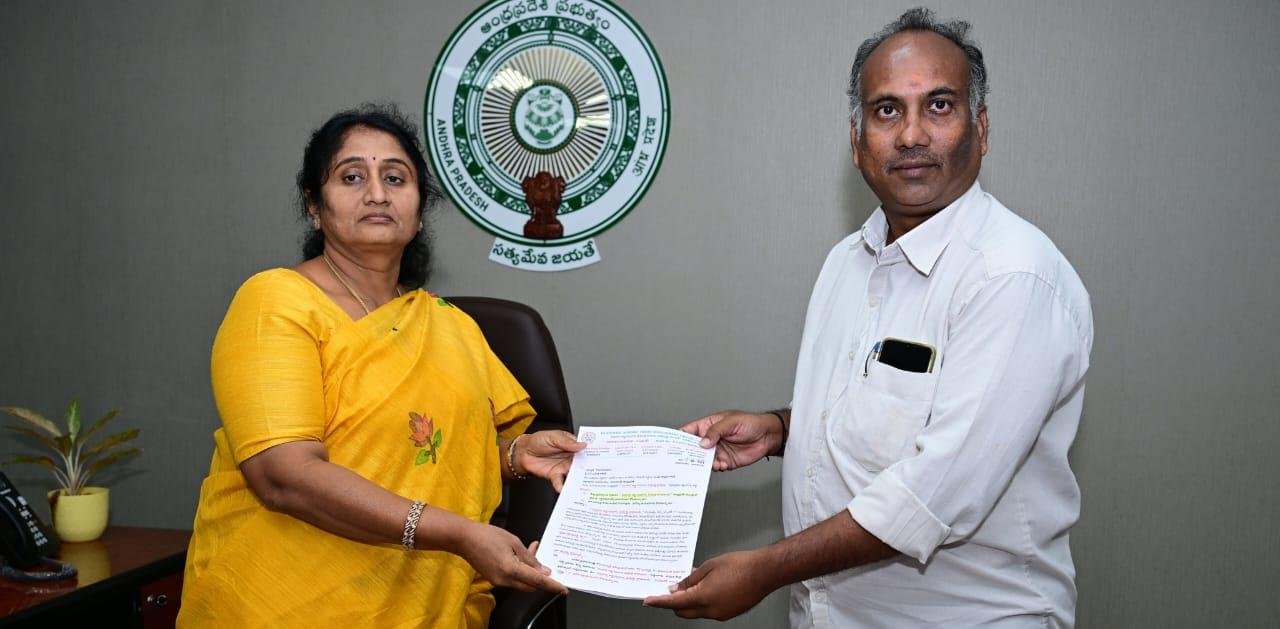
Andhra Pradesh: Kandikattu Narasimha Rao, State President of Medara Sangham and a High Court Advocate, met Andhra Pradesh BC Minister S Savita on November 11, to advocate for the welfare of the Medara caste and other marginalized communities. The meeting highlighted ten key demands, including the inclusion of Medara castes in the list of nomadic tribes. The minister responded positively, assuring swift action on these requests.
Push for nomadic tribe recognition
Narasimha Rao submitted a memorandum urging the government to recognize 72 castes, including the Medara community, as nomadic tribes, as per the Dr. Bhikuram report. He also called for introducing this proposal in the Assembly. Minister Savita affirmed her commitment to addressing this demand, bringing hope to historically overlooked communities.
Economic empowerment through SEED loans

The Medara Sangham President highlighted the need for SEED (Self-Employment Economic Development) loans to uplift nomadic tribes economically. The minister acknowledged the importance of this initiative and assured a favorable response.
Promoting bamboo as a sustainable alternative
With the slogan “No Plastic… Bamboo is Better”, Narasimha Rao also emphasized the ecological benefits of bamboo and sought government support for promoting its use. Minister Savita appreciated the initiative and assured collaboration to advance this sustainable alternative.

Gratitude and optimism
Expressing heartfelt thanks to Minister Savita, Narasimha Rao shared optimism about the swift implementation of these demands. The Medara community looks forward to achieving greater recognition and empowerment through these efforts.