

US Extends Ceasefire with Iran Amid Stalled Talks, Internal Power Struggles
World War
 Samir Singh 'Bharat'-Editor-in-Chief
Send an email
26 April 2026
Samir Singh 'Bharat'-Editor-in-Chief
Send an email
26 April 2026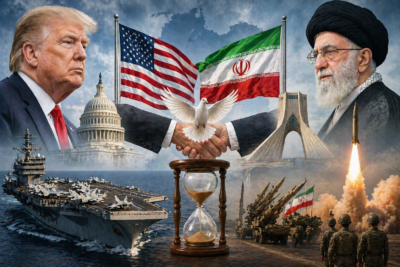
War-Report: The United States has extended its ceasefire with Iran, reflecting both a continued effort to pursue diplomacy and growing concern over the uncertain direction of negotiations. The decision, announced by Donald Trump on April 21, will remain in place until Iran presents what has been described as a “unified proposal” and formal discussions reach a conclusion. While the extension prevents immediate escalation, it also highlights deep divisions within Iran and rising tensions that could lead to renewed conflict.
The ceasefire extension comes after a planned second round of talks between the United States and Iran in Islamabad failed to take place. Iranian representatives did not confirm their participation, and there was no clear response to US proposals. This breakdown has raised doubts about whether meaningful negotiations can proceed in the near future.

Pakistan’s role as a mediator has been important in maintaining communication between the two sides. Pakistani officials reportedly urged Washington to avoid resuming military action while Iranian leaders worked to form a coordinated position. This intervention reflects wider regional concern that any escalation between the United States and Iran could destabilize the Middle East.
A key issue in the stalled negotiations is Iran’s inability to present a unified position. The reference to a “unified proposal” suggests that earlier attempts were fragmented or inconsistent. Analysts believe this is due to internal divisions within Iran’s leadership, where different factions hold competing views on how to deal with the United States.

Two major figures are central to this internal struggle: Mohammad Bagher Ghalibaf and Ahmad Vahidi. Their opposing approaches have made it difficult for Iran to adopt a single, clear negotiating strategy.
Ghalibaf has supported diplomatic engagement and has shown willingness to continue talks without strict preconditions. His position reflects a more pragmatic approach aimed at reducing tensions and finding a negotiated outcome.
In contrast, Vahidi, a senior leader within the Islamic Revolutionary Guards Corps, is associated with a more hardline stance. Reports indicate that he and his allies pushed for a precondition requiring the United States to lift its blockade on Iranian ports before negotiations could begin.

This disagreement became clear when Iran initially signaled it would attend the Islamabad talks but later introduced the blockade condition, leading to the cancellation of the meeting. The adoption of this demand suggests that Vahidi and aligned figures currently have strong influence over decision-making.
Vahidi’s influence is believed to be strengthened by his connection to Mojtaba Khamenei, giving him significant authority in shaping policy. This power dynamic has made it harder for moderate voices within Iran to advance a flexible negotiating position.
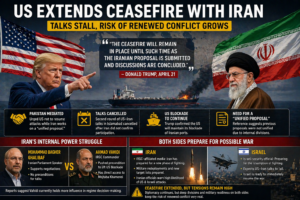
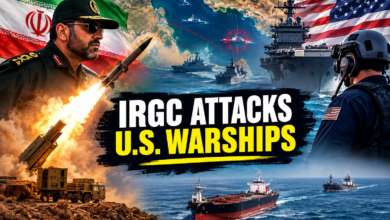
Despite ongoing diplomatic efforts, both sides are preparing for the possibility of renewed conflict. Iranian officials and media linked to the IRGC have indicated that the country is ready for a new phase of confrontation. Reports suggest that Iran has repositioned military assets and updated potential target lists.
Senior Iranian officials have warned that the likelihood of renewed attacks by the United States and Israel is high. These statements emphasize the need for readiness and reflect a growing expectation that the ceasefire may not hold.
On the other side, Israel is also preparing for possible escalation. Security officials have indicated that they expect US–Iran negotiations to fail and have stated that Israel is ready to respond quickly if hostilities resume.
The United States has chosen to maintain its blockade of Iranian ports, even while extending the ceasefire. This move is intended to preserve economic pressure and maintain leverage in negotiations. However, it also remains a major point of contention for Iran, which views the blockade as a critical issue.
For Washington, the strategy is to combine restraint with pressure, hoping that Iran will eventually present a proposal that addresses US concerns. For Tehran, however, the continued blockade strengthens arguments from hardline factions that oppose engagement.
The broader regional environment adds further complexity. Tensions involving Iran, Israel, and other Middle Eastern actors create a situation where even minor incidents could escalate quickly. The absence of trust between the parties makes it difficult to build lasting agreements.
The dual approach of diplomacy and military preparation on both sides creates a fragile balance. While talks are technically ongoing, the lack of progress and continued mistrust increase the risk that the ceasefire could collapse.

Experts emphasize that maintaining the ceasefire will require sustained diplomatic engagement and clear communication. Confidence-building measures and compromise from both sides will be necessary to move forward.
Our Media Opinion, the extension of the ceasefire between the United States and Iran offers a temporary pause in tensions but does not resolve the underlying issues. Internal divisions within Iran, strategic pressure from the United States, and regional dynamics all contribute to an uncertain future. The coming weeks will be crucial in determining whether diplomacy can succeed or whether the region will face another phase of conflict.