

NHRC Calls Heat Waves a Growing Human Rights Crisis, Urges Urgent Urban Mitigation Measures
By Doruvu Paul Jagan Babu: Assistant Chief Editor

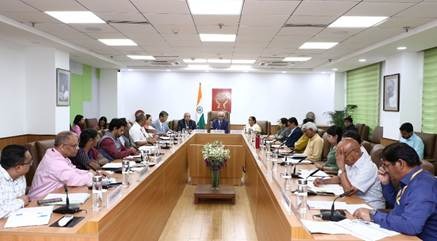
New Delhi-Andhra Pradesh: Expressing concern over the increasing frequency and severity of heat waves across the country, the National Human Rights Commission (NHRC) has described extreme heat as a serious human rights issue linked to environmental degradation and climate change. At a high-level meeting on “Heat Wave and its Mitigation in Urban Areas” held in New Delhi, experts, government officials, municipal commissioners, and environmental specialists emphasized the need for urgent and coordinated action to protect vulnerable populations and build climate-resilient cities.
Heat waves and pollution: Annual crisis with limited results NHRC
Presiding over the meeting, NHRC Chairperson Justice V. Ramasubramanian observed that India witnesses recurring debates on pollution during winter and heat waves during summer, yet mitigation efforts have yielded limited visible results. He noted that environmental rights received global attention only decades after the adoption of the Universal Declaration of Human Rights in 1948, despite their direct impact on human well-being.
Justice Ramasubramanian linked rising temperatures and heat stress to rapid industrialization, unchecked urbanization, destruction of forests, and loss of water bodies. Referring to Mahatma Gandhi’s vision of self-reliant villages, he remarked that migration to cities and the growth of “concrete jungles” have significantly worsened urban heat conditions.
Vulnerable communities face greatest risk
NHRC Secretary General Bharat Lal highlighted that heat waves disproportionately affect vulnerable groups, including construction workers, outdoor labourers, gig workers, the elderly, pregnant women, and people lacking access to adequate housing or cooling facilities.

He expressed concern over the rising number of heat-related deaths reported across the country and reiterated that the rights to life, health, and a clean environment are fundamental human rights. While several states and municipal bodies have introduced heat mitigation measures, fatalities continue to rise, underscoring the need for stronger interventions.
Experts recommend comprehensive urban heat action plans
Experts from institutions including the Indian Institute of Science, IMD, NDMA, Ministry of Health, and various environmental organizations proposed a wide range of measures to tackle heat stress.

Key recommendations included strengthening early warning systems, expanding urban green cover, protecting water bodies, implementing cool roof technologies, introducing heat-sensitive work schedules, improving public awareness, enhancing healthcare preparedness, and developing ward-level heat-risk mapping using advanced technologies such as artificial intelligence.
Several speakers stressed the need for worker-centric safety protocols and special protections for outdoor and informal-sector workers who face prolonged exposure to extreme temperatures.
Focus on climate-resilient cities
Municipal commissioners from Ahmedabad and Indore shared successful initiatives, including urban greening, shaded public spaces, cool roof programs, and micro-level heat-risk mapping. Experts emphasized that future urban planning must integrate climate resilience through sustainable infrastructure, biodiversity conservation, restoration of wetlands, and protection of forests.
The NHRC concluded that combating heat waves requires coordinated efforts by governments, urban local bodies, experts, and civil society to safeguard lives, livelihoods, and human rights in an era of increasing climate challenges.