

Rising Unrest in Manipur and Kashmir Raises Fresh Security Challenges for India
Violence, Militancy Test Stability
 Samir Singh 'Bharat'-Editor-in-Chief
Send an email
31 May 2026
Samir Singh 'Bharat'-Editor-in-Chief
Send an email
31 May 2026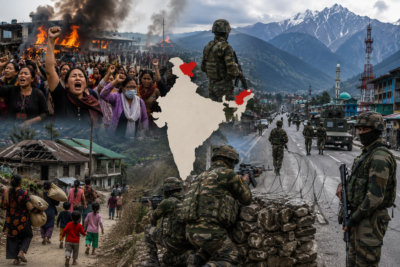
New Delhi: India is confronting growing internal security challenges as renewed ethnic violence in Manipur and persistent militancy in Jammu and Kashmir continue to test the country’s stability and governance. Analysts warn that unresolved local grievances, political alienation, and broader regional tensions are creating a complex security environment that could have long-term implications for India’s domestic and strategic priorities.
Recent discussions among security experts have focused on two of India’s most sensitive conflict zones—Manipur in the northeast and Kashmir in the north—where developments over the past year have highlighted the difficulties of maintaining peace amid deep-rooted social and political divisions.
Manipur Conflict Expands Beyond Initial Ethnic Divide
The ongoing violence in Manipur, which erupted in 2023, remains one of the most serious internal conflicts witnessed in India in recent years. What began as clashes between the Meitei and Kuki-Zo communities has evolved into a broader crisis involving multiple ethnic groups and armed factions.
Observers note that recent reports suggest sections of Naga groups have increasingly become involved in the conflict, raising concerns that the unrest could spread further across the region. Such developments have heightened fears that the violence may transform into a wider ethnic confrontation involving communities with long-standing historical grievances.
The roots of the conflict lie in disputes over land rights, political representation, resource allocation, and competing claims over identity and autonomy. These tensions have been aggravated by decades of insurgency, demographic changes, and distrust among various ethnic groups.

Security analysts argue that many of the armed groups operating today have historical links to older insurgent movements that emerged in northeast India during previous decades. Although several organizations have entered ceasefire agreements with the government, underlying tensions have never been fully resolved.
Concerns Over Governance and Policy Response
Critics have questioned whether the central government’s response has been sufficient to address the scale of the crisis. Despite repeated appeals from civil society organizations and local leaders, many residents continue to express concerns regarding displacement, security, and rehabilitation.
Thousands of people remain affected by the violence, with communities continuing to live in segregated areas amid fears of renewed clashes. Humanitarian concerns, including access to education, healthcare, and livelihoods, remain significant challenges across affected districts.

Experts argue that the prolonged nature of the conflict reflects deeper governance issues and the absence of a comprehensive political solution capable of addressing the concerns of all communities involved.
Kashmir Faces Ongoing Militancy Threat
While Manipur struggles with ethnic violence, Jammu and Kashmir continues to face security concerns linked to militant activity and political instability.
The region remains under close scrutiny one year after a major militant attack that killed 26 people and triggered a serious military confrontation between India and Pakistan. The incident heightened tensions between the two nuclear-armed neighbors and raised fears of broader escalation in South Asia.
Although security forces have intensified counterinsurgency operations, analysts believe that militancy remains a persistent challenge. Small but active militant networks continue to operate in parts of the region, exploiting local grievances and regional instability.
Security experts warn that even isolated attacks have the potential to trigger wider political and diplomatic consequences due to the sensitive nature of the Kashmir dispute.
Political Alienation Remains a Key Concern
Beyond security issues, concerns persist regarding political representation and public trust in Jammu and Kashmir.
Several analysts argue that heavy security measures, restrictions on political activity, and prolonged uncertainty regarding governance arrangements have contributed to feelings of alienation among sections of the population.
While the government maintains that its policies are aimed at promoting stability, development, and integration, critics contend that long-term peace requires meaningful political engagement and greater participation of local stakeholders in decision-making processes.
Observers note that sustainable stability will likely depend not only on security operations but also on efforts to rebuild confidence, strengthen democratic institutions, and address economic and social concerns.
India-Pakistan Relations Continue to Influence Security Calculations
Developments in Kashmir remain closely linked to the broader relationship between India and Pakistan. Periodic tensions along the Line of Control and competing narratives regarding security incidents continue to shape regional dynamics.
Security experts suggest that any significant militant attack in Kashmir could quickly affect bilateral relations, increasing the risk of military escalation. As a result, both countries continue to monitor developments in the region closely.
The strategic environment has become even more complicated due to changing geopolitical realities and shifting global alliances.
Strategic Outlook Shaped by Global Uncertainty
India’s security planners are also navigating an increasingly uncertain international landscape. Growing geopolitical competition, conflicts in different parts of the world, and evolving relationships among major powers are influencing New Delhi’s strategic calculations.
Questions regarding the future direction of U.S.-India relations, regional security partnerships, and broader Indo-Pacific dynamics are becoming increasingly important for policymakers. While cooperation between India and the United States remains strong in many areas, analysts note that shifts in global politics could affect strategic priorities in the coming years.
At the same time, India’s leadership continues to balance domestic security concerns with broader foreign policy objectives, including economic growth, regional stability, and defense modernization.
Multiple Challenges Require Long-Term Solutions
Experts believe that the situations in Manipur and Kashmir demonstrate the complexity of India’s internal security landscape. While the two regions have distinct historical and political contexts, both highlight the challenges of addressing conflict through security measures alone.
Many analysts argue that lasting peace will require a combination of effective governance, inclusive political dialogue, economic development, and community reconciliation. Without sustained efforts to address underlying grievances, they warn that instability could continue to pose challenges for India’s national security and social cohesion.
As New Delhi seeks to navigate an increasingly volatile regional and global environment, developments in Manipur and Kashmir are likely to remain central issues shaping India’s domestic policies and strategic outlook in the years ahead.