


Hantavirus-Linked Cruise Ship Reaches Tenerife as Passengers Prepare to Return Home
Health Emergency at Sea Sparks International Concern
 Samir Singh 'Bharat'-Editor-in-Chief
Send an email
10 May 2026
Samir Singh 'Bharat'-Editor-in-Chief
Send an email
10 May 2026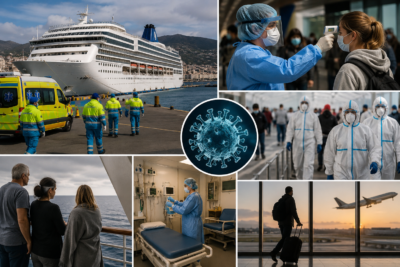
Special Report : A cruise ship linked to a suspected hantavirus outbreak has arrived at the Spanish island of Tenerife, where hundreds of passengers are expected to disembark under strict health monitoring before beginning their journeys back to their home countries. The incident has triggered widespread concern among international health agencies, maritime authorities, and travelers, as officials work to contain any potential spread of the rare but potentially deadly virus.
The vessel, which had been navigating through parts of the Atlantic during its scheduled voyage, reportedly experienced a medical emergency after several passengers and crew members began showing flu-like symptoms associated with hantavirus infection. Health authorities became alerted when onboard medical staff identified symptoms including fever, severe fatigue, breathing difficulties, headaches, and muscle pain among some travelers.
As the ship docked at Tenerife’s main cruise terminal, emergency medical teams, epidemiologists, and Spanish public health officials were deployed to oversee the controlled disembarkation process. Authorities emphasized that precautionary measures were being implemented to ensure passenger safety while minimizing risks to the local population.
The arrival of the cruise ship has placed Tenerife at the center of an international public health response. Local hospitals, emergency services, and infectious disease specialists have remained on standby as health screenings continue for everyone aboard the vessel.
Passengers Face Anxiety During Quarantine Procedures
Passengers onboard described scenes of uncertainty and anxiety during the final days of the voyage. Many travelers reportedly remained confined to their cabins after the suspected outbreak emerged, while medical teams conducted temperature checks and health assessments throughout the ship.

Several passengers said the atmosphere onboard shifted dramatically once health warnings were announced. Cruise activities were reportedly suspended, dining services restricted, and public gathering areas temporarily closed as authorities attempted to isolate potentially infected individuals.
Families traveling with children expressed concern over limited information during the early stages of the health scare. Some passengers said they learned about the suspected hantavirus exposure through rumors circulating onboard before official announcements were made by cruise management.
Medical staff reportedly distributed masks and hygiene kits while instructing passengers to avoid unnecessary movement throughout the ship. Crew members intensified cleaning and sanitation operations in cabins, corridors, restaurants, elevators, and recreational areas.

Travelers waiting to disembark in Tenerife were instructed to remain calm and cooperate with medical screening procedures. Health authorities established temporary assessment stations near the dock where passengers underwent symptom checks before being cleared for onward travel.
Despite fears surrounding the outbreak, officials stated that the majority of passengers did not display severe symptoms. However, precautionary monitoring continues due to the virus’s incubation period and the possibility of delayed symptom development.
Understanding Hantavirus and Its Risks
Hantavirus is a rare but serious viral disease primarily transmitted through exposure to infected rodents, particularly through contact with their urine, droppings, or saliva. Humans can become infected by inhaling contaminated airborne particles in enclosed spaces where rodents are present.
The virus is known to cause severe respiratory illness, sometimes progressing into Hantavirus Pulmonary Syndrome (HPS), a potentially fatal condition affecting the lungs and cardiovascular system. Early symptoms often resemble common flu infections, making initial diagnosis difficult.
Medical experts explain that symptoms usually begin with fever, muscle aches, fatigue, headaches, dizziness, nausea, and abdominal pain. In severe cases, patients may develop coughing and breathing difficulties as fluid accumulates in the lungs.
Although hantavirus infections remain relatively rare globally, outbreaks have historically raised alarm due to the disease’s high mortality rate in severe cases. Public health officials stress that early medical intervention significantly improves patient outcomes.
Experts investigating the cruise ship incident are attempting to determine how exposure may have occurred. Preliminary assessments suggest possible contamination in storage or maintenance areas where rodents may have been present, although no official confirmation has yet been issued.
Spanish authorities stated that environmental inspections would be conducted onboard to identify any sanitation concerns or evidence of rodent activity. Health investigators are also tracing passenger movement and possible exposure timelines during the voyage.
Tenerife Authorities Launch Coordinated Response
Authorities in Tenerife implemented extensive emergency protocols ahead of the ship’s arrival. Medical personnel wearing protective equipment were stationed at the port, while transportation arrangements were modified to reduce public interaction during passenger transfers.
Officials from Spain’s health ministry coordinated closely with local authorities in the Canary Islands to ensure sufficient medical resources were available if additional cases emerged. Isolation facilities were also reportedly prepared for passengers requiring further observation or treatment.
Emergency response teams established designated pathways at the port terminal to separate passengers undergoing health checks from regular cruise traffic. Security personnel restricted public access to sections of the harbor during the operation.
Spanish officials emphasized that there was no evidence of widespread transmission among the local population. Authorities reassured residents that preventive measures were being implemented according to international public health standards.
Tourism officials also moved quickly to address concerns about potential impacts on Tenerife’s tourism industry, which heavily depends on international visitors and cruise ship arrivals. Authorities stressed that the situation was being managed carefully and posed no immediate threat to tourists or residents outside the affected vessel.
The Canary Islands government urged the public to avoid panic while relying on verified information from health authorities. Officials warned against misinformation spreading online regarding the outbreak.
International Health Agencies Monitor Situation
The suspected hantavirus outbreak has attracted attention from global health organizations monitoring infectious disease risks associated with international travel and cruise tourism.
Health agencies from several countries whose citizens were onboard the vessel have reportedly been informed about the situation. Authorities are coordinating efforts to track passengers after they return home, ensuring follow-up monitoring and medical support where necessary.
Experts note that cruise ships present unique challenges during infectious disease incidents because of their confined environments, shared facilities, and large international passenger populations. Rapid containment measures are therefore considered essential once symptoms emerge onboard.
The incident has renewed discussions about health preparedness in the cruise industry following previous outbreaks involving respiratory and gastrointestinal illnesses aboard international vessels.
Medical researchers are also analyzing whether the reported cases involve confirmed hantavirus infection or a suspected cluster pending laboratory verification. Samples collected from affected individuals are expected to undergo testing in specialized laboratories.
Until official laboratory results are finalized, authorities continue treating the situation with heightened caution.
Cruise Industry Faces Renewed Scrutiny
The health scare has once again highlighted concerns surrounding disease management protocols within the global cruise industry. Over recent years, cruise operators have invested heavily in onboard medical infrastructure, quarantine capabilities, and sanitation procedures following multiple high-profile outbreaks at sea.
Industry analysts say the Tenerife incident could intensify pressure on cruise companies to strengthen monitoring systems for infectious diseases, including environmental inspections and pest control measures.
Passengers aboard cruise ships often spend extended periods in close proximity, increasing the risk of disease transmission if outbreaks occur. Maritime health experts emphasize the importance of rapid communication, transparency, and coordinated emergency responses in such situations.
Questions have also emerged regarding whether warning signs may have been detected earlier during the voyage. Some passengers reportedly complained about delayed communication from cruise management during the initial phase of the incident.
Cruise operators have not publicly disclosed the total number of suspected cases onboard. However, company representatives stated that they were cooperating fully with Spanish authorities and international health agencies.
The cruise line also pledged support for affected passengers, including medical assistance, accommodation arrangements, and travel coordination following disembarkation.
Medical Experts Urge Calm but Vigilance
Infectious disease specialists stressed that hantavirus does not typically spread easily from person to person in most cases, unlike highly contagious respiratory viruses. Experts said this significantly reduces the likelihood of a large-scale outbreak among the general public.
However, authorities continue encouraging vigilance because symptoms can worsen rapidly in infected individuals. Travelers who were onboard the vessel have been advised to monitor their health closely for several weeks and seek medical attention if symptoms develop.
Doctors also reminded the public that hantavirus infections remain uncommon and are generally associated with direct environmental exposure to infected rodents rather than routine human interaction.
Public health campaigns in Spain and other affected countries are expected to provide additional guidance regarding symptom recognition and preventive measures.
Experts stressed that accurate diagnosis is essential because early hantavirus symptoms can resemble influenza, COVID-19, or other respiratory illnesses. Laboratory testing therefore plays a critical role in confirming infections.
Healthcare workers involved in the Tenerife operation were instructed to follow enhanced protective measures while handling suspected cases.
Passengers Begin Returning Home
As disembarkation operations continue, passengers cleared through medical screening are beginning to depart Tenerife on specially coordinated flights and transport services arranged in cooperation with airlines and embassies.
Some travelers may remain temporarily in Tenerife for observation depending on their medical status or exposure history. Authorities said decisions regarding isolation or additional testing would be made on a case-by-case basis.
Passengers described feelings of relief after finally reaching land following days of uncertainty at sea. However, many also expressed frustration over disrupted travel plans and lingering concerns about their health.
Several embassies established emergency communication channels to assist citizens returning from the cruise. Consular officials are helping coordinate documentation, medical consultations, and travel logistics for affected travelers.
Meanwhile, Spanish authorities continue environmental assessments onboard the vessel before determining whether further sanitation or containment procedures are necessary.
The cruise ship itself may remain under inspection until health investigators complete their examination and authorities determine that all public health requirements have been satisfied.
Broader Implications for Global Travel
The Tenerife incident serves as another reminder of the challenges facing the international travel sector in an era of increasing health security concerns. Experts warn that global tourism networks can rapidly amplify public health risks when infectious diseases emerge in highly mobile environments such as cruise ships and airports.
Governments and travel operators are likely to review emergency response frameworks following the incident, particularly regarding onboard medical surveillance and international coordination during suspected outbreaks.
The event also underscores the importance of public awareness regarding zoonotic diseases — illnesses transmitted from animals to humans — which continue to pose significant global health challenges.
Researchers say climate change, environmental disruption, and expanding human interaction with wildlife habitats may contribute to increased exposure risks for diseases carried by animals, including rodents.
While investigations into the cruise ship outbreak continue, authorities in Tenerife and across Europe remain focused on preventing further health complications while assisting passengers returning home.
For now, the situation remains under close observation as medical teams work to determine the full scope of the suspected hantavirus exposure and ensure the safe conclusion of the voyage that unexpectedly turned into an international health emergency.