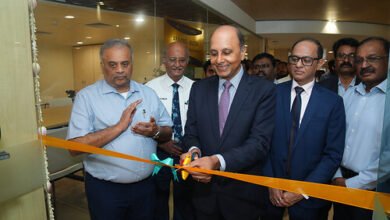


National Health Summit Highlights CRM Findings, Showcases Best Practices to Build Inclusive, Future-Ready Healthcare System
By Doruvu Paul Jagan Babu: Assistant Chief Editor

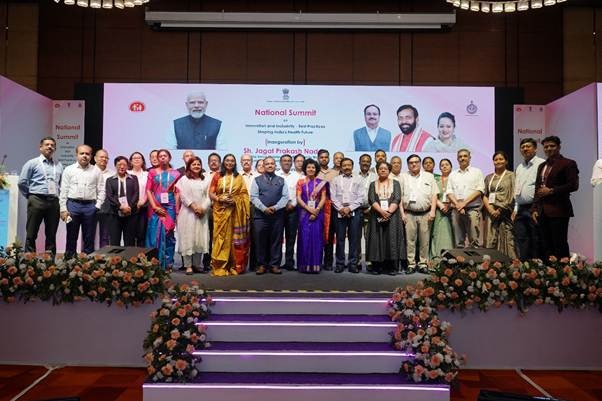
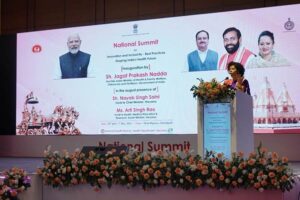
Delhi: The two-day National Summit on “Innovation and Inclusivity: Best Practices Shaping India’s Health Future” concluded with a strong emphasis on evidence-based policy, innovation, and cooperative federalism, as detailed deliberations on the 17th Common Review Mission (CRM) under the National Health Mission (NHM) underscored both progress and gaps in India’s public health system.
Focus on innovation and knowledge sharing
The opening day of the summit served as a platform for states and Union Territories to present innovative healthcare interventions and best practices. These sessions enabled peer learning and showcased scalable models across key areas such as primary healthcare, maternal and child health, digital health solutions, and non-communicable disease management.
Additionally, presentations on ongoing and upcoming initiatives by the Ministry helped align state-level strategies with national health priorities, promoting more effective on-ground implementation.
CRM findings drive technical deliberations
The second day centered on findings from the 17th Common Review Mission, which assessed healthcare delivery across 17 states and UTs. The CRM, a key mechanism for independent evaluation under NHM, provided insights into governance, service delivery, and system performance.

The findings indicated significant progress in:
Operationalization of Ayushman Arogya Mandirs
Expansion of comprehensive primary healthcare
Adoption of digital health technologies
Improved maternal and child healthcare services
Enhanced screening and management of non-communicable diseases
Increased use of telemedicine platforms
Challenges and areas for improvement
Despite progress, discussions highlighted several areas requiring attention:
Optimizing human resource deployment
Ensuring availability of essential drugs and diagnostics
Expanding healthcare access in remote and underserved regions
Strengthening referral systems
Improving data quality and real-time monitoring
Enhancing biomedical waste management systems
Stakeholders emphasized the importance of data-driven decision-making and stronger community participation to sustain gains.
Call for inclusive and sustainable healthcare
In her closing remarks, Aradhna Patnaik, Additional Secretary and Mission Director, NHM, praised the strides made by states while urging a shift toward long-term health system strengthening aligned with Sustainable Development Goals (SDGs) for 2030.
She stressed that digital health advancements must remain inclusive, ensuring no beneficiary—especially vulnerable populations—is left behind. Capacity building of frontline health workers was identified as critical to achieving this goal.
Top best practices from states
The summit highlighted 12 standout initiatives demonstrating innovation and adaptability:
Gujarat: Audit-based TB mortality reduction system
Tamil Nadu: Mental health and substance abuse response centres for students
Kerala: Antibiotic stewardship under One Health approach
Jammu & Kashmir: Strengthened medical supply chains
Assam: ‘Uttran’ initiative for maternal and child health
Chhattisgarh: Malaria elimination and follow-up model
Haryana: Comprehensive NCD care framework
Jharkhand: Data-driven healthcare action model (AMB T4)
Madhya Pradesh: SUMAN ICCC and district help desks
Maharashtra: ‘Matrusneh’ maternal health programme
Odisha: Urban geriatric healthcare services
Uttar Pradesh: Capacity building for neonatal and family planning services
These initiatives were recognized as scalable models contributing to a resilient healthcare ecosystem.
Strengthening cooperative federalism
The summit reaffirmed the government’s commitment to cooperative federalism, with states encouraged to adopt context-specific innovations and strengthen inter-state collaboration. The CRM was highlighted as a critical tool for ensuring accountability, fostering learning, and guiding policy decisions.
Way forward: Building a resilient health system
The deliberations concluded with a collective resolve to:
Sustain innovation-driven healthcare reforms
Scale up successful models nationwide
Strengthen health infrastructure and governance
Ensure inclusive, equitable access to healthcare
The summit ultimately reinforced India’s commitment to building a future-ready, inclusive public health system capable of addressing evolving healthcare challenges.
India Health Summit Highlights Innovation, CRM Findings and Key Gaps
India’s two-day National Health Summit in New Delhi highlighted key reforms shaping the country’s public healthcare system. Discussions centered on findings from the National Health Mission’s 17th Common Review Mission, which showed progress in primary healthcare, digital health, and maternal services. However, gaps remain in workforce distribution, access in remote areas, and infrastructure. Officials emphasized data-driven policy, innovation, and cooperative federalism.
Twelve best practices from states were showcased as scalable models. Leaders stressed that future healthcare growth must be inclusive, technology-driven, and focused on strengthening systems to ensure equitable access and long-term resilience.India’s two-day National Health Summit in New Delhi highlighted key reforms shaping the country’s public healthcare system. Discussions centered on findings from the National Health Mission’s 17th Common Review Mission, which showed progress in primary healthcare, digital health, and maternal services.
However, gaps remain in workforce distribution, access in remote areas, and infrastructure. Officials emphasized data-driven policy, innovation, and cooperative federalism. Twelve best practices from states were showcased as scalable models. Leaders stressed that future healthcare growth must be inclusive, technology-driven, and focused on strengthening systems to ensure equitable access and long-term resilience.