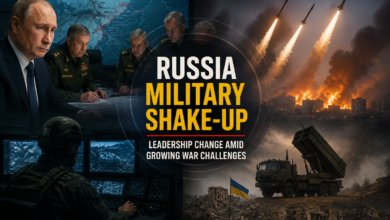



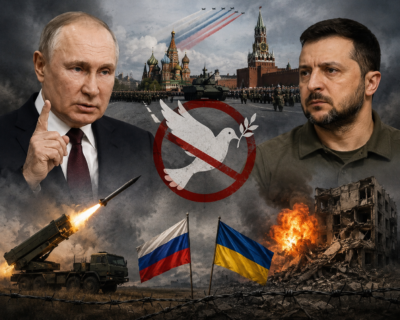
WAR-REPORT : The Russian Ministry of Defense has formally announced the conditions of a unilateral ceasefire that Moscow says will coincide with the country’s Victory Day commemorations on May 9. According to the Russian government, the temporary pause in hostilities is intended to mark the anniversary of the Soviet Union’s victory over Nazi Germany during the Second World War. Yet despite Moscow’s public framing of the ceasefire as a humanitarian and symbolic gesture, Ukrainian officials and many international observers believe the move is less about peace and more about strategic pressure, intimidation, and political messaging.
The Russian Ministry of Defense declared on May 7 that the ceasefire would begin at midnight local time on May 8 and continue until midnight on the morning of May 10. Russian officials stated that all military operations would be halted during this period. According to the announcement, Russian forces would suspend ground combat operations, artillery fire, frontline drone strikes, and long-range missile and drone attacks. Moscow portrayed the decision as an opportunity to reduce violence during one of Russia’s most important national holidays and called on Ukraine to follow the same course.
However, the ceasefire announcement was accompanied by sharp warnings from Russian officials, including direct threats of large-scale retaliation if Ukraine failed to comply. The Russian Ministry of Defense warned that if Ukraine continued military operations during the declared ceasefire period or launched attacks against Russian territory or Russian-occupied areas, Russia would respond with what it described as a “massive” missile strike against Kyiv. This warning immediately raised concerns that the ceasefire was being used not as a genuine diplomatic opening but as a political instrument designed to pressure Ukraine while protecting Russia’s Victory Day celebrations.
Victory Day occupies a central place in Russian political culture and national identity. Every year on May 9, Russia commemorates the Soviet victory in the Second World War with large military parades, patriotic ceremonies, and speeches emphasizing national sacrifice and military strength. Since the beginning of the war in Ukraine, the Kremlin has increasingly linked its current military campaign to the historical memory of the Soviet fight against Nazi Germany. Russian President Vladimir Putin frequently uses Victory Day events to rally domestic support, project strength, and reinforce narratives portraying Russia as defending itself against external threats.
This year’s celebrations carry additional significance because of increasing Ukrainian long-range strike capabilities. Over the past year, Ukraine has demonstrated an ability to target military infrastructure, oil depots, air bases, and logistical centers deep inside Russian territory. Ukrainian drone attacks have repeatedly disrupted Russian operations far from the battlefield and exposed vulnerabilities in Russian air defenses. These developments have generated concern inside Russia about the possibility of attacks during major national events, especially in Moscow.

Ukrainian President Volodymyr Zelensky responded critically to Moscow’s ceasefire announcement. Speaking on May 7, Zelensky argued that Russia had already violated previous declarations of restraint and had responded to earlier Ukrainian ceasefire efforts with additional military strikes and threats. He referred specifically to Ukraine’s unilateral ceasefire initiative from May 5 to May 6, which he said Russia answered with intensified attacks instead of reciprocal de-escalation.
Zelensky accused Moscow of seeking temporary security guarantees solely for the purpose of protecting its Victory Day parade while continuing the broader war effort afterward. He remarked that Russia appeared to want Ukraine’s “permission” to ensure that officials and military personnel could safely attend ceremonies on Red Square “for one hour once a year” before returning to military operations against Ukraine. His statement reflected deep skepticism inside Kyiv regarding Russia’s intentions and reinforced the Ukrainian position that temporary pauses announced unilaterally by Moscow cannot be trusted as genuine steps toward peace.
The broader international reaction to the ceasefire declaration has also been shaped by Russia’s increasingly aggressive rhetoric in the days leading up to May 9. Russian officials have issued a series of warnings suggesting that any Ukrainian attempt to disrupt Victory Day celebrations would provoke severe retaliation. These statements have included direct references to attacks on Kyiv and even threats aimed indirectly at Ukraine’s Western partners.

Russian Foreign Ministry spokesperson Maria Zakharova intensified the rhetoric on May 7 by declaring that Russia would take “appropriate steps” if Ukraine attempted to interfere with Victory Day events through strikes against Russian territory. Zakharova specifically warned of possible retaliatory attacks against what she described as “decision-making centers” in Kyiv. The phrase has often been interpreted as a reference to government buildings, military command facilities, and political leadership locations inside the Ukrainian capital.
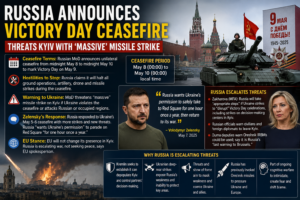
Zakharova also repeated earlier warnings urging civilians and foreign diplomatic personnel to leave Kyiv immediately because of the possibility of large-scale Russian retaliation. Russian authorities claimed that these warnings had been formally communicated to diplomatic missions and international organizations operating in Ukraine. The statements appeared designed to increase pressure not only on Ukraine itself but also on foreign governments maintaining diplomatic presences in Kyiv.
Some Russian lawmakers amplified the threats even further. Members of the State Duma suggested that Russia could potentially employ Oreshnik intermediate-range ballistic missiles in retaliatory strikes against Kyiv if Ukraine targeted Russian celebrations. The deputies framed these remarks as a “last warning to Brussels,” signaling that the threats were also directed at European governments supporting Ukraine militarily and financially.
The Oreshnik missile system has become an increasingly visible component of Russian strategic messaging. Russian officials have repeatedly invoked the missile as part of efforts to demonstrate military strength and intimidate both Ukraine and NATO countries. Although details regarding the system remain limited, Russian authorities portray it as a powerful weapon capable of delivering devastating strikes over long distances. By publicly mentioning Oreshnik missiles in connection with Kyiv, Russian politicians appeared to be escalating psychological pressure ahead of Victory Day.
European officials rejected the Russian warnings and signaled that they would not alter their diplomatic activities because of Moscow’s threats. European Commission spokesperson for Foreign Affairs and Security Policy Anouar El-Anouni stated on May 7 that the European Union would maintain its presence in Kyiv despite Russian statements. He noted that Russian attacks had already damaged diplomatic facilities in the Ukrainian capital, including buildings connected to the European Union mission in Ukraine.
El-Anouni accused Russia of attempting to shift responsibility for the war onto Ukraine while simultaneously escalating the conflict through threats and military actions. He argued that Moscow’s behavior demonstrated a lack of genuine commitment to peace negotiations and instead reflected an effort to intimidate Ukraine and its international partners.
Analysts believe the Kremlin’s threats serve several interconnected purposes. One objective appears to be the protection of Russia’s Victory Day ceremonies from potential embarrassment or disruption. Ukrainian drone strikes during or near the celebrations would undermine the Kremlin’s image of control and military competence, particularly during one of the most symbolic moments of the Russian political calendar.
Another likely objective is psychological warfare. By threatening devastating retaliation against Kyiv, Russian authorities may hope to pressure Ukrainian leaders into avoiding strikes during the Victory Day period. The warnings also appear aimed at discouraging foreign diplomatic activity in Kyiv and creating uncertainty among Ukraine’s international supporters.
At the same time, many analysts argue that the intensity of Russia’s rhetoric reflects underlying insecurity rather than confidence. Ukrainian long-range strike capabilities have exposed significant weaknesses in Russia’s ability to defend strategic sites deep inside its territory. Repeated Ukrainian drone attacks have reached regions previously considered relatively secure, including areas close to Moscow. These incidents have embarrassed Russian authorities and raised questions about the effectiveness of Russia’s air defense network.
The Institute for the Study of War and other observers have suggested that the Kremlin’s escalating threats indicate recognition that Russia cannot fully guarantee the security of its capital during major events. From this perspective, the ceasefire declaration and accompanying warnings may represent an attempt to reduce the likelihood of Ukrainian strikes through intimidation rather than through military deterrence alone.
Russia has previously used periods of declared humanitarian pauses or temporary ceasefires for strategic advantage. Throughout the war, both sides have accused each other of violating ceasefire arrangements and exploiting pauses to reposition forces, reinforce defensive positions, or conduct information operations. Ukrainian officials therefore remain highly suspicious of any unilateral Russian declarations that are not coordinated through formal international mechanisms.
The Kremlin’s current messaging also fits into a broader pattern of what analysts describe as cognitive warfare. Russia has repeatedly attempted to influence Ukrainian public opinion and political decision-making through psychological pressure, threats, and narratives emphasizing Russian military power. These efforts aim not only to affect battlefield dynamics but also to shape perceptions among civilians, foreign governments, and international audiences.
Earlier in the war, Russian officials and state media promoted narratives suggesting that Russian forces could rapidly seize Kyiv and overthrow the Ukrainian government. Although those initial military objectives failed, Russia has continued to use missile strikes, drone attacks, and rhetoric to create fear and uncertainty inside Ukraine. During the winter of 2025–2026, Russia launched extensive strikes against Ukrainian energy infrastructure in an effort to weaken civilian morale and strain the country’s economy.
The latest warnings surrounding Victory Day appear to continue this strategy. By combining ceasefire declarations with threats of overwhelming retaliation, Russia may be attempting to portray itself as both restrained and powerful simultaneously. Moscow can present itself domestically as offering peace while blaming Ukraine for any continued violence. Internationally, the Kremlin may hope to frame Ukraine as reckless if Kyiv refuses to comply with the unilateral ceasefire.
However, Ukraine argues that Russia’s actions contradict its public claims of restraint. Ukrainian officials note that Russian missile and drone attacks have continued throughout previous ceasefire announcements and diplomatic initiatives. Kyiv maintains that genuine peace efforts would require meaningful negotiations, mutual agreements, and verifiable commitments rather than temporary unilateral declarations accompanied by threats.
The atmosphere surrounding this year’s Victory Day celebrations therefore reflects the broader realities of the war. Both Russia and Ukraine continue to pursue military objectives while simultaneously engaging in intense information warfare. Public statements, symbolic gestures, and psychological operations have become central elements of the conflict alongside conventional combat operations.
The coming days may prove particularly sensitive. If Ukraine refrains from strikes during the Victory Day period, Russia may portray the absence of attacks as evidence that its warnings succeeded. If strikes occur despite the threats, the Kremlin could use them to justify further escalation. Either outcome may become part of competing narratives aimed at domestic and international audiences.
For ordinary civilians in Ukraine, especially residents of Kyiv, the escalating rhetoric has added another layer of anxiety to an already exhausting conflict. Russian missile and drone attacks have repeatedly targeted cities across Ukraine, causing civilian casualties and widespread destruction. Warnings about possible “massive” retaliatory strikes inevitably generate fear among populations already living under constant threat.
Diplomatic missions and international organizations operating in Kyiv also face difficult decisions. While European officials have stated that they will maintain their presence, the public warnings from Russia underline the risks associated with continued diplomatic activity in a war zone. At the same time, withdrawing diplomatic personnel could be interpreted as yielding to Russian intimidation, something European governments appear unwilling to do.
The situation highlights the increasingly blurred line between military operations and political theater in the Russia-Ukraine war. Victory Day itself is not merely a historical commemoration; it is also a carefully managed display of state power, national identity, and political legitimacy for the Kremlin. Protecting the image of stability and strength during the celebrations has become strategically important for Moscow.
Ultimately, Russia’s unilateral ceasefire announcement has not reduced tensions. Instead, it has intensified fears that the holiday period could become another flashpoint in the conflict. The combination of ceasefire rhetoric, direct threats, missile warnings, and diplomatic pressure has created an atmosphere of uncertainty and apprehension.
Whether the ceasefire results in a temporary reduction in violence or becomes a prelude to further escalation remains unclear. What is evident, however, is that both Russia and Ukraine continue to view information, symbolism, and psychological influence as critical dimensions of the war. The events surrounding Victory Day demonstrate that even declarations of peace can become instruments of strategic competition in one of the world’s most dangerous ongoing conflicts.