

World War

North Korea’s Expanding Nuclear Arsenal Raises Strategic Concerns for Global Security

World War

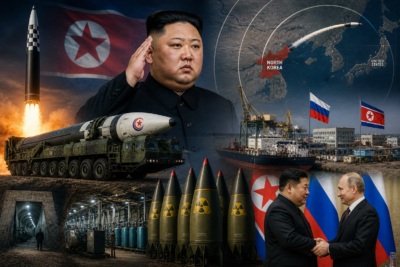
WAR-REPORT: North Korea is expected to significantly expand its nuclear weapons arsenal over the next decade, a development that is likely to reshape the global security environment and intensify concerns among major powers. Analysts warn that this expansion could challenge existing deterrence strategies and force the United States and South Korea to reassess their military preparedness.

North Korea Nuclear Expansion Raises Global Alarm

Recent estimates suggest that North Korea has the capacity to produce enough fissile material for up to 20 nuclear warheads each year. This projection, based on statements from Lee Jae Myung, indicates a rapid acceleration in North Korea’s nuclear production capabilities.

If this rate continues, North Korea could accumulate approximately 290 nuclear warheads by 2035. Such a stockpile would place it on par with France, one of the world’s leading nuclear powers. This potential parity underscores the scale of North Korea’s ambitions and the seriousness of the emerging threat.

Security experts, including analysts from the Institute for the Study of War, believe that North Korea is expanding its uranium enrichment infrastructure. These facilities are essential for producing fissile material, and their growth suggests a long-term commitment to increasing nuclear output.

The direction of North Korea’s nuclear strategy has been shaped by Kim Jong Un, who has emphasized the development of both strategic and tactical nuclear weapons. During the 9th Congress of the Workers’ Party of Korea, Kim outlined plans to produce large nuclear warheads capable of targeting distant adversaries and smaller weapons designed for regional deterrence.

This dual approach is intended to strengthen the credibility and survivability of North Korea’s nuclear deterrent. By increasing the number and variety of its weapons, North Korea reduces its reliance on a limited set of systems and enhances its ability to withstand potential preemptive strikes.
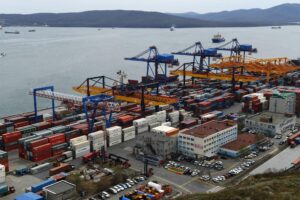
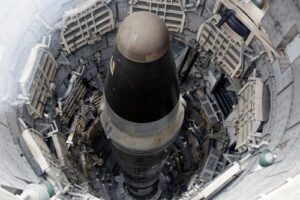
A key element of this strategy is the continued development of intercontinental ballistic missiles. North Korea has already demonstrated the ability to launch missiles capable of reaching the United States. However, questions remain about whether it can deploy these systems in sufficient numbers to overcome advanced missile defense networks.

An increase in fissile material production could allow North Korea to expand its missile force and improve its chances of penetrating defensive systems. This would significantly complicate the strategic calculations of the United States and its allies.

For South Korea and the United States, this evolving threat may require adjustments in defense planning. These could include enhancements to missile interception systems, greater emphasis on early warning capabilities, and a reassessment of preemptive strike doctrines.

In addition to its military advancements, North Korea is also pursuing economic initiatives that could support its long-term objectives. Recent reports highlight increasing cooperation between North Korea and Russian regional authorities.

The government of Primorsky Krai has announced plans to establish a working group aimed at expanding trade with North Korea. This initiative is expected to facilitate business partnerships and increase the flow of goods between the two regions.

One area of focus is the Rason Special Economic Zone, which is designed to attract foreign investment and promote economic development. Strengthening this zone could help North Korea diversify its economic relationships and reduce its dependence on China.

Reports indicate that Russian companies have already begun expanding their involvement in North Korea. Joint ventures include plans for a plastics manufacturing facility in Vladivostok and a meat-processing plant developed by North Korean entities in Russia. These projects reflect a growing economic partnership that may provide North Korea with additional resources.

The strengthening of ties between Russia and North Korea also carries broader geopolitical implications. Increased cooperation could reduce the effectiveness of international sanctions and provide North Korea with alternative channels for trade and investment.
As North Korea continues to advance its nuclear capabilities, the international community faces a complex and evolving challenge. The combination of increased production capacity, technological development, and expanding economic partnerships suggests that North Korea is positioning itself as a long-term nuclear power.

This trajectory raises important questions about global security, deterrence, and the future of arms control. Governments and international organizations will need to carefully consider their responses to ensure stability in the region.

Our Media Opinion, North Korea’s expanding nuclear arsenal represents a significant shift in the global security landscape. The potential for a large and diverse stockpile of nuclear weapons, combined with ongoing missile development and economic cooperation, highlights the urgency of addressing this issue. The actions taken in response will play a critical role in shaping the future of international security.

North Korea’s accelerating nuclear expansion is not just a regional concern anymore—it is rapidly evolving into a global strategic challenge that could reshape deterrence dynamics across multiple continents. The projected capability to produce up to 20 nuclear warheads annually places North Korea on a trajectory that few analysts previously considered realistic. If sustained, this pace would fundamentally alter the balance of power in East Asia and beyond.

At the core of this expansion lies the leadership of Kim Jong Un, whose long-term vision appears focused on establishing North Korea as an undeniable nuclear power. Unlike earlier strategies that emphasized survival and deterrence, the current approach suggests a shift toward strategic leverage. By building both tactical and strategic nuclear capabilities, North Korea is creating a diversified arsenal that can be used across different conflict scenarios.

This diversification is critical. Tactical nuclear weapons are designed for battlefield use, particularly in conflicts involving neighboring states like South Korea. Strategic weapons, on the other hand, are intended for long-range deterrence, including potential targets in the United States. The combination of both significantly complicates defense planning for adversaries, as it introduces multiple layers of threat.

One of the most concerning aspects of this expansion is North Korea’s progress in missile technology. Intercontinental ballistic missiles (ICBMs) have already demonstrated the potential to reach distant targets, but the real issue is scalability. A larger number of warheads paired with improved delivery systems increases the probability of overwhelming missile defense networks. Even advanced interception systems could struggle against a high-volume attack scenario.

This reality forces the United States and South Korea into a difficult position. Strengthening missile defense systems is one option, but it comes with high costs and technical limitations. Alternatively, both countries may need to reconsider their broader deterrence strategies, including the possibility of more aggressive postures or expanded military deployments in the region. Neither option is simple, and both carry risks of escalation.

Adding another layer of complexity is North Korea’s growing economic engagement with Russia. This relationship has the potential to undermine international sanctions, which have long been a key tool in limiting North Korea’s nuclear ambitions. Economic cooperation—whether through trade, joint ventures, or industrial projects—can provide North Korea with resources that indirectly support its military programs.

The development of the Rason Special Economic Zone is particularly significant in this context. By attracting foreign investment and facilitating cross-border trade, North Korea is attempting to create a parallel economic system that reduces its dependence on traditional partners. This diversification not only strengthens its economy but also enhances its ability to sustain long-term military expansion.

At the same time, global geopolitical tensions are creating an environment in which North Korea’s actions may receive less unified opposition. Divisions among major powers reduce the likelihood of coordinated responses, allowing Pyongyang to operate with greater freedom. This fragmentation of international consensus is a major advantage for North Korea, enabling it to pursue its objectives with fewer constraints.

The implications of a 290-warhead arsenal extend far beyond immediate military concerns. Such a stockpile would elevate North Korea into the ranks of established nuclear powers, fundamentally changing how it is perceived on the global stage. It would also challenge existing arms control frameworks, many of which were designed around a smaller set of nuclear states.

From a strategic perspective, this development introduces a new level of unpredictability. A larger and more diverse nuclear arsenal increases the risk of miscalculation, particularly in crisis situations. Even minor incidents could escalate rapidly if nuclear capabilities are perceived to be at stake. This heightened risk environment places additional pressure on diplomatic channels, which are already limited.

Experts argue that addressing this challenge requires more than just military solutions. Diplomatic engagement, economic incentives, and multilateral cooperation will all be necessary to manage the situation effectively. However, achieving meaningful progress in these areas is difficult, given the deep mistrust between North Korea and other nations.

Ultimately, North Korea’s nuclear expansion represents a long-term strategic shift rather than a temporary escalation. It reflects a calculated effort to secure both regime survival and international leverage. The question is no longer whether North Korea will continue to build its arsenal, but how the rest of the world will respond to this reality.

If current trends continue, the next decade could see a fundamental transformation in global security dynamics. The decisions made by key actors—including the United States, South Korea, and their allies—will play a critical role in determining whether this transformation leads to greater stability through deterrence or increased instability driven by competition and mistrust.

Related Articles

Leave a Reply

Your email address will not be published. Required fields are marked *

Back to top button
error: Content is protected !!
.site-below-footer-wrap[data-section="section-below-footer-builder"] { margin-bottom: 40px;}