


“Digital Arrest” Cyber Scam Targets Homemaker in Bengaluru, ₹5 Lakh Lost to Impersonators
By Samir Singh 'Bharat': Editor In Chief
 war-times.com
Send an email
21 April 2026
war-times.com
Send an email
21 April 2026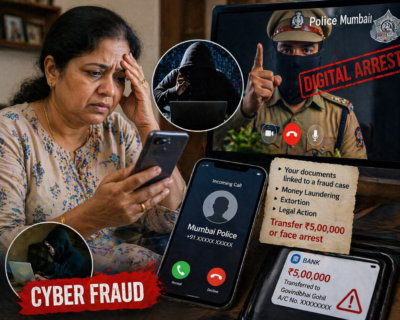
Special Report : A disturbing case of cyber fraud has once again highlighted the growing sophistication of online scams in India, as a 58-year-old homemaker from Thanisandra in Bengaluru fell victim to a so-called “digital arrest” scheme. In this alarming method, fraudsters impersonate law enforcement officials and psychologically pressure victims into transferring money under the threat of arrest and legal consequences.
According to police officials, the victim lodged a formal complaint with the East Division Cyber Crime Police on April 16, reporting that she had been coerced into transferring ₹5 lakh from her bank account. The घटना unfolded over two days, beginning with what initially appeared to be a routine phone call but quickly escalated into a prolonged and intimidating ordeal.

The victim stated that on April 14, she received a voice call from an unknown mobile number. The caller introduced himself as an officer from the Mumbai Police and claimed that her personal identification documents were linked to a serious fraud case registered in Mumbai. The caller spoke in an authoritative tone, using legal terminology and referencing alleged criminal activities to create a sense of urgency and fear.
Bengaluru Woman Falls Victim to ‘Digital Arrest’ Scam
At first, the victim was confused and anxious, as she had no knowledge of any such case. However, the caller insisted that her documents had been misused in illegal operations, including financial fraud and other serious offenses. He warned that failure to cooperate would result in immediate arrest and further legal complications.

The situation intensified the following day when the victim received a WhatsApp video call from another number at around 9:30 in the morning. During this call, the fraudsters reportedly posed as senior police officials and created a staged environment to make their claims appear legitimate. The victim was allegedly instructed to remain on the video call continuously for several hours, during which she was subjected to repeated threats and psychological pressure.
For nearly three to four hours, the scammers maintained constant communication, ensuring that the victim had no opportunity to verify the claims or seek external help. They reportedly warned her that disconnecting the call or contacting anyone else would worsen her situation and lead to immediate legal action. This tactic, often referred to as “digital confinement,” is designed to isolate victims and prevent them from thinking clearly.
Under intense stress and fear, the victim was eventually instructed to transfer ₹5,00,000 to a specific bank account. The account was allegedly held in the name of Govindbhai Gohil. The fraudsters claimed that this payment was necessary for “verification” purposes and assured her that the money would be refunded once her innocence was established.

Believing that she was complying with a legitimate legal process, the victim transferred the amount as instructed. Only later did she realize that she had been deceived. After discussing the incident with family members and understanding the nature of the scam, she approached the cyber crime police to file a complaint.
Police officials have confirmed that a case has been registered and an investigation is currently underway. Authorities are working to trace the bank account used in the transaction, identify the individuals involved, and determine whether the funds can be recovered. However, officials have acknowledged that such cases are often complex, as the money is quickly moved through multiple accounts to avoid detection.
Cybersecurity experts have noted that “digital arrest” scams are becoming increasingly common across India. These scams rely heavily on psychological manipulation rather than technical hacking. By impersonating law enforcement officers and creating a sense of भय and urgency, fraudsters are able to bypass rational thinking and compel victims to act quickly.
In many cases, scammers use publicly available information or leaked data to make their claims appear more convincing. They may reference real institutions, use official-sounding language, and even display fake identification or uniforms during video calls. This level of detail can make it difficult for victims to distinguish between genuine authorities and fraudsters.
Authorities have repeatedly urged the public to remain cautious and verify any such claims before taking action. Law enforcement agencies do not conduct investigations or demand payments through phone calls or video calls. Any request for money under the threat of arrest should be treated as highly suspicious.
Police have also advised citizens to avoid sharing personal or financial information with unknown callers and to report suspicious activity immediately. Awareness campaigns are being conducted to educate the public about common cyber fraud techniques and how to protect themselves.

This case serves as a stark reminder of the evolving nature of cybercrime and the need for increased vigilance. As digital communication becomes more widespread, criminals are finding new ways to exploit trust and fear. Protecting oneself from such scams requires not only technological safeguards but also awareness and critical thinking.
The incident in Bengaluru underscores the importance of timely reporting and community awareness. By coming forward, the victim has not only initiated legal action but also contributed to raising awareness about this emerging threat.
As investigations continue, authorities hope to dismantle the network behind this fraud and prevent further incidents. Meanwhile, citizens are urged to stay alert, question suspicious communications, and remember that no legitimate authority will ever demand money under threat of immediate arrest through digital means.
war-times.com
Send an email
21 April 2026