

Iranian-Backed Militias Escalate Drone Campaign Across Gulf
By Samir Singh 'Bharat': Editor In Chief
 war-times.com
Send an email
14 April 2026
war-times.com
Send an email
14 April 2026
WAR-REPORT : Rising security concerns across the Gulf region have been further intensified by a series of drone attacks that regional governments increasingly attribute to Iranian-backed Iraqi militias. These developments highlight the growing complexity of modern conflicts in the Middle East, where state and non-state actors operate through interconnected networks, often making it difficult to distinguish between direct and indirect involvement.
The Bahrain Defense Force reported on April 13 that it intercepted seven drones described as “Iranian,” marking one of the most serious aerial threats faced by the country in recent months. Although Bahraini authorities did not confirm the launch location of these drones, the description has led to strong suspicion regarding the involvement of Iran-aligned groups operating outside Iran’s borders.
Expanding Threat from Proxy Forces
The term “Iranian drones” does not necessarily mean that the drones were launched directly by Iran. Instead, it likely refers to the origin of the technology and equipment used. Many Iraqi militias receive drones and technical support from the Islamic Revolutionary Guard Corps, which has played a central role in developing and distributing drone capabilities to allied groups across the region.
These militias in Iraq have increasingly relied on drones as a primary tool of warfare. With access to such systems, they are capable of carrying out long-range and low-cost attacks that are difficult to detect. This allows them to extend their operational reach far beyond Iraq into neighboring Gulf countries.
The unclear nature of responsibility complicates international responses. While the drones may be built in Iran, they are often used by militias that act with a degree of independence. This creates a situation in which responsibility is difficult to assign, allowing both Iran and its allies to avoid direct accountability.

Diplomatic Reactions in the Gulf
The recent attacks have triggered strong diplomatic responses from Gulf countries. Bahrain summoned the Iraqi charge d’affaires in protest against what it described as ongoing drone attacks by Iraqi militias targeting Bahrain and other Gulf Cooperation Council members.
This move reflects growing concern among Gulf nations, which see these attacks as a direct threat to their national security. Saudi Arabia took a similar step by summoning the Iraqi ambassador on April 12, indicating a coordinated regional response to the threat.
These diplomatic actions demonstrate increasing pressure on Iraq to take responsibility for the activities of militias operating within its borders. However, the Iraqi government faces significant challenges in controlling these groups, particularly those with strong ties to Iran.

Attacks on United States Interests
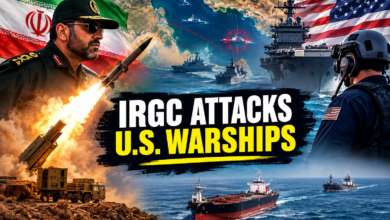
Iranian-backed militia groups have also claimed responsibility for several drone attacks targeting United States military bases and allied facilities in the region. These include locations in Saudi Arabia, Bahrain, and Kuwait.
Such attacks serve multiple purposes. They allow militias to demonstrate their capabilities, challenge the presence of United States forces, and send a political message aligned with Iran’s regional objectives. At the same time, they place pressure on Gulf countries that maintain close security ties with the United States.
The use of drones in these operations reflects a broader change in warfare. Low-cost technologies now allow smaller groups to carry out attacks with significant strategic impact, disrupting military operations and creating uncertainty.
Iran’s Role and Influence
A central question is the extent to which Iran is directly involved in these attacks. While Iran has not officially claimed responsibility, the continued activity of Iranian-backed militias suggests at least indirect approval.
It is widely believed that these militias would not conduct sustained attacks against regional states without Iran’s support. Many of these groups maintain close ties to the Islamic Revolutionary Guard Corps and depend on it for training, equipment, and guidance.
There is clear evidence that Iran can influence militia behavior when it chooses to do so. In January 2024, IRGC Quds Force Commander Esmail Ghaani reportedly instructed Iranian-backed militias to stop attacks against United States forces. This demonstrated Iran’s ability to control or limit militia operations.
The fact that attacks are continuing suggests that Iran has not issued similar instructions in the current situation. This may indicate a deliberate strategy to apply pressure on regional opponents without engaging in direct conflict.
Internal Divisions Among Militias
The situation is further complicated by differences among Iraqi militias. Although many groups are aligned with Iran, they do not all follow a single command structure. Differences in leadership and priorities can lead to inconsistent behavior.
Efforts to reduce tensions have been led by Iraq’s Shia political groups, particularly the Shia Coordination Framework. This coalition has attempted to negotiate a temporary pause in militia attacks.
Reports indicate that Hadi al Ameri, a senior political and militia leader, was tasked with negotiating with key groups such as Kataib Hezbollah and Harakat Hezbollah al Nujaba. These groups are known for their strong ties to Iran and are less influenced by domestic political pressure.
A Conditional Truce
According to Iraqi sources, a conditional truce may have been reached. The agreement reportedly required militias to stop attacks on United States interests and diplomatic sites in exchange for a halt to strikes on militia bases by the United States and Israel.
However, the details of this agreement remain unclear. It is not known whether the truce applies to attacks outside Iraq or whether it includes Gulf countries. This lack of clarity raises questions about the effectiveness of the agreement.
In addition, it is uncertain which militia groups have agreed to the truce. The Popular Mobilization Forces include many different factions, and not all may be willing to follow the same terms.
Regional Security Concerns
The continuation of drone attacks despite diplomatic efforts highlights the fragile security situation in the Gulf region. Countries in the region now face a persistent threat that is difficult to counter using traditional defense systems.
The spread of drone technology has changed the nature of conflict. Non-state actors can now carry out attacks that were once only possible for national militaries. This increases the risk of ongoing low-level conflict across the region.
At the same time, the involvement of multiple actors makes the situation more complex. Actions by one group can quickly lead to responses from others, creating a cycle of tension and escalation.
Risk of Wider Conflict
The current situation carries a significant risk of broader conflict. If drone attacks cause major damage or casualties, affected countries may respond with stronger military action. This could draw in additional regional and international forces.
The presence of United States military bases in the region adds to this risk. Attacks on these bases could lead to direct military responses, increasing tensions between the United States and Iran.
Our Media Opinion
The recent drone attacks attributed to Iranian-backed Iraqi militias represent a serious challenge to regional stability. While Iran’s exact role remains unclear, the continued operations of these groups suggest ongoing support or approval.
Efforts to establish a truce highlight the difficulty of managing conflicts involving multiple armed groups with different objectives. Without clear agreements and strong enforcement, such efforts are unlikely to succeed.
As tensions continue to rise, the Gulf region faces an uncertain future. The decisions made by regional governments and international powers in the coming weeks will play a critical role in determining whether the situation moves toward stability or further escalation.
war-times.com
Send an email
14 April 2026