

India Gas Crisis 2026: Rising LPG Prices, Shortages Hit Households and Small Businesses
By Doruvu Paul Jagan Babu: Assistant Chief Editor

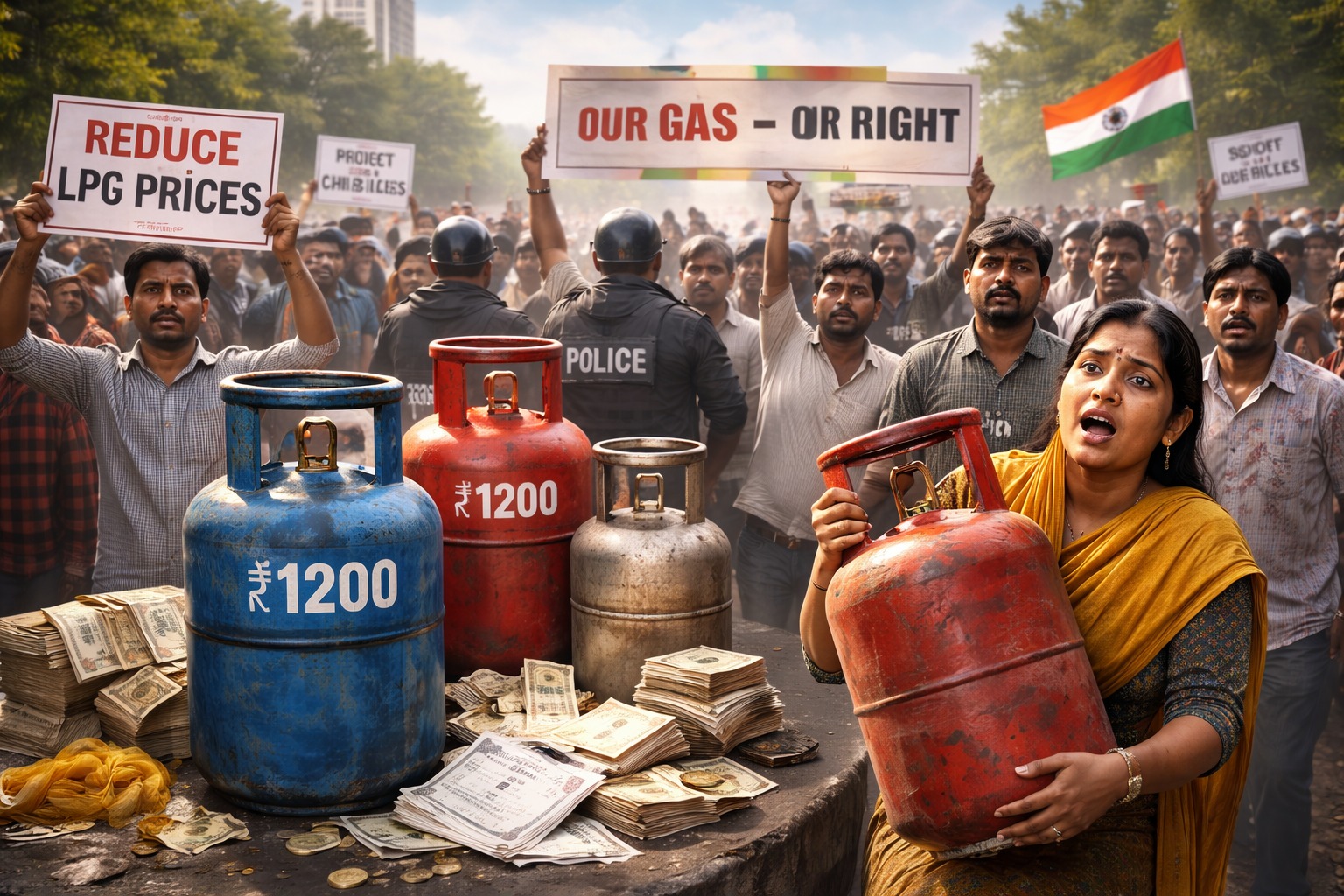
Growing concern is being expressed across the country over an intensifying gas crisis, with rising LPG prices, alleged shortages, and black marketing placing a heavy financial burden on common citizens, small businesses, and daily wage earners.
Rising prices and accessibility concerns Gas
Citizens across several states have voiced frustration over the steep increase in domestic gas prices, stating that affordability has become a major issue. While officials maintain that adequate LPG supplies are available, many consumers claim that cylinders are either delayed or inaccessible, particularly in rural and semi-urban areas.
Impact on small businesses and workers
The crisis has significantly affected small-scale businesses such as tiffin centers, roadside vendors, and local hotels, which rely heavily on LPG for daily operations. Many business owners report reduced earnings and operational difficulties, while daily wage workers and youth—already facing employment challenges—are being pushed into financial distress.
Allegations of black marketing

Reports of black marketing and diversion of domestic cylinders for commercial use have further aggravated the situation. Consumers allege that such practices are contributing to artificial shortages and price hikes, making it difficult for genuine users to access essential fuel.
Krishna-Godavari Basin and supply debate
Public discourse has also centered around the utilization of natural gas resources from the Krishna-Godavari Basin. Critics argue that despite significant extraction—estimated at around 21,000 tonnes per day—much of the gas is being transported to other regions, while local demand remains unmet.

It is pointed out that the state’s requirement is relatively low, at approximately 4,000 tonnes per day, yet supply constraints persist. As a result, authorities are reportedly compelled to rely on imported gas at higher prices, which ultimately increases the burden on consumers.
Demand for local distribution via PNG
Experts and stakeholders suggest that expanding Piped Natural Gas (PNG) infrastructure could provide a sustainable solution. Local distribution of gas from domestic sources could reduce dependency on imports, lower costs for households, and ensure consistent supply for small businesses.
Call for government intervention
Various groups and citizens have called on state governments to take immediate action, including passing resolutions and urging the Central Government to ensure equitable allocation of natural gas resources. There is also growing demand for stricter regulation to curb black marketing and improve transparency in distribution.
Proposed Agitations and Public Mobilization
In response to the ongoing crisis, CPM has announced plans for statewide agitations under the slogan “Our Gas—Our Right.” Initial large-scale public meetings are expected to be held in cities like Rajahmundry, with warnings that protests may intensify if corrective measures are not implemented.
Need for long-term policy reforms
Energy analysts emphasize the need for comprehensive policy reforms, including strengthening domestic supply chains, investing in infrastructure like PNG networks, and ensuring fair pricing mechanisms. With India’s growing energy demands, balancing domestic consumption and commercial distribution remains a critical challenge.
The ongoing gas crisis underscores the urgent need for coordinated action by both Central and State governments to protect consumers and stabilize the energy sector.