


Mother and sister abuse by the police: Against the dignity of society 2026
By Samir Singh 'Bharat': Editor In Chief

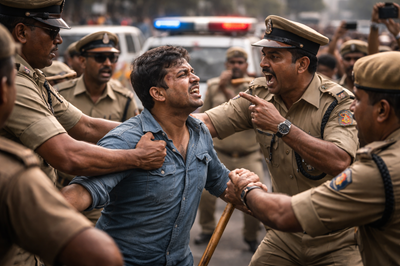
Delhi : In India, the relationship between the police and the public has long been a subject of concern, debate, and reform. While the police are entrusted with maintaining law and order, protecting citizens, and enforcing the law, a growing perception among ordinary people is that there exists a significant distance—both emotional and institutional—between the police system and the public it serves. This gap often results in mistrust, fear, and, in some cases, misuse of authority.police.
At the heart of this issue lies a critical question: Are police personnel adequately trained not only in law enforcement but also in social behavior, communication, and human rights? Furthermore, what legal boundaries define police conduct, and what rights do citizens have when those boundaries are crossed?
This article explores the complexities of police-public relations in India, examines the legal framework governing police behavior, and highlights the urgent need for reforms—particularly in training, accountability, and public awareness.police.
The Growing Distance Between Police and Public
One of the most pressing challenges in India’s policing system is the widening gap between the police and the people. Ideally, the police should function as a public service institution—approachable, transparent, and supportive. However, in many parts of the country, citizens perceive the police as intimidating, unapproachable, or even hostile.police.
This distance is often rooted in multiple factors:

-
Lack of communication and trust
-
Authoritarian policing culture
-
Limited accountability mechanisms

-
Inadequate training in soft skills
For many ordinary citizens, interacting with the police is not a comfortable experience. Instead of feeling protected, people often feel fearful or hesitant. This undermines the very foundation of democratic policing, which is based on cooperation between law enforcement and the community.police.
The Need for Social Behavior Training
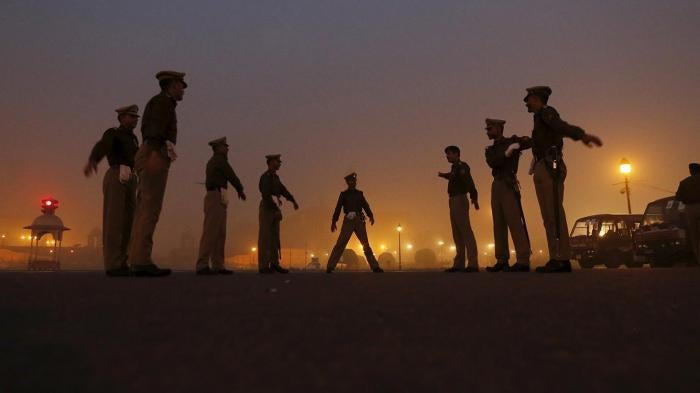
Police training in India traditionally focuses on physical fitness, weapons handling, law enforcement procedures, and discipline. While these aspects are essential, they are not sufficient in a modern democratic society.police.
Police personnel regularly interact with citizens from diverse backgrounds—victims, witnesses, suspects, and ordinary people. These interactions require empathy, patience, and effective communication.police.
Therefore, alongside conventional training, there is an urgent need for:
-
Social behavior training
-
Communication skills development
-
Human rights education
-
Conflict resolution techniques
Such training can help police personnel handle sensitive situations without resorting to aggression or abuse. It can also improve public perception and build trust.
Can Police Beat Someone on the Road?
One of the most common and serious concerns raised by citizens is whether the police have the legal right to physically assault individuals in public places.
The answer is no.
Under Indian law, the police do not have the authority to beat or physically assault any individual without legal justification. Use of force by police is strictly regulated and must be:
-
Reasonable
-
Necessary
-
Proportionate to the situation
For example, force may be used in situations such as:
-
Preventing a crime
-
Controlling a violent crowd
-
Self-defense
However, arbitrary violence, such as beating someone on the road without lawful reason, is illegal and constitutes a violation of fundamental rights.
Such actions can attract legal consequences under various provisions of the Indian Penal Code (IPC), including charges of assault, causing hurt, or abuse of authority.
Does the Law Allow Police to Abuse or Use Foul Language?
Another serious issue frequently reported is the use of abusive language by police personnel, including offensive and derogatory remarks involving family members.
Legally and ethically, this is not permitted.
Police officers are public servants and are expected to maintain dignity, professionalism, and respect in all interactions. The use of abusive language, especially involving “mother-sister” insults, is:
-
Unprofessional
-
Unethical
-
Potentially unlawful
Such behavior can amount to:
-
Verbal abuse
-
Harassment
-
Violation of dignity
Every citizen has the right to be treated with respect, regardless of the situation.
Legal Rights of Citizens in India
India’s Constitution provides several fundamental rights to citizens, which act as safeguards against misuse of power by authorities, including the police.
Article 19: Freedom of Expression
Under Article 19, citizens have the right to freedom of speech and expression. This includes the right to:
-
Question authority
-
Express grievances
-
Speak against injustice
However, this right is subject to reasonable restrictions, such as public order and national security.
Article 21: Right to Life and Personal Liberty
Article 21 guarantees that no person shall be deprived of life or personal liberty except according to procedure established by law.
This includes:
-
Protection from arbitrary arrest
-
Protection from custodial violence
-
Right to dignity
Any act of police brutality or abuse violates this fundamental right.
Can a Defamation Case Be Filed Against Police?
Yes, a citizen can file a defamation case against a police officer if their reputation is harmed through false statements, abusive language, or public humiliation.
Defamation in India can be:
-
Civil defamation (seeking compensation)
-
Criminal defamation (under IPC Sections 499 and 500)
If a police officer:
-
Uses abusive language publicly
-
Makes false allegations
-
Insults a person’s dignity
Then the affected individual has the right to seek legal remedy.
However, such cases require evidence, such as:
-
Witness statements
-
Audio/video recordings
-
Written complaints
Why Does Police Misconduct Occur?
Despite clear legal boundaries, instances of police misconduct still occur. Several factors contribute to this:
1. Lack of Awareness Among Citizens
Many people are not fully aware of their legal rights. This lack of awareness allows misuse of authority to go unchallenged.
2. Power Imbalance
Police officers hold significant authority, and in some cases, this leads to misuse or overreach.
3. Weak Accountability Systems
Internal disciplinary mechanisms are often slow or ineffective, reducing deterrence.
4. Stress and Work Conditions
Police personnel often work long hours under stressful conditions, which can affect their behavior and decision-making.
5. Cultural Factors
A legacy of colonial policing practices has contributed to a command-and-control mindset rather than a service-oriented approach.
The Role of Public Awareness
One of the most effective ways to prevent misuse of police power is through public awareness.
Citizens should know:
-
Their rights during police interactions
-
Legal procedures for arrest and detention
-
How to file complaints against misconduct
Awareness empowers individuals and creates accountability.
Steps Toward Reform
To improve police-public relations and ensure accountability, several reforms are necessary:
1. Training Reforms
Introduce mandatory social behavior and human rights training.
2. Community Policing
Encourage regular interaction between police and communities to build trust.
3. Stronger Accountability
Establish independent bodies to investigate complaints against police.
4. Use of Technology
Body cameras and CCTV can help ensure transparencypolice.
5. Legal Awareness Campaigns
Educate citizens about their rights through media and public programs.police.
Towards a Balanced and Just System
The police play a crucial role in maintaining law and order, but their authority must be exercised within the framework of the law and with respect for human dignity.
No law in India permits the police to:
-
Arbitrarily beat citizens
-
Use abusive language
-
Harass individuals without cause
At the same time, citizens must be aware of their rights and responsibilities. A lack of awareness should not become a gateway for misuse of power.police
Bridging the gap between police and public requires effort from both sides. The police must adopt a more humane, service-oriented approach, while citizens must stay informed and assert their rights within the legal framework.police
Only then can India move toward a policing system that is not feared, but respected—a system that truly serves and protects its people.police