

Israel Strikes Deepen Shock Within Iran’s Security Apparatus
By Samir Singh 'Bharat': Editor In Chief
 war-times.com
Send an email
20 March 2026
war-times.com
Send an email
20 March 2026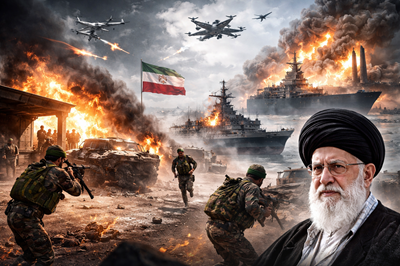
WAR-REPORT : In a significant escalation of regional tensions, a series of targeted operations conducted by the Israel Defense Forces has reportedly inflicted both structural and psychological disruption across Iran’s internal security network. These strikes, ranging from high-level “decapitation” operations to tactical attacks on local enforcement units, appear designed not only to degrade Iran’s operational capabilities but also to instill widespread uncertainty within its security establishment.
While the full extent of the disruption remains difficult to verify through open-source intelligence, early indicators suggest that the strikes have triggered confusion, fear, and adaptive responses among Iranian forces. Analysts emphasize that the dual impact—kinetic and psychological—may prove as consequential as the physical damage inflicted on infrastructure and personnel.
Targeting the Chain of Command
One of the defining features of the recent Israeli campaign has been its comprehensive targeting strategy. The Israel Defense Forces has reportedly struck individuals and facilities across all levels of Iran’s internal security hierarchy.
High-ranking figures such as Ali Khamenei, Ali Larijani, and Gholamreza Soleimani have been identified as part of the broader targeting scope. These individuals represent critical nodes in Iran’s political-military decision-making apparatus, and any disruption to their roles carries potential strategic consequences.
Simultaneously, Israeli strikes have extended to lower-ranking personnel, including members of the Basij Organization stationed at checkpoints and local enforcement outposts. This bottom-up targeting approach underscores a deliberate effort to destabilize the entire security ecosystem rather than focusing solely on leadership decapitation.

Tactical Shift: From Headquarters to Local Nodes
Another notable evolution in the Israeli strategy has been a shift in targeting priorities. Earlier phases of the campaign reportedly focused on high-value headquarters and centralized command facilities. However, recent operations have increasingly concentrated on smaller, decentralized sites such as:
-
Checkpoints
-
Roadblocks

-
Local police stations
-
Temporary command posts
This transition reflects an understanding that modern internal security operations rely heavily on distributed networks. By disrupting these nodes, Israel may be attempting to paralyze Iran’s ability to maintain internal order, particularly in times of crisis.
Despite this shift, analysts caution that strikes on strategic-level targets may not yield immediate tactical effects. For instance, the potential impact of Gholamreza Soleimani’s death on the operational effectiveness of Basij units remains uncertain. Organizational resilience, redundancy, and ideological cohesion could mitigate immediate disruptions.
Psychological Warfare and the Climate of Fear
Beyond the physical destruction, the psychological dimension of the campaign has emerged as a critical factor. The perception that Israeli forces can target any individual, at any time, and in any location has reportedly generated widespread fear within Iran’s security ranks.
The involvement of Mossad has further amplified this effect. In some instances, intelligence operatives have allegedly contacted Iranian officers directly, reinforcing the sense of vulnerability and surveillance. Even in the absence of such direct communication, the precision and unpredictability of the strikes contribute to a pervasive atmosphere of uncertainty.
This psychological pressure has manifested in several observable behaviors:
-
Abandonment of established headquarters
-
Relocation to improvised facilities
-
Frequent changes in command-and-control structures
-
Increased operational secrecy and fragmentation
Such adaptations, while necessary for survival, can also degrade coordination and efficiency, thereby compounding the overall impact of the strikes.
Naval Strike at Bandar Anzali
In a parallel development, the Israel Defense Forces expanded its operational scope to Iran’s northern maritime infrastructure. On March 18, Israeli forces targeted a major port facility at Bandar Anzali Port, a critical hub for Iran’s trade across the Caspian Sea, particularly with Russia.
The strike reportedly hit the 4th Artesh Naval District Headquarters and damaged “dozens” of vessels, including the Moudge-class frigate IRIS Deylaman. According to Israeli officials, several of the targeted vessels were equipped with anti-aircraft systems capable of posing a threat to aerial operations.
Additional targets included:
-
A naval command center
-
A shipyard facility
-
A customs building
-
A shipping organization believed to be Shahid Tamjidi Offshore Industries
The latter is reportedly linked to Iran’s Ministry of Defense and Armed Forces Logistics, highlighting the strategic significance of the strike.
This operation represents a notable expansion of the conflict into maritime domains and underscores the vulnerability of Iran’s economic and logistical networks.
Strikes on Missile Infrastructure
The combined Israeli campaign has also maintained a sustained focus on Iran’s ballistic missile capabilities. These assets are central to Tehran’s deterrence strategy and its ability to retaliate against external threats.
Recent satellite imagery indicates that Israeli forces struck a launch pad at the Shahroud Missile Facility between March 11 and 19. This facility had previously been targeted earlier in the conflict, with reported damage to key components such as:
-
Mixing buildings
-
Casting facilities
-
Warhead production lines
Additional strikes have been reported at the Khorgu Missile Base, where multiple munition bunkers and support structures were damaged. This site has been repeatedly targeted since early March, indicating its strategic importance.
Further reports suggest that Israeli forces conducted strikes near Borazjan, an area associated with the IRGC Navy’s 26th Salaman Missile Group. While it remains unclear whether this specific unit was directly affected, the pattern of attacks suggests a systematic effort to degrade Iran’s missile infrastructure across multiple regions.
Strategic Implications
The cumulative impact of these operations points to a broader strategic objective: the gradual erosion of Iran’s ability to project power both internally and externally.
By targeting internal security forces, Israel may be seeking to weaken the regime’s capacity to maintain domestic stability. Simultaneously, strikes on missile and naval assets aim to limit Iran’s ability to retaliate or escalate the conflict.
However, the long-term effectiveness of this approach remains uncertain. Iran’s security apparatus is known for its resilience and adaptability, and the extent to which it can recover from these disruptions will be a key factor in determining the trajectory of the conflict.
Uncertainty and Escalation Risks
Despite the apparent success of the strikes, significant uncertainties remain. Open-source intelligence provides only a partial picture, and the true extent of the damage—both physical and organizational—may take time to fully assess.
Moreover, the escalation of such operations carries inherent risks. Continued targeting of high-profile figures and critical infrastructure could provoke a more aggressive response from Iran, potentially drawing in additional regional actors.
The involvement of strategic assets, including missile facilities and naval ports, also raises concerns about broader regional stability. Disruptions to trade routes and energy infrastructure could have far-reaching economic consequences beyond the immediate conflict zone.
Our Media Opinion
The recent wave of Israeli strikes represents a multifaceted campaign aimed at undermining Iran’s internal security and strategic capabilities. Through a combination of precision targeting and psychological pressure, the Israel Defense Forces has introduced a new level of uncertainty into Iran’s security landscape.
While the immediate effects are evident in the form of damaged infrastructure and disrupted operations, the longer-term consequences will depend on Iran’s ability to adapt and respond. As both sides continue to navigate this high-stakes confrontation, the risk of further escalation remains a defining feature of the evolving regional dynamic.
war-times.com
Send an email
20 March 2026