

Round table voices renewed call for development push in Rayalaseema
By Doruvu Paul Jagan Babu: Assistant Chief Editor

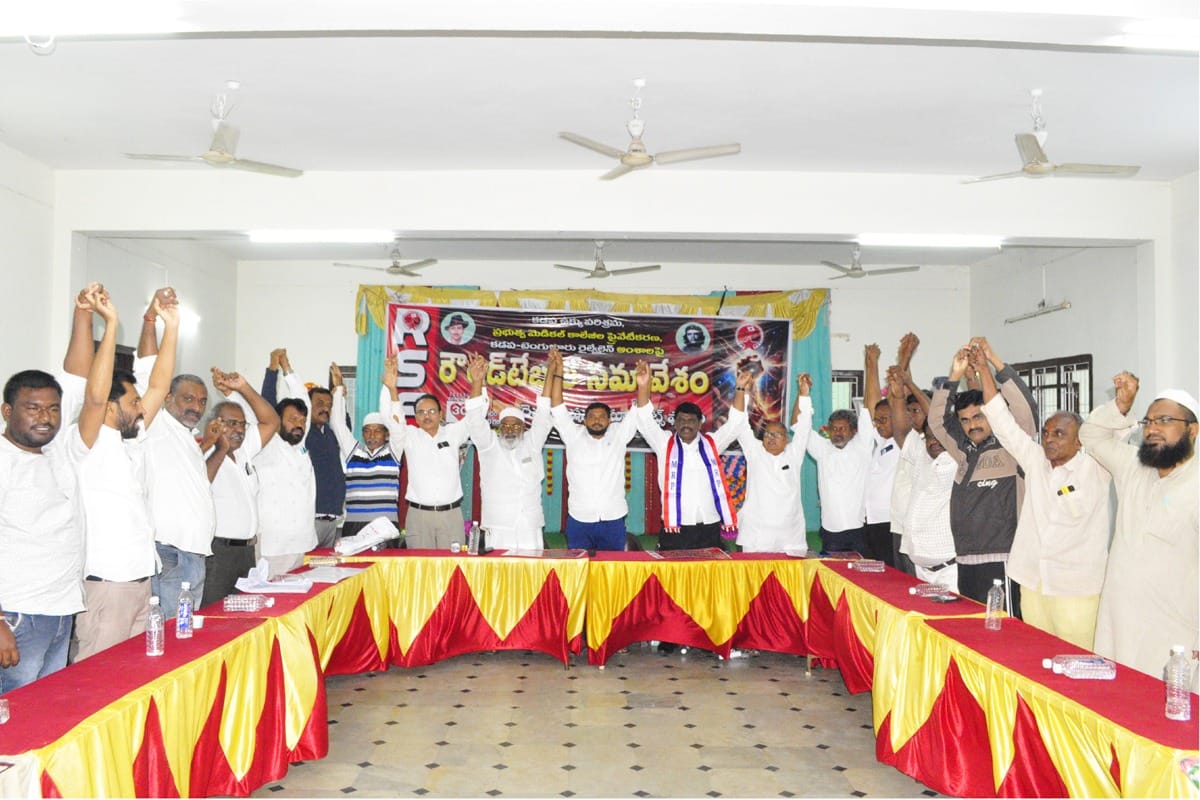
Kadapa – Andhra Pradesh: A wide coalition of political parties, public organisations, and civil society groups came together at a round table meeting in Kadapa on Sunday, calling for urgent measures to address long-standing developmental delays in the Rayalaseema region. The meeting, held under the auspices of the Rayalaseema Students Federation (RSF), was presided over by RSF State President DM Obulesu Yadav. The meeting saw participation from a wide range of leaders.
Speakers expressed concern that Rayalaseema would remain backward for years unless major pending projects—especially the Kadapa Steel Plant and the Kadapa–Bengaluru railway line—were expedited.
Delays in Kadapa Steel Plant raise alarms
Participants noted that despite repeated assurances, foundation stones, and political commitments, the Kadapa Steel Plant at Jammalamadugu remains stalled. They warned that the unit’s production capacity risks diminishing over time.
The speakers argued that the steel plant—strategically located between Kurnool, Kadapa, and Anantapur—is essential for industrial growth and employment generation. They noted that thousands of engineering, degree, MBA, MCA, polytechnic, and ITI graduates continue to migrate to Hyderabad, Chennai, Bengaluru, and Gulf countries due to lack of opportunities.

Kadapa–Bengaluru railway line stuck midway
Leaders recalled that the Kadapa–Bengaluru railway project was approved nearly a decade ago, with funds sanctioned, land acquired, and plans finalised. While the track up to Pendlimari was completed and the Kadapa–Nandyala demo train ran until last year, the remaining work has stalled.
They stressed that completion of this line would transform Rayalaseema’s economic, social, and industrial landscape by improving connectivity with the Bengaluru metropolitan region.

Concerns over medical college privatization
Speakers also opposed the privatization of medical colleges in the region, warning it would put medical education beyond the reach of poor and middle-class families. They said healthcare services become profit-centric when institutions move into private hands, reducing accessibility for the poor.
The coalition insisted that both education and healthcare must remain in the government sector to ensure affordability and equity.
Call for united movements across Rayalaseema
Participants urged a joint movement to pressure the government on the steel plant, railway line, and medical education issues. They said coordinated public action was essential to safeguard the region’s development.