


‘Bison’: A bold cinematic reflection on caste, identity, and humanity
By Doruvu Paul Jagan Babu: Assistant Chief Editor

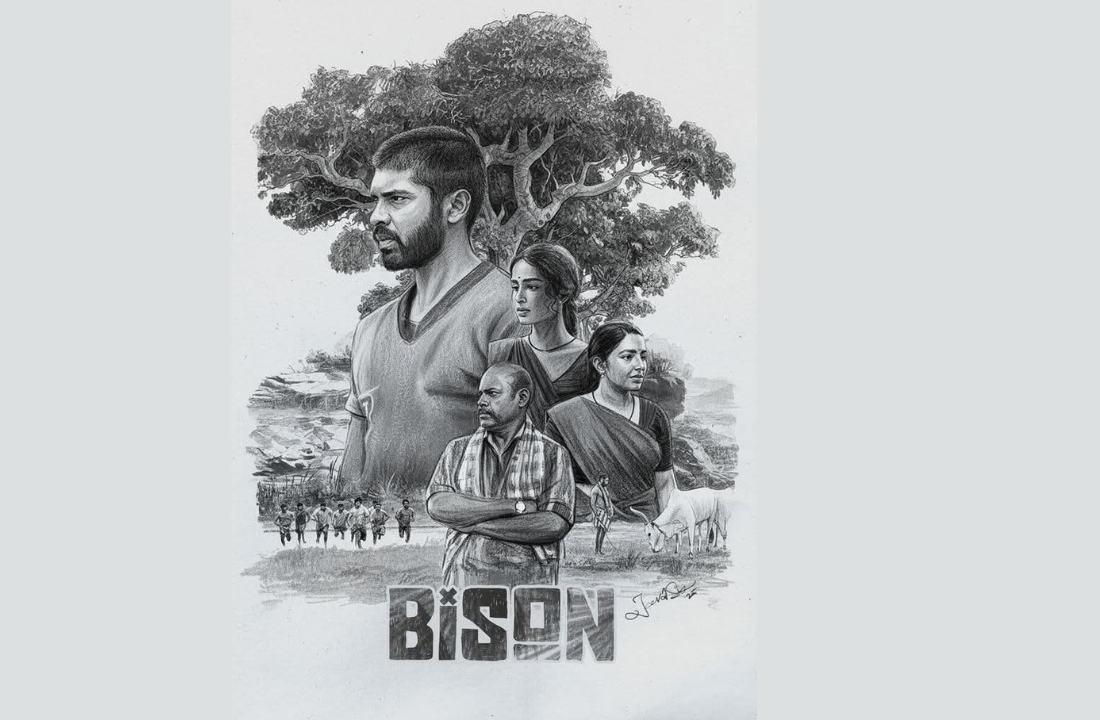
Director Mari Selva Raj’s Bison is not just a film—it is a mirror reflecting the pain, pride, and perseverance of marginalized communities. Through powerful symbolism and raw emotion, the movie challenges the audience to confront social prejudices that continue to divide people by caste and class.
A cry against discrimination
The film opens with haunting imagery—a fight, a mysterious cry, and the unsettling statement that “the Arava people are too much.” These words, steeped in caste prejudice, set the tone for the narrative. Bison explores what “too much” truly means—when it becomes a label for resistance, awareness, and the long fight against historical oppression.
The struggle for dignity and identity
Through the eyes of its characters, Bison captures the everyday battles of those seeking dignity in a world that questions their existence. The film’s dialogue echoes with pain and resilience: “We don’t know why they hate us, why they keep us away, but we continue to stand and struggle.”

Director Mari Selva Raj’s storytelling invites the audience to witness how unity, sparked by one person’s courage, can uplift an entire community.
Symbolism rooted in animal metaphors
In keeping with the director’s previous works, Bison uses animal imagery as a reflection of human values and struggles. Just as Karnan depicted the donkey as a symbol of endurance and Perumal portrayed the same animal as the throne of the oppressed, Bison turns its gaze to the sheep—gentle yet resilient, representing both vulnerability and strength.

Mari Selva Raj’s affection for animals extends beyond metaphor. He portrays them as integral to the livelihoods of marginalized groups—pigs, cows, donkeys, and sheep—each carrying a story of survival and coexistence.
A political underpinning in every frame
The film subtly critiques the politics of ownership—of land, animals, and even emotion. It questions why certain animals are claimed as symbols of purity by some while being used to demean others. The director exposes how caste politics seeps even into cultural and religious symbolism, turning compassion into division.
A film that speaks beyond boundaries
Bison is not a film driven by hatred but by the pursuit of truth. It compels viewers from all communities to look inward, to understand the layered narratives of those often unheard. Mari Selva Raj, known for his authentic portrayal of subaltern lives, crafts a story that resonates with empathy and introspection.
Conclusion: A call for collective reflection
Bison stands as a cinematic testament to resistance, belonging, and humanity. Its message is clear—recognizing and respecting every community’s story is not “too much”; it is essential for a just society. ‘Bison’ is a must-watch for anyone who believes cinema can awaken conscience as much as it entertains.