


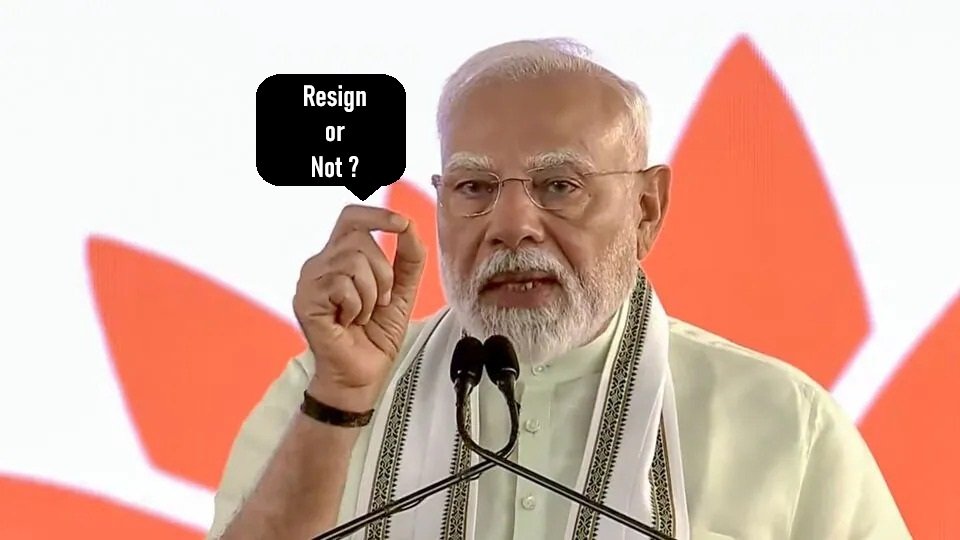
New Delhi:-Prime Minister Narendra Modi has turned 75, and with that milestone comes a burning question in Indian politics — will he resign, or will he continue leading the nation as before?
For years, speculation has swirled around an “unofficial 75-year retirement rule” within the Bharatiya Janata Party (BJP) and its ideological parent, the Rashtriya Swayamsevak Sangh (RSS). As the date arrives, political circles are abuzz with curiosity, opposition leaders are mounting pressure, and the public is left wondering: what exactly happens now?
Where Does the 75-Year Rule Come From?
The so-called rule is not written anywhere in the BJP constitution, nor is it an official government guideline. Instead, it comes from past precedents. Senior leaders like L.K. Advani and Murli Manohar Joshi were moved out of active politics once they crossed the 75-year mark.
Adding fuel to the debate, RSS chief Mohan Bhagwat had earlier remarked: “When you turn 75, it means you should stop now and make way for others.” Many took this as a signal of a strict retirement age for BJP leaders.

But recently, Bhagwat clarified that he never announced any such binding rule, leaving the door wide open for Modi to continue.
What Are the Opposition Parties Saying?
The Congress and other opposition parties have seized on this moment. Congress leader Udit Raj boldly declared, “PM Modi should resign as he turns 75. He cannot have one rule for others and another for himself.”

Opposition leaders argue that Modi’s rise was partly made possible because senior figures like Advani and Joshi were asked to step aside at 75. They now accuse the BJP of “double standards” if Modi continues despite crossing the same age threshold.
This line of attack is designed to highlight contradictions within the ruling party and keep the spotlight on Modi’s leadership choices.
What Is BJP’s Stand?
For the BJP, the matter seems straightforward: there is no formal age limit for the Prime Minister or any other leader. Senior party members and allies have repeatedly emphasized that Modi will serve his full term and is expected to lead the party into the 2029 Lok Sabha elections.
Union ministers have publicly supported Modi, calling him the “most popular leader of India” and insisting that his age has no bearing on his ability to govern.
Will Modi Resign or Continue?
This is the question everyone is asking, but the answer appears clear for now.
No official rule exists: Without a written policy, resignation would depend solely on Modi’s personal decision.
Strong mandate: Modi was re-elected with a clear majority in 2024, and BJP leaders see no reason to replace him mid-term.
Party consensus: The BJP has consistently shown unity in backing Modi, unlike in past eras when multiple power centers existed.
Given these factors, Modi stepping down at 75 seems highly unlikely. Instead, the debate appears to be more of a political talking point than a genuine possibility.
What Would Happen If He Did Step Down?
If, against expectations, Modi chose to resign, it would set off a political earthquake:
The BJP would need to quickly identify a successor.
Governance continuity could be tested in the short term.
Opposition parties would claim victory, saying they forced accountability.
But considering the current climate, this remains a distant scenario.
Conclusion: Age vs. Leadership
So, will PM Modi resign at 75? The evidence suggests otherwise. While the “75-year rule” has been cited in the past, it has never been an official doctrine. For Modi’s supporters, age is just a number; for his critics, it is a question of consistency and fairness.
As things stand, PM Modi looks set to continue leading the government, and the 75-year debate may fade away as just another chapter in India’s political theatre.