

War Is Making Oil Scarce Again, but the World’s Energy Safety Net Is Running Thin
Global oil prices have responded sharply to the growing uncertainty.

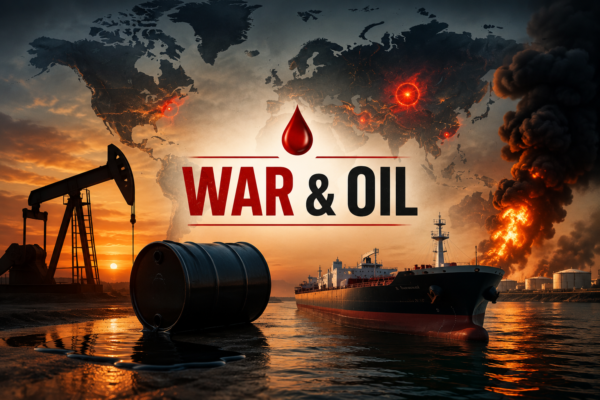
War-Report: Escalating military conflicts and rising geopolitical tensions are once again disrupting global oil supplies, pushing energy markets into a period of heightened uncertainty. As wars threaten major production hubs and critical shipping routes, analysts warn that the world’s emergency oil reserves and spare production capacity—the traditional safety net against supply shocks—are becoming increasingly limited.
The latest conflicts in the Middle East have intensified concerns over the security of global energy supplies. With the possibility of disruptions to key maritime chokepoints such as the Strait of Hormuz, traders and governments are closely monitoring developments that could significantly reduce crude oil exports from one of the world’s most important energy-producing regions.
Global oil prices have responded sharply to the growing uncertainty. Investors fear that any prolonged disruption to production or transportation could tighten supplies further, increasing fuel costs for consumers and businesses worldwide. Rising crude prices also threaten to reignite inflation, complicating economic recovery efforts in many countries.
Historically, major oil-producing nations and strategic petroleum reserves have helped stabilize markets during periods of crisis. However, experts note that the world’s buffer has weakened in recent years. Many countries have already drawn down their strategic petroleum reserves following previous energy crises, while several oil-producing nations are operating with limited spare production capacity.
US Launches Fresh Wave of Strikes on Iran as Washington Reimposes Naval Blockade on Iranian Ports
The United States has launched another wave of military strikes against Iran, significantly escalating tensions in the Middle East amid an increasingly volatile regional security environment. The latest attacks come shortly after Washington announced the reimposition of a naval blockade targeting Iranian ports, a move aimed at tightening economic and strategic pressure on Tehran.

According to U.S. officials, the strikes targeted military infrastructure, missile storage facilities, and logistics hubs believed to support Iran’s regional military operations. The Pentagon stated that the operation was designed to degrade Iran’s ability to launch attacks against U.S. personnel, allied forces, and commercial shipping routes across the Gulf region.
The Organization of the Petroleum Exporting Countries (OPEC) and its allies continue to play a crucial role in balancing global supply, but analysts caution that additional production increases may be constrained if geopolitical instability spreads or infrastructure is damaged. Any interruption affecting major exporters could leave the market with fewer options to offset shortages.

Shipping has also become a growing concern. Commercial vessels navigating conflict-prone waters face increased security risks, higher insurance premiums, and potential delays. These factors add to transportation costs and create further uncertainty in global energy markets.
Energy-importing countries, particularly in Asia and Europe, are among the most vulnerable to sustained supply disruptions. Governments are reviewing contingency plans, diversifying import sources, and accelerating investments in renewable energy and alternative fuels to reduce dependence on unstable oil markets.
Economists warn that persistently high oil prices could have far-reaching consequences beyond the energy sector. Higher transportation and manufacturing costs may drive up prices for food, consumer goods, and industrial products, placing additional pressure on households and businesses already coping with inflation.
Meanwhile, renewable energy investments continue to gain momentum as governments seek long-term solutions to reduce reliance on fossil fuels. However, experts emphasize that the global economy remains heavily dependent on oil, meaning that geopolitical disruptions will continue to influence energy prices and economic stability for the foreseeable future.
As conflicts persist and uncertainty clouds global energy markets, policymakers face the difficult challenge of ensuring adequate fuel supplies while preparing for a future in which traditional energy safety nets may no longer be sufficient to absorb major geopolitical shocks.