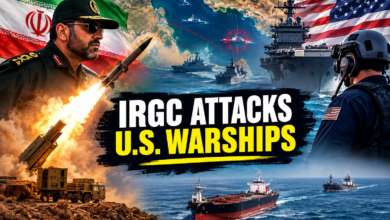



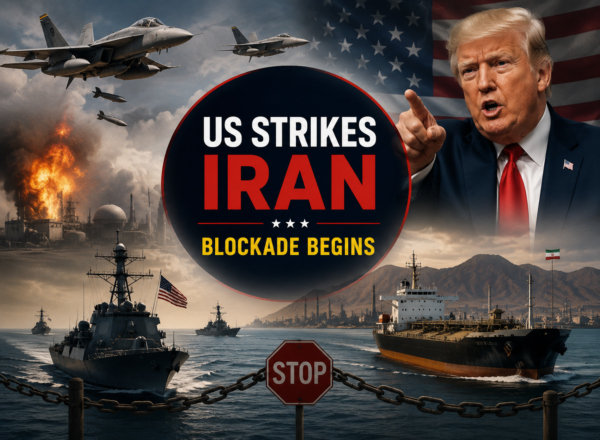
War-Report : Washington-Middle East: The United States has significantly escalated its military campaign against Iran by launching a new series of airstrikes while reportedly initiating a naval blockade around key Iranian ports. The latest developments mark a sharp intensification in the ongoing confrontation, raising fears of a broader regional conflict that could disrupt global energy supplies and international trade.
According to reports, U.S. forces targeted multiple strategic military installations across Iran, focusing on missile infrastructure, logistics hubs, air-defense systems, and naval facilities believed to support Iran’s military operations. The strikes are part of Washington’s broader effort to weaken Iran’s military capabilities and reduce its ability to threaten international shipping routes in the Persian Gulf and the Strait of Hormuz.
Trump Signals More Military Action
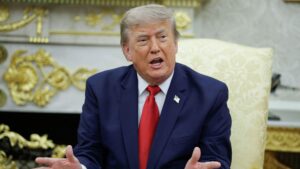
U.S. President Donald Trump further heightened tensions by warning that additional military operations could take place in the coming days. Speaking to reporters, Trump indicated that Iranian power plants, bridges, and other critical infrastructure could become future targets if Tehran continues what Washington describes as “hostile activities” against international shipping and U.S. interests.
The President suggested that the next phase of military operations could begin as early as the following week, although no formal timetable has been confirmed by U.S. defense officials.
Political observers note that President Trump has previously used strong public warnings as part of his negotiating strategy, combining military pressure with diplomatic signaling to influence adversaries before formal negotiations.

Naval Blockade Raises Regional Stakes
Alongside the air campaign, reports indicate that the United States has begun tightening maritime restrictions around several Iranian ports. The move is intended to limit Iran’s ability to transport military supplies, fuel, and strategic goods while increasing economic pressure on the Iranian government.
Military analysts believe that controlling maritime access could significantly affect Iran’s logistics network, particularly if the blockade continues over an extended period. However, such actions also increase the possibility of direct naval confrontations in the Persian Gulf.

Risk to Global Energy Markets
The escalation has once again drawn international attention to the Strait of Hormuz, one of the world’s most critical energy corridors through which a substantial portion of global oil exports passes every day.
Security experts warn that prolonged military operations or disruptions to commercial shipping could lead to increased insurance costs, higher freight charges, and renewed volatility in global crude oil prices.
Energy-importing countries are closely monitoring the situation, as any interruption in maritime traffic could affect international supply chains and fuel markets.
Iran Maintains Defiant Position
Iranian authorities have continued to reject external pressure and maintain that the country’s sovereignty and security interests remain non-negotiable. Officials have repeatedly stated that Iran reserves the right to defend its territory and maritime interests under international law.
Tehran has also emphasized that any further attacks on its territory or infrastructure would receive what it describes as an “appropriate response.”
International Community Calls for Restraint
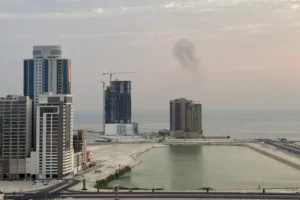
Several governments and international organizations have expressed concern over the rapidly deteriorating security situation in the Middle East. Diplomatic efforts are continuing behind the scenes as regional and global powers seek to prevent the crisis from expanding into a wider military confrontation.
Analysts believe that sustained dialogue remains essential to reducing tensions, as prolonged hostilities could have significant humanitarian, economic, and geopolitical consequences extending well beyond the region.
Growing Uncertainty
The latest military developments underscore the increasingly fragile security environment in the Middle East. With both Washington and Tehran maintaining firm public positions, the possibility of further escalation remains high.
Whether the current campaign evolves into a broader conflict or eventually creates conditions for renewed diplomatic engagement will depend largely on the decisions taken by both governments in the coming weeks. Until then, global markets, regional allies, and international observers are expected to remain on high alert as the situation continues to unfold.