

Taiwan’s APEC Participation Signals Rare Cross-Strait Engagement
Amid Concerns Over U.S. Arms Sales and Regional Security
 Samir Singh 'Bharat'-Editor-in-Chief
Send an email
31 May 2026
Samir Singh 'Bharat'-Editor-in-Chief
Send an email
31 May 2026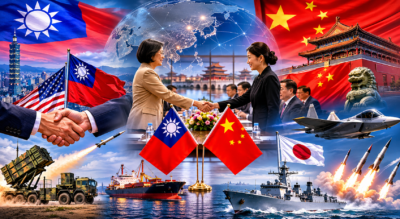
WAR-REPORT : In a notable diplomatic development, Taiwan has secured participation of one of its highest-ranking officials in an Asia-Pacific Economic Cooperation (APEC) meeting held in mainland China, marking a rare instance of official engagement between Taipei and Beijing amid years of strained cross-strait relations. The development comes at a time when concerns are also growing in Taiwan and Japan over potential delays in critical U.S. defense commitments, including major arms sales and missile deliveries.
Senior Taiwanese Official Attends APEC Meeting in China
Taiwan’s Minister Without Portfolio and chief trade negotiator, Yang Jen-ni, attended an APEC ministerial meeting in Suzhou, China, from May 22 to May 23. Her participation is being viewed as a significant diplomatic event because she is the most senior serving Taiwanese government official to visit mainland China on official business since 2016.
The visit is particularly noteworthy given Beijing’s longstanding policy of restricting Taiwanese government officials from participating in international forums. However, APEC has remained one of the few international platforms where Taiwan continues to engage with regional economies under the designation “Chinese Taipei.”
Taiwan joined APEC in 1991, and because the organization is composed of member economies rather than sovereign states, it has allowed Taiwan to maintain a presence despite objections from Beijing regarding Taiwan’s international status.
Earlier this year, Taiwan also sent Jonathan Sun, Director General of the Ministry of Foreign Affairs’ Department of International Organizations, to participate in APEC Senior Officials’ Meetings, reflecting Taipei’s continued effort to maintain an active role within the regional economic forum.

Cross-Strait Relations Remain Tense
Despite the participation of Taiwanese officials in APEC events hosted by China, broader political relations between Beijing and Taipei remain strained.
The Chinese government continues to insist that any official engagement across the Taiwan Strait must be based on the “1992 Consensus.” Beijing interprets this understanding as recognition that Taiwan is part of China, although both sides historically differed on which government legitimately represented China.
Taiwan’s ruling Democratic Progressive Party (DPP), including former President Tsai Ing-wen and current President William Lai Ching-te, has consistently declined to endorse the 1992 Consensus. As a result, Beijing suspended official communication mechanisms with Taipei following Tsai’s election in 2016.

Analysts suggest that allowing Yang Jen-ni to attend the Suzhou meeting may reflect Beijing’s willingness to maintain limited economic engagement through multilateral institutions while continuing to oppose formal political recognition of Taiwan.
Taiwan Watches Closely as U.S. Considers Major Arms Package
While Taiwan’s participation in APEC may be viewed as a diplomatic success, growing uncertainty surrounding a major U.S. arms package has generated concern among policymakers and defense planners in Taipei.
According to reports, U.S. President Donald Trump indicated that a proposed arms sale to Taiwan remains under review and could potentially become part of broader negotiations with China. White House sources reportedly suggested that a final decision on the package could be made in the near future.
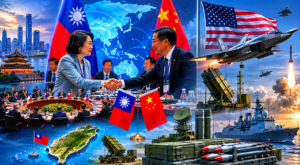
The proposed military package is valued at approximately 14 billion U.S. dollars and includes several advanced air-defense systems designed to strengthen Taiwan’s ability to counter potential military threats.
Among the systems reportedly under consideration are:
- Patriot surface-to-air missile systems
- National Advanced Surface-to-Air Missile Systems (NASAMS)
- Advanced interceptor missiles for air-defense operations
Defense experts believe these systems are central to Taiwan’s efforts to establish a modern integrated air and missile defense network, often referred to as the “T-Dome.”
President Lai has identified the development of a comprehensive missile-defense shield as a key national security objective. Such a system would enhance Taiwan’s ability to detect, track, and intercept incoming missile threats and could play a critical role in protecting military infrastructure and civilian population centers during a potential conflict.
Importance of Integrated Air Defense
Military analysts argue that Taiwan’s ability to survive the opening stages of a conflict would depend heavily on the effectiveness of its air-defense network.
In any large-scale military scenario, the People’s Liberation Army (PLA) would likely seek to weaken Taiwan’s defenses through precision missile strikes before launching broader operations. Strengthening air-defense capabilities therefore remains one of Taipei’s highest defense priorities.
A delay or suspension of the proposed U.S. arms package could raise concerns within Taiwan regarding Washington’s long-term commitment to the island’s security. It could also influence regional perceptions about U.S. reliability as a security partner in the Indo-Pacific.
Observers note that Taiwan has increasingly focused on building a layered defense structure capable of responding to both conventional and missile-based threats, making advanced interceptor systems particularly important.
Japan Faces Concerns Over Delayed Missile Deliveries
Taiwan is not the only U.S. ally facing uncertainty over defense procurements.
Japan has reportedly been informed that deliveries of Tomahawk cruise missiles may be delayed due to increased military demands associated with the conflict involving Iran.
The United States had originally planned to deliver approximately 400 Tomahawk missiles to Japan through two separate shipments, with completion expected by 2028. However, reports indicate that the delivery schedule could be pushed back by as much as two years.
The Tomahawk missile acquisition forms a key component of Japan’s evolving defense strategy and represents one of the most significant enhancements to Tokyo’s long-range strike capabilities in recent decades.
Japan has been steadily expanding its defense posture in response to a rapidly changing regional security environment, including concerns regarding North Korea’s missile programs and China’s growing military capabilities.
Strategic Implications for the U.S.-Japan Alliance
Security experts warn that prolonged delays in weapons deliveries could create challenges for Japan’s defense modernization plans.
The issue is not only military but also political. Analysts suggest that China could use reports of delayed arms deliveries in information campaigns aimed at questioning the reliability of U.S. security commitments to its regional allies.
Even if the delays are caused by operational requirements and competing global priorities, perceptions of reduced American support could affect public confidence and strategic planning in allied nations.
At the same time, U.S. officials continue to emphasize their commitment to strengthening defense cooperation with Japan and supporting Tokyo’s ongoing military reforms.
Indo-Pacific Security Landscape Becoming More Complex
The developments involving Taiwan and Japan highlight the increasingly interconnected nature of security issues across the Indo-Pacific region.
On one hand, Taiwan’s participation in an APEC meeting hosted by China suggests that limited channels of engagement remain open despite deep political disagreements. On the other hand, uncertainty surrounding major defense procurements underscores the challenges facing U.S. allies as they seek to strengthen deterrence capabilities amid rising geopolitical tensions.
Regional governments are closely monitoring how Washington balances its commitments across multiple theaters while maintaining support for partners in East Asia. Decisions regarding arms sales to Taiwan and missile deliveries to Japan are likely to be viewed as important indicators of future U.S. strategic priorities.
As geopolitical competition intensifies and military modernization accelerates across the region, developments in cross-strait relations, defense cooperation, and alliance management will continue to shape the security environment of the Indo-Pacific in the years ahead.