

Ceasefire Holds, But Shockwaves Continue: Latin America Feels Lingering Impact of US–Iran War 2026
World War

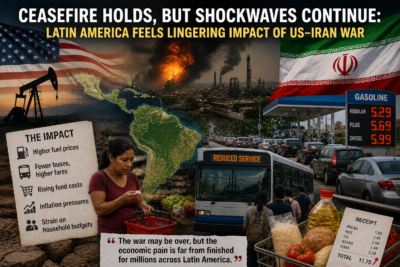
WAR-REPORT : The ceasefire between the United States and Iran may have halted direct military confrontation, but the economic consequences of the conflict continue to ripple across Latin America, affecting millions of lives. Despite the reduction in immediate hostilities, the war’s aftereffects—particularly in energy markets, supply chains, and inflation—are still being felt in households, businesses, and governments throughout the region.
What was initially seen as a distant geopolitical conflict has now translated into everyday economic hardship for ordinary citizens thousands of miles away. Rising fuel prices, increasing food costs, and disrupted transportation systems have become a daily reality, underscoring the global interconnectedness of modern economies.
A Ceasefire Without Immediate Economic Relief
The ceasefire agreement between the United States and Iran brought temporary optimism to global markets. Oil prices dipped briefly, and investors reacted positively, expecting stabilization. However, these gains proved short-lived.
Energy markets remain volatile, and the underlying disruptions caused by the conflict have not yet been resolved. Supply chains damaged during the war continue to struggle, and shipping costs remain elevated. As a result, the expected economic relief has not reached many parts of the world, especially Latin America.
Economists note that while ceasefires can stop active fighting, they do not immediately restore economic balance. Inflationary pressures, once triggered, tend to persist for extended periods.

Rising Fuel Prices and Transportation Challenges
One of the most immediate impacts of the conflict has been the sharp increase in fuel prices. Latin American countries, many of which rely heavily on imported oil, have been particularly vulnerable.
As fuel costs surged:
- Public transportation systems reduced services
- Bus and taxi fares increased
- Daily commuting became more expensive
In several major cities, reduced bus frequencies have forced commuters to spend more time waiting or seek alternative means of transport. For low-income workers, this has translated into higher daily expenses and reduced mobility.

The transportation sector, which forms the backbone of urban economies, has been significantly strained. Small businesses dependent on logistics and delivery services have also faced increased operational costs, further contributing to inflation.
Food Prices and Household Strain
The rise in fuel prices has had a direct impact on food costs. Transportation is a key component of food supply chains, and higher fuel expenses have driven up the price of essential commodities.
Staple foods have become more expensive, forcing families to adjust their consumption patterns. Many households are now:
- Reducing spending on non-essential items
- Switching to cheaper food alternatives
- Limiting portion sizes
This shift has not only affected living standards but also raised concerns about nutrition and long-term public health.
The burden is particularly heavy on vulnerable populations, who spend a larger proportion of their income on food and transportation.
Inflation and Currency Pressures
The conflict triggered a global oil shock, pushing up energy prices and contributing to inflation worldwide. Latin American economies have experienced rising inflation rates, making everyday goods more expensive.
In addition:
- Local currencies have weakened against the US dollar
- Import costs have increased
- Purchasing power has declined
Central banks across the region are facing difficult choices. Raising interest rates to control inflation can slow economic growth, while maintaining lower rates risks further price increases.
This delicate balance has made economic management increasingly challenging.
Unequal Economic Impact Across Countries
The effects of the crisis have not been uniform across Latin America. Oil-exporting countries such as Brazil have experienced some economic benefits from higher global prices, as increased revenues support government finances.
However, most countries in the region are net importers of oil and have been negatively affected. These nations face higher import bills, increased fiscal pressure, and reduced economic stability.
This uneven impact has widened existing economic disparities within the region, creating additional challenges for policymakers.
Persistent Supply Chain Disruptions
Although the ceasefire has reduced geopolitical tensions, global supply chains remain under stress. Shipping routes affected during the conflict have not fully normalized, and logistical costs remain high.
These disruptions have affected:
- Availability of goods
- Industrial production
- Retail prices
Businesses continue to face delays and increased costs, which are often passed on to consumers. This has contributed to sustained inflationary pressures.
Government Measures to Mitigate the Impact
Governments across Latin America have introduced measures to cushion the impact of rising costs on their populations.
These measures include:
- Fuel subsidies to control price increases
- Financial assistance for vulnerable households
- Adjustments to public transportation policies
While these interventions provide temporary relief, they also place additional strain on public finances. Many governments are already dealing with budget deficits, limiting their ability to sustain such support in the long term.
Energy Policy and Long-Term Shifts
The crisis has prompted a reassessment of energy policies in the region. Countries are increasingly aware of the risks associated with dependence on imported fossil fuels.
As a result, there is growing interest in:
- Expanding renewable energy sources
- Investing in domestic energy production
- Enhancing energy efficiency
While these changes will take time, the current crisis may accelerate the transition toward more sustainable and resilient energy systems.
Impact on Daily Life
For ordinary citizens, the economic consequences of the conflict are deeply personal. Daily decisions are increasingly influenced by rising costs and financial uncertainty.
People are adjusting their routines by:
- Reducing travel
- Cutting discretionary spending
- Seeking additional sources of income
These adjustments reflect the broader economic pressures affecting households across the region.
Market Volatility and Economic Uncertainty
Global financial markets remain sensitive to developments related to the conflict. Oil prices continue to fluctuate, and investor confidence remains uncertain.
This volatility affects:
- Business planning
- Investment decisions
- Economic forecasts
Companies are cautious about expansion, and governments are preparing for potential economic slowdowns.
Risk of Prolonged Economic Impact
Experts warn that the economic effects of the conflict may persist long after the ceasefire. Inflation, once established, can take time to subside, and supply chains may require months to fully recover.
In addition, changes in consumer behavior—such as reduced spending—can have lasting effects on economic growth.
This suggests that the region may continue to face challenges even if geopolitical tensions ease further.
Global Interconnectedness Highlighted
The situation highlights the interconnected nature of the global economy. A conflict in one part of the world can have far-reaching consequences for countries thousands of miles away.
Latin America’s experience demonstrates how:
- Energy markets influence local economies
- Supply chain disruptions affect everyday life
- Global events shape domestic policies
This interconnectedness underscores the importance of international cooperation and stability.
Looking Ahead: Uncertain Recovery Path
The future remains uncertain as the ceasefire holds but underlying tensions persist.
Key questions include:
- Will the ceasefire lead to a lasting peace agreement?
- How quickly can global markets stabilize?
- Can governments effectively manage inflation and support their populations?
The answers to these questions will determine the pace and extent of economic recovery in Latin America.
Lasting Effects Beyond the Battlefield
The ceasefire between the United States and Iran has brought a pause to direct conflict, but its economic consequences continue to shape the lives of millions in Latin America.
Rising fuel and food prices, disrupted transportation, and ongoing economic uncertainty illustrate how deeply global events can influence local realities.
As the region navigates these challenges, resilience and adaptive policymaking will be essential. While the hope for stability remains, the path to recovery is likely to be gradual and complex.
The crisis serves as a reminder that in today’s interconnected world, the effects of conflict extend far beyond borders—impacting economies, societies, and everyday lives across the globe.