

Journalist Murder Sparks Outrage: JDRF Demands Protection Law, Swift Justice
By Doruvu Paul Jagan Babu: Assistant Chief Editor

Andhra Pradesh: The brutal killing of a journalist in Andhra Pradesh has triggered widespread condemnation, with media bodies and civil society voices demanding urgent safeguards for journalists. JDRF leaders have called the murder a direct attack on press freedom and urged the government to enact stronger legal protections and ensure swift punishment for those responsible.
Brutal killing of journalist in Chittoor
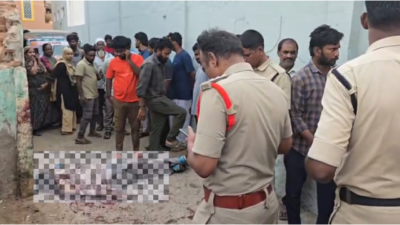
Jaganmohan Reddy, a journalist for Andhra Jyothy (ABN) in V. Kota Mandal of Chittoor district, was allegedly chased and hacked to death by unidentified assailants while returning from a morning walk. The attack, reportedly carried out with machetes, has shocked the journalistic community.
Alleged motive linked to investigative reporting
According to JDRF State Secretary Meda Srinivas, the murder is believed to be linked to the journalist’s reporting on illegal sandalwood trafficking. He stated that Reddy’s work in exposing unlawful activities may have made him a target.

Strong condemnation by JDRF leaders
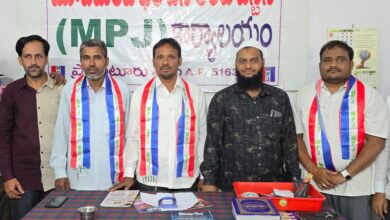
At a meeting held in Rajahmundry, Meda Srinivas, along with District President Marampudi Somaraju, strongly condemned the incident, calling it “inhumane” and a serious threat to democratic values.
They demanded:
Immediate identification and arrest of the accused
Strict and exemplary punishment
Preventive measures to avoid similar incidents
Call for legal protection for journalists

JDRF leaders urged the government to introduce a dedicated law to ensure the safety and protection of journalists. They emphasized that reporters who bring critical issues to light should not have to risk their lives in the process.
Press freedom under threat
The incident has once again highlighted the growing vulnerability of journalists in India. Reports from media watchdogs and rights groups indicate that:
Journalists, especially those covering crime, politics and illegal activities, face increasing threats and intimidation
Regional reporters in smaller towns and rural areas are particularly at risk due to limited institutional protection
Physical attacks, legal harassment and online abuse have become more frequent
In the Telugu states, several instances in recent years have raised concerns over journalist safety, with media bodies repeatedly calling for institutional safeguards and accountability mechanisms.
Debate over justice intensifies
While journalist associations have demanded swift justice, some groups have gone further, calling for extreme measures such as police encounters against the accused—reflecting the depth of anger and frustration within the community.
A wake-up call for authorities
The killing has reignited debate over press freedom and the safety of media professionals. Stakeholders stress that unless concrete steps are taken to protect journalists, such incidents will continue to undermine democracy and the public’s right to information.
Our Media Opinion
The outrage following the brutal murder has continued to intensify, with JDRF emerging at the forefront of the demand for justice and systemic reform. Leaders of JDRF have made it clear that this is not an isolated crime, but part of a disturbing pattern where journalists—especially those working in districts like Chittoor—are increasingly exposed to threats, violence, and intimidation.
JDRF representatives have warned that unless immediate and concrete steps are taken, such attacks will continue to rise. They stressed that the murder of Jaganmohan Reddy reflects a failure of the system to protect those who risk their lives to bring truth to the public. According to JDRF, journalists working on sensitive issues such as illegal activities, corruption, and organized crime are being left vulnerable without adequate institutional support.
At the meeting held in Rajahmundry, JDRF leaders strongly reiterated their core demands. These include the immediate arrest of all accused, a fast-track investigation, and the introduction of a dedicated Journalist Protection Act. JDRF has emphasized that existing laws are insufficient to address targeted attacks on media professionals, particularly in rural and semi-urban areas.
JDRF has also called for the establishment of a monitoring mechanism that tracks threats against journalists and ensures preventive action before incidents escalate into violence. They argued that reactive justice is not enough—what is needed is proactive protection.
Furthermore, JDRF highlighted that the fear among journalists is real and growing. Many reporters, especially those working independently or in smaller organizations, lack access to legal, financial, or security support. This creates a dangerous environment where truth-telling comes at a personal cost.
JDRF leaders concluded with a clear warning: if authorities fail to act decisively in this case, it will send a message that attacks on journalists can occur without consequences. For JDRF, this is a defining moment—not just for justice in one case, but for the future of press freedom in India.