


Hyderabad Police Push Banking Reforms to Combat Cyber Fraud Under Operation Octopus
Cyber Crime Investigation


Anantapur-New Delhi : In a decisive move to curb the growing menace of cyber fraud, Hyderabad Police convened a high-level banking conclave on April 23, bringing together senior representatives from across the banking sector to develop a coordinated strategy against financial cybercrime. The meeting, held in Hyderabad, focused on tightening regulatory practices, improving accountability, and introducing systemic reforms aimed at eliminating vulnerabilities exploited by fraud networks.
The conclave was chaired by V. C. Sajjanar and attended by 75 officials representing 45 public and private sector banks. Participants included regional managers, zonal heads, general managers, deputy general managers, and nodal officers responsible for compliance and risk management. The scale and seniority of participation underscored the seriousness with which authorities are approaching the issue.

This initiative is part of the broader crackdown known as Operation Octopus, a two-phase effort targeting organized cyber fraud networks that operate both domestically and internationally. The operation has already led to several arrests, including bank officials accused of facilitating the opening of mule accounts—an essential component of many cyber fraud schemes.
At the core of the discussions was a proposed “twin-challenge framework,” a concept introduced to fundamentally change how bank branches measure performance. Traditionally, banks have emphasized the number of new accounts opened as a key indicator of growth. However, Commissioner Sajjanar highlighted that this approach has inadvertently created opportunities for fraudsters to exploit gaps in due diligence.

Under the new framework, branches would be evaluated based on two critical objectives: ensuring that none of their customers fall victim to cybercrime and preventing the creation of mule accounts. These goals are intended to be integrated into formal key performance indicators, with recognition and incentives for branches that successfully meet these standards.
The Commissioner warned that aggressive targets for account openings have become a significant vulnerability within the banking system. Fraud networks often take advantage of this pressure by using fake or manipulated documents to open accounts quickly, bypassing proper verification processes. Once established, these accounts are used to channel stolen funds, making it difficult to trace the fund and identify the perpetrators.
Officials at the conclave provided insights into how international cybercrime syndicates operate. Many of these groups are based in countries such as Cambodia, Vietnam, and the United Arab Emirates, where they coordinate large-scale fraud operations. These networks rely heavily on local intermediaries and, in some cases, insiders within banks to gain access to the financial system.

Mule accounts play a central role in these operations. Opened using weak or compromised Know Your Customer procedures, these accounts act as conduits for transferring funds obtained through scams. Victims are often tricked into sending money to these accounts, which is then quickly moved across multiple channels to obscure its origin.
To address this challenge, the police recommended a series of measures aimed at strengthening KYC processes and enhancing oversight. Banks were urged to implement stricter verification protocols, particularly for high-risk accounts and newly opened accounts. Enhanced due diligence, including background checks and continuous monitoring, was identified as a key step in preventing misuse.
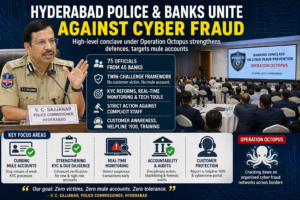
The adoption of advanced technological tools was also emphasized. Systems capable of real-time transaction monitoring can help identify suspicious patterns, such as sudden large transfers or frequent transactions involving newly created accounts. Tools like Mule Hunter were recommended to detect and flag accounts that exhibit characteristics associated with fraud.
Another important recommendation was the imposition of transaction limits during the initial period after an account is opened. By restricting the amount and frequency of transactions, banks can reduce the risk of immediate misuse while allowing time for additional verification and monitoring.
Accountability within banking institutions was a major theme of the conclave. Authorities stressed that internal controls must be strengthened to ensure that employees adhere to established procedures. Strict disciplinary action was proposed for staff found to be complicit in fraudulent activities, including blacklisting across the financial sector.
Periodic forensic audits were also suggested as a means of identifying irregularities. By examining the accounts handled by flagged officials, banks can detect patterns of misuse and take corrective action before significant damage occurs. Such audits can also serve as a deterrent, reinforcing the importance of compliance among employees.
The conclave also addressed the role of banks in supporting victims of cybercrime. Frontline staff, who are often the first point of contact, were encouraged to actively guide victims toward available resources, including the national cybercrime helpline 1930 and the official reporting portal. Prompt reporting can significantly increase the chances of recovering lost funds and apprehending offenders.
Training programs for bank employees were identified as a critical component of this effort. Staff must be equipped to recognize signs of potential fraud, such as unusual withdrawal patterns, sudden requests for large transfers, or attempts to prematurely close fixed deposits. By intervening early, banks can prevent losses and protect their customers.
Customer awareness was another key focus area. Banks were urged to educate their clients about common fraud techniques and preventive measures. This includes advising customers not to share sensitive information, verifying the authenticity of requests, and being cautious of unsolicited offers or urgent demands for payment.
The Commissioner emphasized the need for a zero-tolerance approach to cybercrime, calling for continuous collaboration between banks and law enforcement agencies. Regular information sharing, joint investigations, and coordinated responses are essential to effectively combat the evolving threat landscape.
The discussions at the conclave reflect a broader shift in how cybercrime is being addressed in India. Rather than treating it as an isolated issue, authorities are adopting a holistic approach that involves multiple stakeholders, including financial institutions, technology providers, and regulatory bodies.
Experts believe that such initiatives are crucial in keeping pace with the rapidly changing nature of cyber threats. As fraudsters adopt more sophisticated techniques, the systems designed to counter them must also evolve. This requires not only technological upgrades but also changes in mindset and organizational culture.

The integration of cyber fraud prevention into performance metrics represents a significant in this direction. By aligning incentives with security objectives, banks can create an environment where preventing fraud is as important as achieving business growth.
Our Media Opinion, the high-level conclave organized by Hyderabad Police marks an important step in the fight against cybercrime. Through initiatives like Operation Octopus, authorities are working to dismantle fraud networks and strengthen the resilience of the financial system. The success of these efforts will depend on sustained cooperation, continuous innovation, and a shared commitment to protecting customers from the growing threat of cyber fraud.