


Sri Lanka’s Fragile Path to Reform as Political Change Faces Rising Pressure 2026
By Samir Singh 'Bharat': Editor In Chief

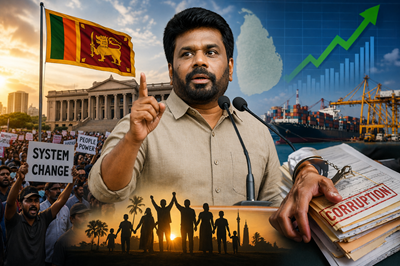
SPECIAL-REPORT : Nearly eighteen months after taking office, the government of Anura Kumara Dissanayake is navigating a complex and uncertain path toward political and economic transformation. Elected in September 2024 with strong public support, Dissanayake and his coalition, the National People’s Power, entered power with a mandate for sweeping reform. Their promises centered on economic recovery, anti corruption measures, and a broader commitment to what they described as a complete restructuring of the country’s political system.
Since then, the government has achieved a degree of stability in the national economy and has taken visible steps to address corruption. However, growing doubts are emerging about whether the administration can fulfill its ambitious agenda. Questions about governance style, accountability, and inclusiveness are becoming more prominent, raising concerns about the long term direction of the country.
A Mandate Born from Crisis
The rise of the National People’s Power government must be understood in the context of the deep crisis that preceded it. In recent years, Sri Lanka experienced one of the most severe economic collapses in its history. Shortages of essential goods, rising inflation, and widespread unemployment led to mass protests and political upheaval.
Public frustration with established political elites created an opening for a new leadership force. Dissanayake’s campaign focused on breaking away from entrenched systems of patronage and corruption. His message resonated strongly with voters who were seeking both accountability and a new direction for the country.
The election result, followed by a parliamentary majority for the National People’s Power, provided a rare opportunity to implement meaningful reforms. For many observers, this moment represented a turning point in Sri Lanka’s political trajectory.

Economic Recovery and Stability
One of the most notable achievements of the current government has been its ability to maintain economic stability. After a period of severe disruption, key economic indicators have shown signs of improvement. Inflation has moderated, foreign exchange reserves have stabilized, and essential imports have become more accessible.
These developments reflect a combination of domestic policy adjustments and international support. The government has worked to restore confidence among investors and financial institutions while continuing to engage with international partners on debt restructuring and economic assistance.
Despite these improvements, the recovery remains fragile. Many citizens continue to face economic hardship, particularly those in lower income groups. The cost of living remains high, and the benefits of economic stabilization have not been evenly distributed across society.

Anti Corruption Efforts
A central pillar of the National People’s Power agenda has been the fight against corruption. The government has initiated a series of investigations and legal actions aimed at addressing past abuses of power. These efforts have been widely welcomed by the public, which has long demanded greater accountability from political leaders.
However, the progress of these initiatives has been uneven. While some high profile cases have moved forward, others have faced delays or encountered resistance within the system. Critics argue that without deeper institutional reforms, anti corruption efforts may struggle to achieve lasting impact.
The challenge lies not only in prosecuting individual cases but also in transforming the structures that enable corruption. This requires strengthening independent institutions, improving transparency, and ensuring that the rule of law is applied consistently.
The Promise of System Change
At the heart of the government’s platform is the concept of system change. This idea goes beyond incremental reforms and calls for a fundamental restructuring of how the state operates. It includes changes to governance practices, public administration, and the relationship between citizens and the state.
While this vision has generated significant support, it also presents considerable challenges. Implementing such wide ranging reforms requires strong political will, effective coordination, and sustained public engagement. It also demands a willingness to confront entrenched interests that may resist change.
So far, the government’s approach has been mixed. Some reforms have been introduced, but progress has been slower than many supporters had hoped. This has led to growing frustration among those who expected more rapid and decisive action.
Risks of Political Backsliding
The stakes of the current moment are high. Failure to deliver meaningful reforms could have serious consequences for Sri Lanka’s political future. One of the key risks is the re emergence of ethnic tensions, which have historically played a significant role in the country’s conflicts.
Efforts to address issues related to minority rights and reconciliation have been limited. Without a more inclusive approach, there is a danger that unresolved grievances could resurface. This would not only undermine social cohesion but also weaken the foundation for long term stability.
Another concern is the potential return of authoritarian practices. If the government struggles to maintain public support, there may be pressure to adopt more centralized and restrictive forms of governance. This would represent a departure from the democratic aspirations that underpinned the recent political transition.
Governance Style and Public Perception
The style of governance adopted by the current administration has also come under scrutiny. Some critics argue that the government has become increasingly defensive in response to criticism. This has raised concerns about transparency and openness.
An inclusive and consultative approach to governance is widely seen as essential for building trust and ensuring the success of reforms. Engaging with a broad range of stakeholders, including civil society organizations and opposition groups, can help to strengthen policy outcomes and enhance legitimacy.
Improving communication with the public is another important aspect. Clear and consistent messaging can help to manage expectations and maintain confidence in the reform process.
The Role of Independent Institutions
Strengthening independent oversight mechanisms is a critical component of sustainable reform. Institutions such as the judiciary, anti corruption bodies, and regulatory agencies play a vital role in ensuring accountability and preventing abuses of power.
The current government has taken some steps in this direction, but more needs to be done. Ensuring the independence and effectiveness of these institutions requires both legal reforms and a commitment to respecting their autonomy.
Without strong oversight, efforts to combat corruption and improve governance may be undermined. Building institutional resilience is therefore essential for achieving long term change.
Security Policies and Civil Liberties
Another area of concern is the use of counter terrorism measures. While maintaining security is an important responsibility of the state, there have been reports of abuses associated with these policies. Such practices can have a negative impact on civil liberties and undermine public trust.
Balancing security and human rights is a complex task, but it is essential for maintaining democratic values. Reforms in this area should focus on ensuring that security measures are applied fairly and in accordance with the law.
Addressing these issues can also contribute to reconciliation efforts by reducing perceptions of discrimination and injustice.
Protecting the Most Vulnerable
Economic recovery efforts must also prioritize the needs of the most vulnerable members of society. While macroeconomic indicators may show improvement, many households continue to struggle with basic living costs.
Expanding social protection programs, improving access to essential services, and creating opportunities for employment are key priorities. Ensuring that the benefits of recovery are widely shared can help to build public support for the reform agenda.
Failure to address these concerns could lead to renewed social unrest and weaken the government’s position.
The Path Forward
Sri Lanka stands at a critical juncture. The initial momentum generated by the election of a reform oriented government has created an opportunity for meaningful change. However, sustaining this momentum will require renewed effort and a clear sense of direction.
The government must demonstrate its commitment to reform by accelerating progress in key areas. This includes strengthening anti corruption measures, adopting a more inclusive approach to governance, and addressing longstanding social and political challenges.
At the same time, it must manage expectations and communicate effectively with the public. Building trust and maintaining support are essential for navigating the difficult path ahead.
Our Media Opinion
The journey toward political and economic transformation in Sri Lanka is far from complete. While important progress has been made, significant challenges remain. The success of the current government will depend on its ability to translate its vision of system change into concrete results.
The coming months and years will be decisive in determining whether Sri Lanka can achieve a stable and inclusive future. By addressing the concerns that have emerged and reinforcing its commitment to reform, the government has an opportunity to fulfill the promise that brought it to power.
If it succeeds, it could set a new course for the nation. If it falls short, the consequences could extend beyond political disappointment, affecting the stability and cohesion of the country for years to come.