

Iran Signals Strategic Use of the Strait of Hormuz as Leverage in Post 2026
By Samir Singh 'Bharat': Editor In Chief

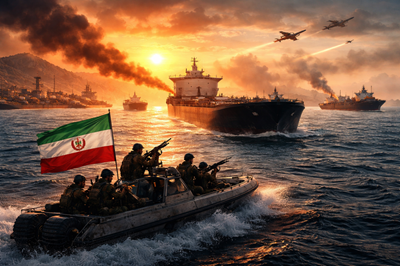
WAR-REPORT : Senior officials in Tehran have increasingly signaled that Iran intends to use the Strait of Hormuz and the critical energy routes surrounding it as a central instrument of strategic leverage in the aftermath of the ongoing conflict. These statements suggest a deliberate effort by Iranian leadership to transform geographic advantage into long-term political, economic, and military influence. By doing so, Iran appears to be positioning itself to extract concessions and secure its strategic objectives once the war subsides.
The Strait of Hormuz is one of the most important maritime chokepoints in the world. Connecting the Persian Gulf to international waters, it serves as a vital passage for a significant portion of global oil and natural gas shipments. Any disruption in this narrow waterway has immediate and far-reaching consequences for global energy markets and economic stability. Iran’s geographic position along the northern coast of the strait gives it a unique capacity to influence maritime traffic, making it a powerful strategic asset.
Recent commentary from Iranian officials and affiliated voices highlights a growing recognition within Tehran of the strait’s importance as a tool of leverage. Among those emphasizing this perspective is Mohammad Bagher Ghalibaf, the Speaker of Iran’s Parliament and a key figure within the country’s political leadership. Alongside him, several media outlets linked to the Islamic Revolutionary Guard Corps (IRGC) and analysts with close ties to Iran’s security institutions have stressed the strategic value of the strait. They have pointed to Iran’s ability to control or disrupt shipping as a means to ensure the regime’s survival and protect its interests both in the present and in the future.
Although some of the individuals contributing to this discussion are not formal decision-makers, their statements reflect a broader and evolving strategic conversation within Iran. This conversation focuses on how to achieve both immediate military objectives and long-term geopolitical goals. The consistent emphasis on the Strait of Hormuz suggests that Iranian leaders are carefully considering how to use this asset not only during the conflict but also in shaping the post-war environment.
On April 1, an analyst believed to be closely aligned with Iran’s security establishment provided further insight into this strategy. The analyst argued that Iran could effectively neutralize threats from the United States and Israel if it maintains what was described as “legal and security dominance” over the Strait of Hormuz, even after the conflict ends. This concept implies a combination of military capability, legal positioning, and strategic messaging that would allow Iran to assert control over the strait while framing its actions as legitimate and defensive.

Such statements indicate that Iran’s leadership is thinking beyond the immediate dynamics of the conflict. Instead, it is exploring how to convert its current capabilities into enduring leverage. By demonstrating its ability to disrupt shipping through the Strait of Hormuz, Iran may seek to establish a lasting deterrent against its adversaries. This deterrent would not necessarily depend on continuous attacks but rather on the credible threat of disruption, which could influence the behavior of other states over the long term.
Iran’s recent actions in the region reinforce this assessment. The country has continued to target maritime assets, signaling its willingness to act on its strategic calculations. In one notable incident, Iranian forces attacked the Panamanian-flagged oil tanker AQUA 1, which had been leased by a Qatari state-owned energy company. The attack occurred approximately 17 nautical miles northwest of Ras Laffan, Qatar, and resulted in damage to the vessel’s hull. This marked the second attack on a civilian vessel within two consecutive days, highlighting a pattern of activity that underscores Iran’s operational capabilities.
These attacks serve both tactical and strategic purposes. On a tactical level, they disrupt the immediate flow of energy supplies and commercial goods, creating uncertainty in global markets. On a strategic level, they send a clear message about Iran’s ability to interfere with maritime traffic at a time and place of its choosing. By demonstrating this capability, Iran strengthens its position as a key player in regional security dynamics and enhances its bargaining power in future negotiations.

Importantly, Iran does not need to sustain a continuous campaign of attacks to achieve its objectives. The establishment of a credible threat, supported by demonstrated capability, may be sufficient to deter adversaries or compel them to adopt more cautious policies. In this sense, the Strait of Hormuz becomes not only a physical chokepoint but also a strategic and psychological one. The mere possibility of disruption can carry significant weight in shaping international behavior.
Iran may be particularly motivated to rely on this form of leverage if it concludes that such actions have been effective in the past. If previous disruptions or threats have led to diplomatic concessions, reduced military pressure, or changes in policy by other countries, Tehran is likely to view this strategy as successful. This could encourage a continued emphasis on maritime leverage as a cornerstone of Iran’s long-term strategic planning.
At the same time, the use of the Strait of Hormuz as a tool of coercion carries considerable risks. Any significant disruption to shipping in the region could trigger widespread economic consequences, given the global dependence on energy supplies that pass through the strait. Prolonged instability could lead to rising energy prices, supply chain disruptions, and increased geopolitical tensions among major powers.
Moreover, repeated attacks on civilian vessels could provoke stronger responses from the international community. Countries with significant interests in the region may increase their naval presence, implement enhanced security measures, or take direct action to ensure the safety of maritime routes. The United States, in particular, has historically maintained a strong naval presence in the Persian Gulf to safeguard freedom of navigation. Any sustained threat to shipping could lead to a more assertive response.
Despite these risks, Iran appears to be carefully weighing the potential benefits of its strategy. The ongoing discussion within Tehran suggests that decision-makers are actively exploring ways to maximize the strategic value of the Strait of Hormuz. This includes not only direct military actions but also broader efforts to shape the narrative and legal framework surrounding its activities.
The concept of “legal and security dominance” is especially significant in this context. By framing its actions as consistent with international law or as necessary for national defense, Iran may seek to legitimize its control over the strait. This approach could complicate efforts by other countries to challenge Iran’s behavior, as it introduces a layer of legal and political ambiguity. Through a combination of diplomatic messaging, legal arguments, and measured military actions, Iran may attempt to reinforce its position without provoking overwhelming retaliation.
The implications of this strategy extend far beyond the immediate region. As one of the world’s most critical energy corridors, the Strait of Hormuz plays a central role in the global economy. Any sustained threat to its stability could have far-reaching consequences, affecting not only energy markets but also international trade and geopolitical relationships.
For the United States and its allies, Iran’s approach presents a complex and multifaceted challenge. On one hand, they must ensure the security and stability of maritime trade, which is essential for global economic health. On the other hand, they must avoid actions that could escalate tensions or inadvertently strengthen Iran’s position. Striking this balance will require careful coordination, strategic patience, and a clear understanding of Iran’s objectives.
Ultimately, the situation underscores the enduring importance of geography in shaping international politics. Iran’s position along the Strait of Hormuz provides it with a powerful strategic advantage, one that it appears increasingly determined to use. By leveraging this advantage, Iran aims to secure its interests, deter its adversaries, and influence the post-war order in its favor.
As the conflict continues and discussions evolve, the Strait of Hormuz is likely to remain at the center of strategic calculations. The interplay between deterrence, coercion, and stability will be a defining factor in the months and years ahead. How Iran and the international community navigate this complex dynamic will have significant implications for regional security and the global economy.
In conclusion, Iran’s signaling about the use of the Strait of Hormuz reflects a broader strategic vision that extends beyond the immediate conflict. By emphasizing its ability to control and disrupt one of the world’s most vital maritime routes, Iran is positioning itself as a key actor in shaping the future balance of power. Whether this strategy will achieve its intended outcomes remains uncertain, but its potential impact is undeniable.