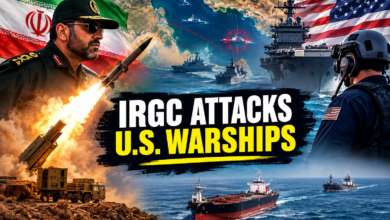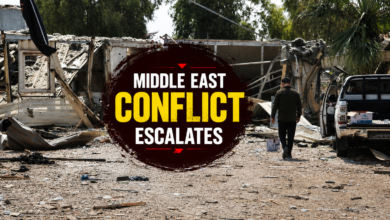



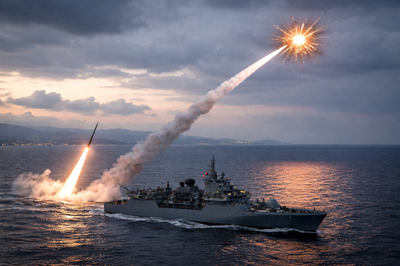
WAR-REPORT : The ongoing war in the Middle East is no longer confined to direct confrontation between primary actors. It is increasingly drawing in regional and global powers, expanding across borders, and involving multiple layers of military, political, and strategic engagement. A recent development highlights this dangerous trajectory: the interception of an Iranian ballistic missile over the eastern Mediterranean after it entered Turkish airspace.
This incident, confirmed by the Turkish Defense Ministry on March 30, marks a significant escalation. It is the fourth confirmed instance of an Iranian projectile entering the airspace of Turkey since the conflict began. Such developments underscore the increasing risk of the war expanding beyond its original boundaries and pulling in additional regional actors.
At the same time, parallel developments—including militia deployments within Iran, allegations of Russian intelligence support, and Ukraine’s growing security partnerships in the Middle East—point to a conflict that is becoming more complex and interconnected.
Missile Interception Over the Eastern Mediterranean
According to official statements, NATO air defense systems successfully intercepted an Iranian ballistic missile over the eastern Mediterranean Sea after it entered Turkish airspace. This interception prevented potential damage and highlighted the readiness of allied defense systems in the region.
The fact that this is the fourth such incident raises serious concerns. Repeated violations of Turkish airspace suggest either operational risk, miscalculation, or deliberate signaling. Regardless of intent, the implications are significant.

Airspace violations between sovereign states are among the most sensitive issues in international relations. They carry the risk of escalation, especially when they involve active conflict zones and advanced weapon systems. Turkey, as a key member of NATO, is not only a regional power but also part of a broader collective defense structure. Any sustained violation of its airspace could trigger wider consequences.
Iran’s Response and Denial
At the time of reporting, Iran had not officially commented on the latest interception. However, earlier statements from Supreme Leader Mojtaba Khamenei indicate a clear denial of responsibility for previous incidents.
On March 20, Khamenei dismissed earlier reports of Iranian projectiles entering Turkish airspace, describing them as a “false flag tactic” attributed to Israel. Such statements reflect the broader information war accompanying the military conflict, where narratives and counter-narratives play a crucial role.

Meanwhile, diplomatic engagement continues behind the scenes. Iranian Defense Minister Majid Ibn al Reza held a phone conversation with Turkish Defense Minister Yasar Guler on March 30. While official details remain limited, it is highly likely that the airspace violations and broader regional tensions were key topics of discussion.
Allegations of Russian Intelligence Support
The conflict has also drawn in external powers in less direct but equally significant ways. Ukrainian President Volodymyr Zelensky stated in an interview that Russia is providing Iran with satellite imagery of United States and allied military assets in the Middle East.
According to these claims, the shared intelligence includes sensitive locations such as Incirlik Airbase in Turkey. If accurate, this development represents a major escalation in the indirect involvement of global powers.
Satellite imagery can significantly enhance targeting accuracy, allowing missile strikes to be more precise and effective. Analysts from the Institute for the Study of War and the Critical Threats Project have previously noted that such support could enable Iran to expand its operational reach—not only against United States forces but also against allied nations.
This intersection of intelligence sharing and active conflict illustrates how regional wars can quickly evolve into broader geopolitical confrontations.
Militia Deployment Inside Iran
Another important development involves the reported deployment of militia forces within Iran. According to anti-regime sources and a journalist affiliated with the Kurdistan Democratic Party, fighters from the Popular Mobilization Forces have been deployed to western Iran.
An Iraqi official cited in these reports claimed that these fighters have been stationed at bases associated with the Basij in cities such as Khorramshahr and Abadan.
The Basij is a paramilitary organization responsible for internal security, civil defense, and social control. The integration of foreign militia forces into this structure suggests a heightened concern within the Iranian leadership regarding internal stability.
Internal Security Concerns and Protest History
The deployment of additional forces is particularly significant given the recent history of unrest in Iran. Both Khorramshahr and Abadan were major centers of protest during the widespread demonstrations that took place between December 2025 and January 2026.
These protests were driven by economic hardship, governance issues, and public dissatisfaction. The current conflict, combined with economic pressure and military losses, may increase the risk of renewed unrest.
By deploying militia forces to these area, the Iranian government appears to be taking precautionary measures to maintain control over areas with a history of dissent.
Border Activity and Strategic Locations
Reports also indicate military activity near key border Area. Anti-regime sources claim that combined forces carried out strikes on a border crossing checkpoint in Shalamcheh in Khuzestan Province.
This location is strategically important, serving as a major crossing point between Iran and Iraq. Previous reports suggested that militia fighters entered Iran through this route, making it a critical sitution in the movement of personnel and resources.
Control over such crossings is essential for both military logistics and internal security. Any disruption can have significant operational consequences.
Ukraine’s Expanding Role in the Middle East
While the conflict continues to evolve, Ukraine is emerging as an increasingly active player in the region. President Volodymyr Zelensky met with King Abdullah II in Amman on March 29 to discuss potential security cooperation.
This meeting followed a series of defense agreements signed by Ukraine with countries such as Saudi Arabia, the United Arab Emirates, and Qatar. These agreements indicate a growing alignment between Ukraine and key Middle Eastern states.
Zelensky expressed Ukraine’s willingness to assist partners in defending against missile and drone attacks, drawing on its own experience in countering similar threats.
Focus on Maritime Security and the Strait of Hormuz
Another important area of discussion was the security of the Strait of Hormuz, a critical maritime route for global energy supplies.
Ukraine highlighted its experience in securing maritime routes using unmanned surface vessels. These systems have been used effectively to counter threats and maintain open shipping lanes.
Reports suggest that Ukrainian sea drones could potentially be deployed in the Strait of Hormuz, representing a new dimension in maritime security operations. Such a move would further internationalize the conflict and introduce advanced technologies into a highly sensitive area.
A Conflict Becoming Global
Taken together, these developments illustrate how the conflict is expanding beyond its original scope. It now involves:
- Direct military engagements across multiple countries
- Indirect involvement of global powers through intelligence sharing
- Internal security measures and militia mobilization
- New alliances and defense partnerships
This complexity increases the risk of miscalculation and unintended escalation.
Potential Future Scenarios
Several possible trajectories could shape the future of the conflict:
1. Continued Regional Escalation
Repeated incidents, such as airspace violations and missile strikes, could draw more countries into direct confrontation.
2. Increased Global Involvement
The role of external powers may expand, turning the conflict into a broader geopolitical struggle.
3. Internal Instability
Economic pressure and military developments could trigger renewed unrest within affected countries.
4. Diplomatic Efforts
Despite the tensions, there remains a possibility of negotiation and de-escalation through international mediation.
Our Media Opinion: A Critical Moment for Regional Stability
The interception of an Iranian missile over Turkish airspace is more than an isolated घटना—it is a sign of a rapidly evolving conflict that is crossing borders and drawing in new actors.
From airspace violations and intelligence sharing to militia deployments and emerging alliances, the situation is becoming increasingly complex. Each development adds another layer of risk and uncertainty.
As the conflict continues to unfold, the actions of regional and global players will determine whether it stabilizes or escalates further. In a world that is deeply interconnected, the consequences of this crisis will extend far beyond the Middle East, shaping the future of international security and cooperation.