

Civilian Strikes in Odesa, Ukraine’s Deep Attacks, and Russia’s Economic Strain
By Samir Singh 'Bharat': Editor In Chief
 war-times.com
Send an email
29 March 2026
war-times.com
Send an email
29 March 2026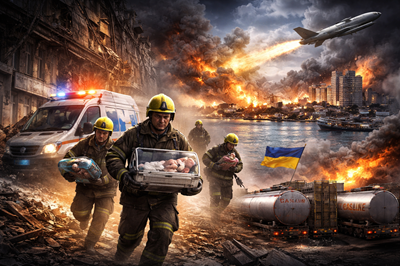
WAR-REPORT: The ongoing war between Russia and Ukraine continues to evolve in both intensity and complexity, marked by a combination of devastating frontline engagements, long-range precision strikes, and mounting economic consequences. Recent developments between March 27 and 28 illustrate the multifaceted nature of the conflict, highlighting the increasing vulnerability of civilian infrastructure, Ukraine’s expanding capacity to strike deep inside Russian territory, and the growing strain on Russia’s domestic economy.
These events collectively underscore a war that is no longer confined to the battlefield alone but is instead being fought across cities, industries, and economic systems.
A Night of Destruction in Southern Ukraine
In the early hours between March 27 and 28, Russian forces launched a large-scale drone assault targeting southern Ukraine, with a particular focus on Odesa and the surrounding oblast. The attack involved a combination of Shahed, Gerbera, and Italmas-type unmanned aerial vehicles, representing one of the most extensive drone barrages in recent weeks.
According to the Ukrainian Air Force, a total of 273 drones were launched during the assault, including approximately 180 Shahed drones. Ukrainian air defense systems responded with significant effectiveness, successfully intercepting 252 of the incoming threats. However, despite this high interception rate, the remaining drones and falling debris caused considerable damage across multiple locations.


A total of 21 drones reportedly struck 18 separate sites, while fragments from intercepted drones fell across nine additional locations. These impacts resulted in damage to residential areas, infrastructure, and, most tragically, a medical facility that was housing some of the most vulnerable civilians.
Maternity Hospital Strike: A Humanitarian Crisis
Among the most alarming aspects of the attack was the direct strike on a maternity hospital in Odesa. Ukrainian President Volodymyr Zelensky confirmed that more than 60 drones were directed specifically at the city, one of which struck the hospital.
At the time of the attack, the facility was operating at full capacity, with 22 women in labor and 19 newborn infants present inside. The strike resulted in the deaths of two individuals and injuries to at least 12 others, according to regional authorities.

Oleh Kiper reported that the broader assault on the region involved over 100 drones, causing damage not only to healthcare facilities but also to residential buildings, critical infrastructure, and port installations. The scale and nature of the attack highlight the continued risks faced by civilians, even in areas far from active frontlines.
The Ukrainian Ministry of Health described the situation as deeply distressing, emphasizing the vulnerability of patients and medical staff during such strikes. The targeting—or incidental striking—of a maternity hospital has drawn renewed attention to the humanitarian dimensions of the conflict and the urgent need for enhanced protection of civilian infrastructure.
Expanding Impact Across Regions
The overnight strikes were not limited to Odesa alone. Russian forces also targeted other regions across Ukraine, including Poltava Oblast and Kryvyi Rih.
In Poltava Oblast, residential and industrial facilities sustained damage, while in Kryvyi Rih—an important industrial hub—energy and infrastructure assets were struck. These attacks reflect a broader strategy aimed at disrupting Ukraine’s economic and logistical capabilities, as well as undermining civilian morale.
Analysts note that Russian long-range strike tactics have increasingly focused on civilian and dual-use infrastructure. This trend suggests a deliberate effort to maximize pressure on Ukraine’s population and governance systems, rather than solely targeting military objectives.
Furthermore, modifications to strike vehicles and tactics—such as the use of mixed drone types and coordinated waves—indicate an evolving approach designed to overwhelm air defense systems and increase the likelihood of successful hits.
Ukraine’s Response: Deep Strikes into Russian Territory
In parallel with defending against incoming attacks, Ukrainian forces have continued to demonstrate their growing capability to conduct long-range strikes against targets inside Russia. On the night of March 27–28 and into the following morning, Ukraine launched a series of operations aimed at disrupting Russia’s defense industrial base and energy infrastructure.
One of the most significant strikes targeted the Promsintez explosives plant in Chapayevsk, located in Samara Oblast, approximately 890 kilometers from the Ukrainian border. The operation reportedly involved the use of a domestically produced FP-5 Flamingo cruise missile, highlighting Ukraine’s advancements in indigenous weapons development.
According to the Ukrainian General Staff, the Promsintez facility plays a crucial role in Russia’s military production, manufacturing over 30,000 tons of explosives annually for use in ammunition, including aerial bombs and missile systems.
The strike caused substantial damage to the plant and triggered secondary explosions, indicating the presence of volatile materials on-site. Geolocated footage and imagery published shortly after the attack showed plumes of smoke rising from the facility, providing visual confirmation of the strike’s impact.
Reports from local residents in Chapayevsk described hearing explosions and observing emergency alerts being activated. However, regional authorities, including Governor Vyacheslav Fedorishchev, downplayed the extent of the damage, claiming that the attack did not affect residential or social infrastructure.

Technological Evolution in Warfare
Ukraine’s use of advanced systems such as the FP-5 Flamingo cruise missile and FP-1 long-range drones underscores the rapid technological evolution taking place within the conflict. These systems enable Ukraine to project power deep into Russian territory, targeting critical nodes in the supply chain that supports Moscow’s war effort.
The ability to strike nearly 900 kilometers beyond its borders represents a significant strategic shift, allowing Ukraine to disrupt production facilities, logistics hubs, and energy assets that were previously considered relatively secure.
This development has forced Russia to reconsider its defensive posture, potentially requiring the redeployment of air defense systems and resources to protect critical infrastructure across a much wider geographic area.
Economic Fallout: Russia’s Fuel Crisis
As the military dimension of the conflict intensifies, its economic consequences are becoming increasingly apparent. One of the most notable recent developments is Russia’s decision to prepare for a temporary suspension of gasoline exports beginning April 1.
Alexander Novak has instructed the Ministry of Energy to draft a resolution banning gasoline exports through July 31, 2026. The primary objective of this measure is to stabilize domestic fuel prices and ensure adequate supply within Russia.
This decision comes amid a sharp rise in gasoline prices, which has been partly attributed to Ukraine’s sustained strikes on Russian oil infrastructure. Refineries, storage facilities, and transportation networks have all been targeted in recent months, reducing output and increasing logistical challenges.
Russia had previously implemented a similar export ban in September 2025, though it was partially lifted in early 2026 to accommodate major exporters. The reintroduction of such measures reflects the growing pressure on the Russian government to address domestic economic concerns.
Balancing War and Domestic Stability
The rising cost of fuel is only one aspect of a broader economic strain facing Russia. Inflation has continued to climb, real incomes have declined, and the price of everyday goods remains elevated. These factors have contributed to increasing public dissatisfaction and placed additional pressure on the Kremlin.
The decision to restrict gasoline exports highlights a difficult balancing act. On one hand, revenue from energy exports is a critical component of Russia’s war financing. On the other, maintaining domestic stability requires ensuring affordable access to fuel and other essential commodities.
Complicating matters further is the broader global energy context. Ongoing instability in the Middle East has contributed to fluctuations in energy prices, adding another layer of uncertainty to Russia’s economic outlook.
Strategic Implications
The events of March 27–28 illustrate the interconnected nature of modern warfare, where military operations, technological innovation, and economic policy are deeply intertwined.
Russia’s continued use of long-range strikes against Ukrainian cities reflects an effort to exert pressure beyond the battlefield, targeting the resilience of civilian populations and critical infrastructure. At the same time, Ukraine’s ability to strike deep within Russian territory demonstrates a growing capacity to challenge the sources of Moscow’s military strength.
Meanwhile, the economic repercussions of these actions are increasingly shaping decision-making at the highest levels of government. Russia’s move to suspend gasoline exports is not merely an economic adjustment but a strategic response to the cumulative effects of sustained conflict.
Our Media Opinion
As the war continues, the line between frontlines and home fronts becomes ever more blurred. The strike on a maternity hospital in Odesa serves as a stark reminder of the human cost of the conflict, while Ukraine’s deep strikes into Russian territory signal a shift in the balance of capabilities.
At the same time, economic pressures are beginning to influence strategic decisions in Moscow, highlighting the far-reaching consequences of prolonged warfare.
Together, these developments point to a conflict that is not only enduring but evolving—one in which military actions, technological advancements, and economic realities are all shaping the path forward.
war-times.com
Send an email
29 March 2026