

Russian War Criticism Intensifies as Military Blogger Warns of Structural Failures
By Samir Singh 'Bharat': Editor In Chief

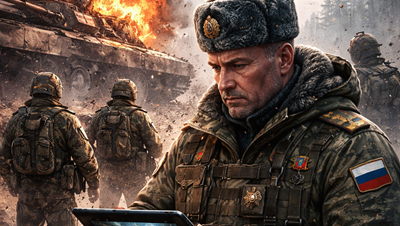
WAR-REPORT : A prominent Russian military blogger has delivered one of the most scathing internal critiques of Russia’s war effort in Ukraine to date, exposing systemic weaknesses in battlefield strategy, force structure, and defense production. The unusually candid assessment sheds light on growing frustration within segments of Russia’s pro-war information space and raises serious questions about Moscow’s ability to achieve a decisive victory in the ongoing conflict.
Mounting Frustration Over Battlefield Stagnation
In a detailed commentary published on March 25, the Russian milblogger outlined a series of critical failures that continue to hinder Russian forces on the battlefield. Chief among these concerns is the military’s reliance on small-group infiltration tactics, which the blogger argues have proven ineffective against Ukraine’s evolving defense strategies.
According to the critique, Russian troops attempting incremental advances are increasingly vulnerable to Ukraine’s expanding use of drone warfare. Ukrainian forces have achieved notable success by integrating first-person view (FPV) drones into their battlefield tactics, allowing them to precisely target Russian infantry and armored units. This technological edge has significantly disrupted Russian offensive operations and contributed to prolonged battlefield stalemates.
The blogger emphasized that without a fundamental shift in military doctrine and operational strategy, Russia is unlikely to make meaningful territorial gains in the near future. Instead, current tactics are leading to high attrition rates with minimal progress, further straining manpower and resources.
Drone Dominance Redefining Modern Warfare
A central theme of the critique is the growing dominance of drones in shaping the conflict. Ukrainian forces have effectively leveraged drone technology not only for reconnaissance but also for direct attacks, creating a highly adaptive and lethal battlefield environment.

Russian armored vehicles, once considered a cornerstone of offensive capability, are now increasingly vulnerable. The blogger criticized the Russian defense establishment for failing to adequately adapt to this reality, particularly by not equipping vehicles with sufficient countermeasures against drone strikes. The widespread destruction of armored units by FPV drones has exposed critical gaps in both equipment design and battlefield preparedness.
This imbalance underscores a broader issue: Russia’s defense industrial base has struggled to keep pace with rapid technological changes. The blogger called for urgent reforms to ensure that production lines can quickly adapt to new battlefield requirements, warning that failure to do so will continue to put Russian forces at a disadvantage.
Call for Structural Military Reforms
Beyond tactical shortcomings, the critique highlights deeper structural issues within the Russian military. The blogger pointed to a culture of misinformation within the chain of command, where lower-level commanders allegedly feel pressured to exaggerate battlefield successes in reports to their superiors.

This practice, the blogger argues, leads to flawed strategic decisions at higher levels, as leadership operates based on inaccurate assessments of the situation on the ground. To address this, the blogger called for greater transparency and accountability within the military hierarchy.
Another major concern is the state of combat training. The blogger stressed the need for longer and more comprehensive training programs for both new recruits and active personnel. Current training cycles, described as insufficient, leave soldiers ill-prepared for the complexities of modern warfare, particularly in an environment dominated by advanced surveillance and precision-strike technologies.
However, implementing such reforms would come with significant challenges. Extending training periods and rotating troops off the frontline would temporarily reduce Russia’s combat capacity, potentially slowing operations even further in the short term.
Industrial Constraints and Strategic Dilemmas
The critique also delves into the limitations of Russia’s defense industrial base. Modernizing production to address battlefield shortcomings would require factories to halt current output and retool their systems—a process that could disrupt the steady supply of weapons and equipment to frontline units.
This creates a strategic dilemma for Russian leadership. On one hand, continuing current production practices perpetuates existing vulnerabilities. On the other, undertaking necessary reforms risks short-term operational setbacks at a time when maintaining pressure on Ukrainian forces remains a key objective.
Russian President Vladimir Putin has consistently emphasized the importance of sustained offensive pressure along the entire frontline. However, the blogger argues that this approach is fundamentally incompatible with the reforms needed to achieve long-term success. Balancing immediate battlefield demands with structural improvements presents a complex challenge with no easy solutions.
Grim Projections for the War’s Duration
Perhaps the most striking element of the critique is its bleak assessment of the war’s trajectory. The blogger estimated that, at the current pace of operations, it could take Russian forces up to a century to seize the remainder of Ukraine.
This projection aligns with previous assessments suggesting that even maintaining current rates of advance would result in an extremely prolonged conflict. Such timelines highlight the limitations of attritional warfare strategies and raise concerns about sustainability, both in terms of military resources and domestic support.
The implication is clear: without significant changes, the war risks becoming a long-term stalemate with devastating consequences for both sides.
Information Space Tensions and Censorship Fears
The timing of the critique is also notable. It comes amid growing speculation that the Kremlin may impose stricter controls on online platforms, particularly Telegram, which has served as a key outlet for independent military commentary.
The blogger’s remarks may represent a final attempt to voice dissent before potential restrictions are implemented. In recent months, Russian authorities have taken steps to consolidate control over the information space, encouraging pro-government narratives while limiting critical voices.
If such measures are expanded, they could significantly reduce the visibility of internal criticism, making it more difficult to gauge the true state of Russia’s war effort.
Backlash Triggered by Ukrainian Counterattacks
The surge in criticism is partly driven by recent Ukrainian successes on the battlefield. Counterattacks in northeastern and southern regions have not only disrupted Russian operations but also challenged official narratives of progress.
One focal point of controversy has been the repeated claim by Russian leadership that the city of Kupyansk had been captured. Despite these assertions, Ukrainian forces have maintained control, and high-profile visits by Ukrainian officials have further underscored the discrepancy between official statements and reality.
The blogger directly criticized these claims, accusing military leadership of misleading the public and undermining credibility. Such discrepancies have fueled frustration among pro-war commentators, who increasingly question the accuracy of official reporting.
Leadership Under Scrutiny
The critique implicitly places responsibility on senior leadership, including President Vladimir Putin and Chief of the General Staff Valery Gerasimov. Their insistence on maintaining continuous offensive operations, despite mounting evidence of strategic inefficiencies, has become a focal point of concern.
Critics argue that this approach prioritizes short-term appearances of progress over the long-term effectiveness of military operations. Without a willingness to adapt and implement necessary reforms, Russia’s leadership risks perpetuating a cycle of limited gains and high losses.
A War at a Crossroads
The milblogger’s assessment paints a picture of a military struggling to adapt to the realities of modern warfare. From outdated tactics and insufficient training to industrial inefficiencies and information management issues, the challenges facing Russian forces are both complex and deeply entrenched.
At the same time, the critique highlights the evolving nature of the conflict, where technological innovation and strategic adaptability play increasingly decisive roles. Ukraine’s effective use of drones and flexible defensive tactics demonstrates how smaller, more agile forces can offset traditional advantages in manpower and equipment.
For Russia, the path forward remains uncertain. Implementing the necessary reforms would require difficult trade-offs and a departure from current strategies. Yet failing to do so risks prolonging the conflict indefinitely without achieving meaningful objectives.
Our Media Opinion
The rare and detailed criticism from within Russia’s pro-war community underscores a growing recognition that the current approach to the war in Ukraine may be unsustainable. While the Kremlin continues to project confidence, internal voices are increasingly highlighting the gap between official narratives and battlefield realities.
As the conflict enters another critical phase, the choices made by Russian leadership will likely determine not only the outcome of the war but also the future trajectory of its military and defense industry. Whether these warnings will lead to meaningful change or be suppressed in an increasingly controlled information environment remains to be seen.